Living Legend
Written by Raine Gifford
Photography by Kit Noble
Straight Wharf Restaurant celebrates 50 years.
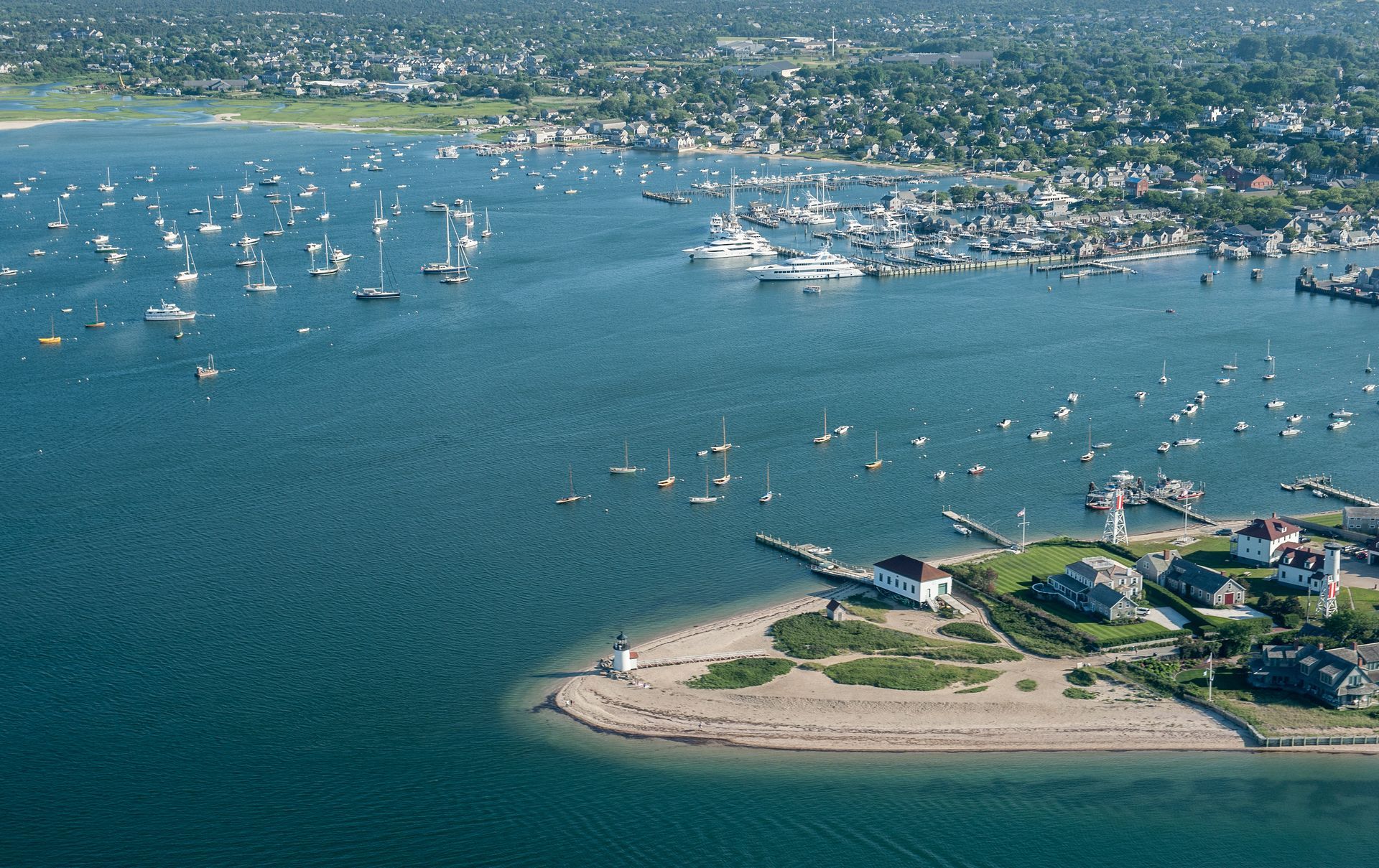
It was once just a laundromat. Today, it’s one of the most iconic high-end restaurants on Nantucket. For the past 50 years, Straight Wharf Restaurant has been a late-night bar, a high-end restaurant and a bustling hub.
We were as surprised as anyone, my sister and I, at where we found ourselves that summer in 1976. I was nine and my sister, Star, was eight. We had a special bird’s-eye view of the Straight Wharf kitchen from the hole my dad had cut into the wall of the upstairs office, watching as desserts were plated, clams opened and dinners loaded onto giant oval trays. When we got tired, we fell asleep up there on makeshift beds, drifting off to the sound of clattering plates and sizzling pans.
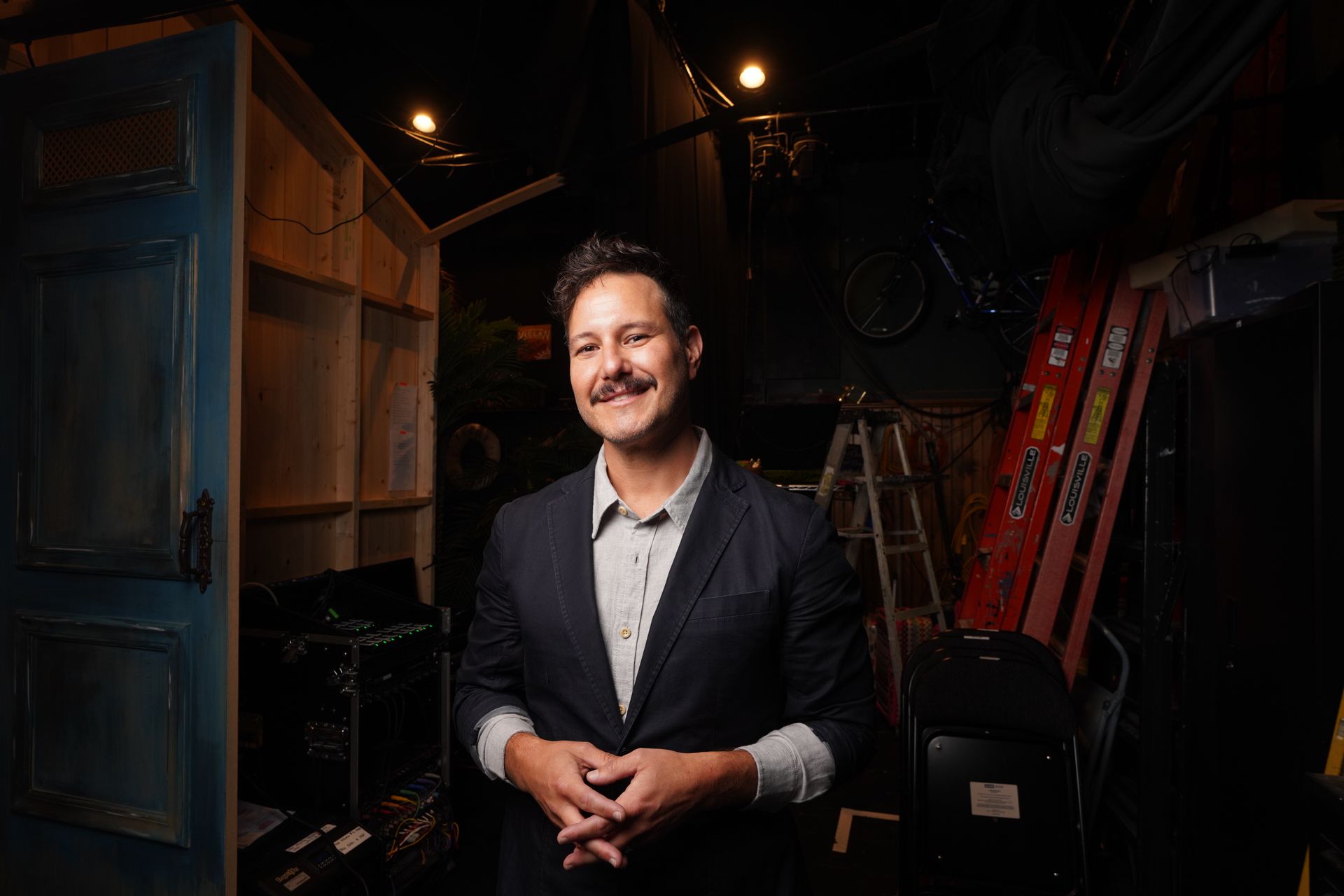
Day and night, “The Restaurant” was our second home. Fifty years later, the spirit of Straight Wharf carries on almost as though it has a life of its own—the same layout, the same shingled interior walls in the dining room, the same thumb back chairs, the same glass hurricane lamps on the tables and the same antique carousel horse. Perhaps most remarkable of all is the continuing presence of the man who started it all, my dad, Jock Gifford, who designed and built the place and has repaired and cared for it year after year.
"It had a really good energy because we weren’t professionals, we were having a goodtime but being serious about doing a good job,” Jock said. “It was different right from the beginning.”
Jock’s connection to Nantucket goes way back. His family started coming to Nantucket in the 1930s. He and my mom, Laine, moved to the island to live year-round in 1967. Jock worked on several projects with Walter Beinecke, founder of Sherburne Associates. As Jock recalls, the waterfront in the late ’50s and early ’60s was “pure industry,” a bit down at the heels, where freight boats unloaded lumber, hardware, coal and ice onto the docks.
The building that became the Straight Wharf Restaurant was created out of a structure originally used as a laundromat to serve the marina. After designing the small retail shops farther down on Straight Wharf, Jock recommended that Beinecke convert the laundromat into a fine dining restaurant, noting that there weren’t any eateries serving locally caught fish and seafood that overlooked the harbor. Beinecke agreed and asked Jock to find someone to run it.
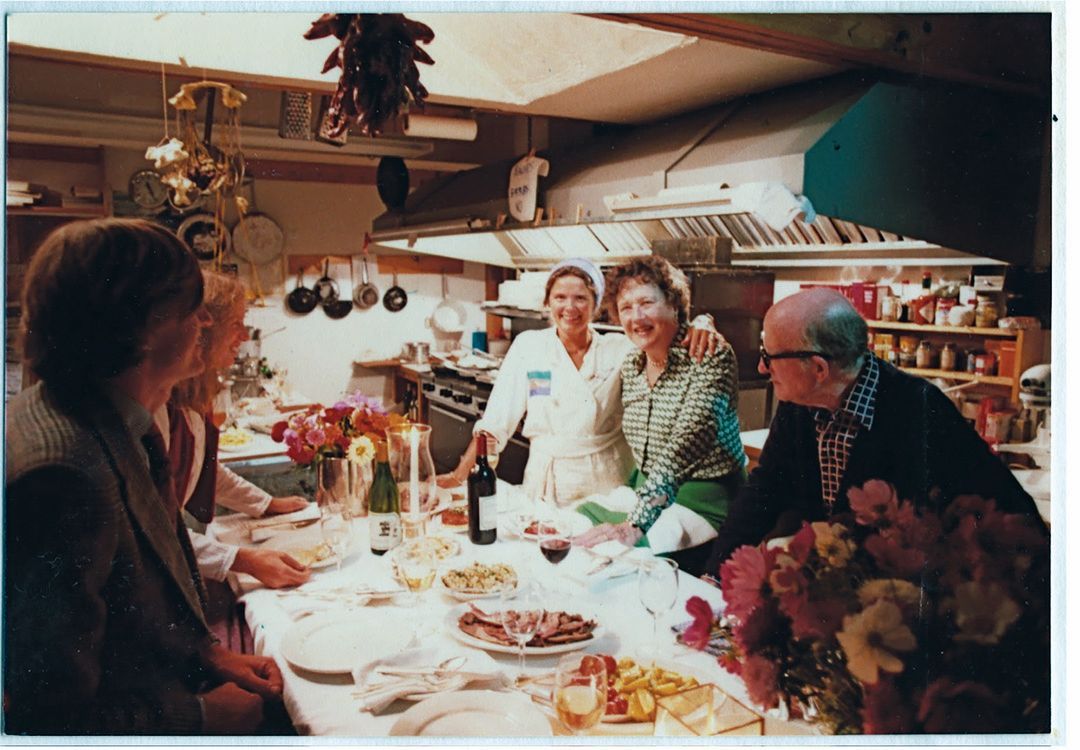
The Giffords had become friends with Susan Mayer, Marian and Russell Morash at WGBH (who produced Julia Child’s show, The French Chef) and Peter McGhee, who had learned to cook from renowned Martha’s Vineyard chef Joe Hyde. The story goes that one of these evenings, McGhee floated the suggestion that the dinner party group take their love of food, cooking and entertaining to the next level and open a restaurant themselves. There might have been wine involved.
What started as a far-fetched idea became a more concrete plan, and there was no turning back. Using his rough plans from the fall, Jock and two friends started building and renovating in April. Morash and Mayer, along with dessert chef Meg DeGive, started planning and testing their trial menu. Hyde was there to help them pull their menu together in a two-week “boot camp,” Marian Morash recalled.
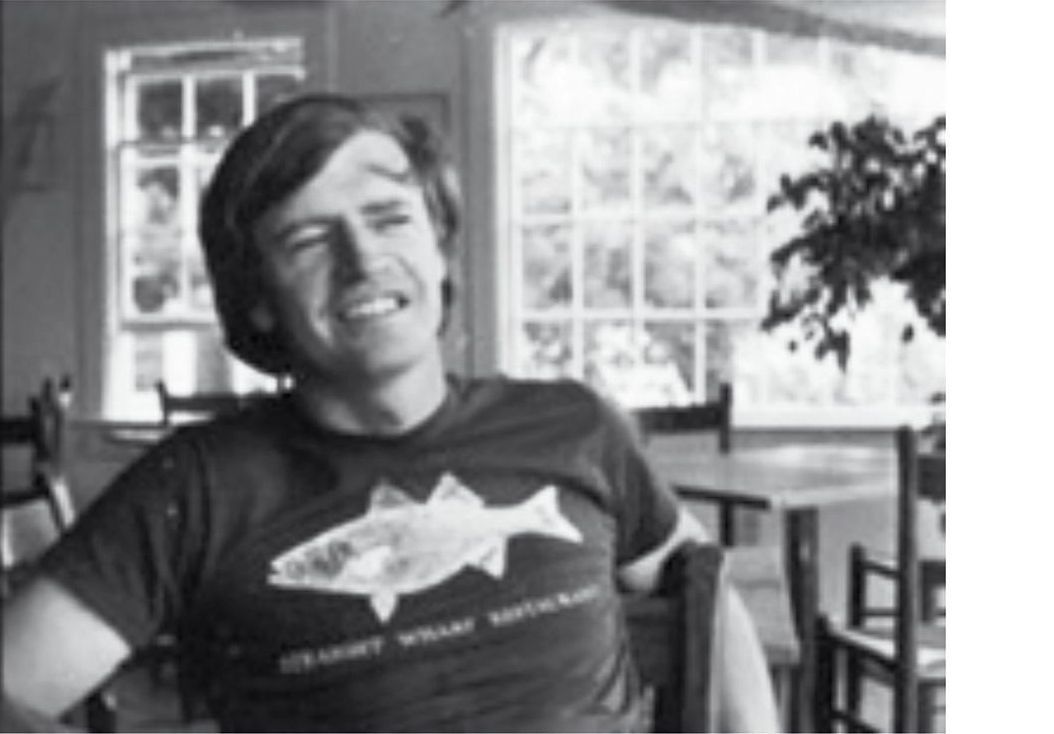
“It was crazy and wonderful,” Marian said. “Everyone was up for it. And with a lot of work, it took shape.” Jock created the iconic logo based on an engraving of a striped bass that he found in a book at the dump.
Mickey Rowland spent eight summers at Straight Wharf from its opening until 1983, starting as a clam opener and working his way up to sous chef. He sums up his time at Straight Wharf as “unquestionably the most enjoyable summers of my life,” describing the staff as “wives and mothers and friends.”
The first few years produced some beloved classics: striped bass with white butter sauce, sole in parchment, swordfish with cream and mushrooms, ice cream with chocolate cognac sauce, and of course, the smoked bluefish pâté. During those early years, Straight Wharf was managed by my parents, with several front-of-house point people who did much to keep thing going—notably, the late Judy Janelli, who could balance a fully loaded tray as her head tossed back in a contagious laugh.
In 1988, Sarah O’Neill stepped up to the helm as executive chef. “Despite it being a job, and stressful at times, it was a community of like-minded hard-working folks,” said Julian Weatherill, who worked with O’Neill as day prep, garde-manger(salads) and bar grill chef. The restaurant was unpretentious. For Ruby Palmer, a childhood friend who worked kitchen prep in the early’90s, it was the “perfect summer job.”
The Straight Wharf bar saw a dramatic shift after longtime bartenders Ken Layman and Dick Burns moved on. In 1989, waitress Andrea Kovalencik introduced Paul Robbins to the Straight Wharf bar. Robbins, better known as Pablo, arrived on Nantucket from the Bahamas, bringing with him a concoction he called a “Goombay Smash,” a boozy mix of orange and pineapple juices, coconut milk and rum. It was an instant hit.
The bar became a hub of Nantucket nightlife and a place where friendships and romance sparked and took hold. The bartenders ran a tight ship. The late Paul Conti became a well-known presence behind the bar. He was followed as head bartender by Packy Norton, who went on toco-own The Chicken Box. Then came Ty Costa, Brendan Dickinson and Tim Farley—now co-owner of Slip 14. Dickinson was introduced to Straight Wharf as a kid. His mom, Brigid Sullivan, and Jock married in 1996.
The ’90s also brought a new practice on Nantucket of hiring seasonal staff from outside the U.S. with the help of a visa program. They came from Jamaica, Ireland and Eastern Europe. Many of those staff members returned year after year, and some became year-round residents. Eulette Heath arrived from Jamaica in 1994 and started baking at Straight Wharf in 1996, where she made bread and pasta until her departure in 2020
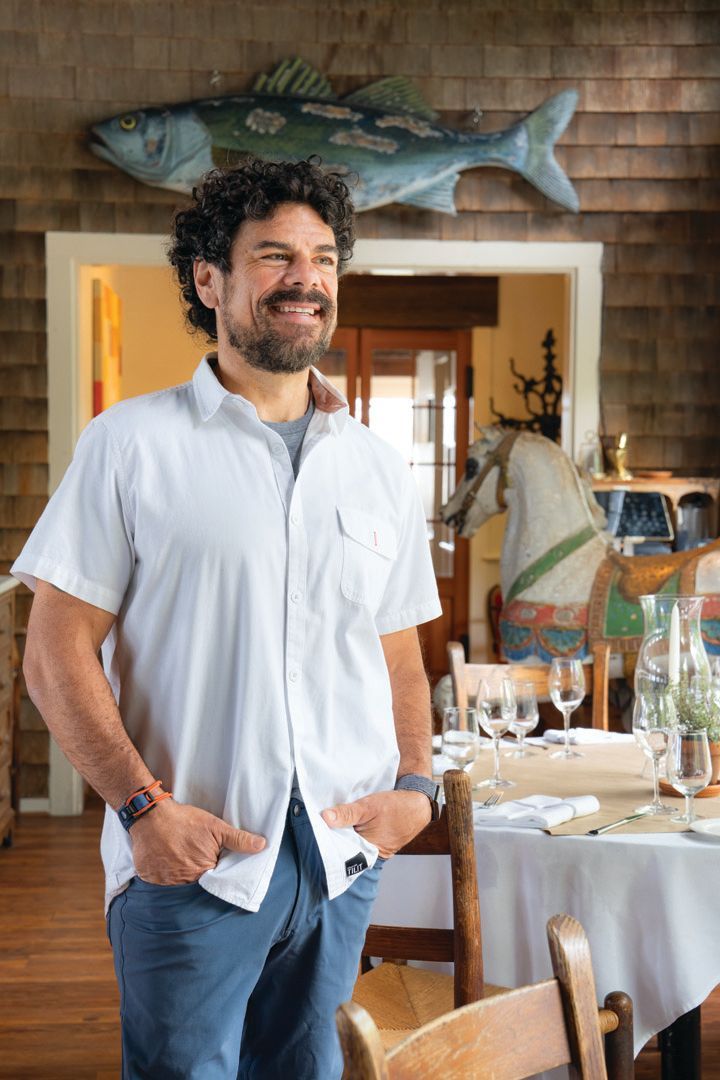
Gabriel Frasca, who worked a summer there in the’90s, returned in 2006 to head the kitchen. He recollected “wanting to embrace a style in which you could tell that the vegetables came into the kitchen in the morning warm from the sun with dirt still on them.” Frasca’s style has become deeply connected with Straight Wharf over the past 20 years. His menu changes with the seasons. He likens the restaurant to a “summer camp."
“I think worrying about success can be the start of your downfall,” Jock said. “You don’t really reach a point of success. The restaurant is like the theater; it doesn’t matter how good you were last night, people who are here tonight care about tonight and tomorrow’s customers care about tomorrow. It’s a moving target, and so we do our best every night. That said, I’m still secretly thrilled to hear people love it.”
“There’s a feeling of family among returning staff members as well as regular customers,” said Taryn Dilworth, who has worked at Straight Wharf since 2016 and has been general manager since 2020. “Nantucket has been through so much change, and although Straight Wharf has been tweaked, it feels unchanged, it feels the same to so many people who have memories of the place.”
Straight Wharf has had many regulars over the years, including a range of celebrities and luminaries, but historically VIPs didn’t get extra-special treatment because they didn’t need it: All the customers got great service. Jock recently consulted with a physician in Connecticut and the conversation inevitably turned to Nantucket. “Without saying anything about my connection, I found out this guy’s favorite restaurant on the island is Straight Wharf,” Jock said. “He goes there every summer. I thought that was cool."
Latest Stories