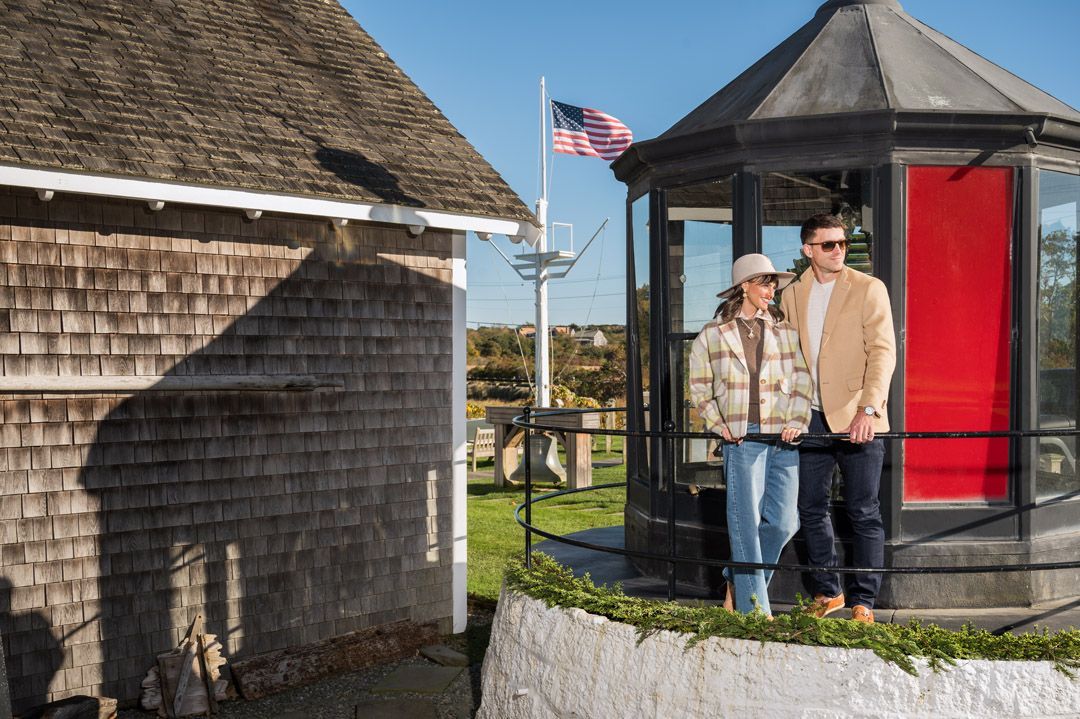
Nantucket's Middle Class Squeeze


November 19, 2026

The impact of Nantucket's housing crisis

Written by Larry Lindner

Photo by Brian Sager and Kit Noble


"I’m a 42-year-old professional, and I have two housemates,” said Peter Burke, the executive director of the Nantucket Chamber of Commerce. Burke isn’t complaining. “I don’t have a family. I don’t have dogs. I actually feel pretty lucky that I have stable year-round housing,” he said. A carpenter on the island does not feel so lucky. Even though he earns about $120,000 a year, he struggles to pay rent. He and his wife finally moved from a cramped studio to a one-bedroom apartment in August, but it’s just a temporary fix because the landlord would only give him a one-year lease.


“I’m paying almost $4,000 a month,” he said, speaking on the condition of anonymity. Next year the landlord “may charge $300 more. Year by year they go higher and higher.” With the man’s business expenses, including insurance, equipment and vehicle maintenance, he simply does not know how he’s going to make ends meet—or where he and his wife are going to live—when the lease ends next summer.


The problem of affordable housing for people who earn a living on Nantucket is only worsening. “The market just really isn’t creating enough year-round housing,” said the island’s housing director, Kristie Ferrantella. “We’re even seeing a decrease in the opportunities” to make it available. The housing issue affects every stratum of Nantucket’s middle class. “I have six vacant police officer positions,” Police Chief Jody Kasper said. “We just conducted interviews with candidates, and we lost three of them due to housing.” Fire Chief Michael Cranson made the same point. “The fire department currently has five vacancies,” he said. “In recent hiring cycles, some otherwise strong candidates couldn’t move forward because they couldn’t find housing on the island.” Meanwhile, “some staff who cannot find housing on-island commute from off-island, which can affect ‘recall to duty’ situations and the fire department’s efficiency.”


Put in practical terms, if you can afford a home on Nantucket and your house catches on fire, there’s a risk that the response might not be what you’d expect because those tasked with protecting the community's infrastructure are often priced out of that very community. With one-bedroom rentals in the ballpark of $4,000 a month, a police officer who earns between $100,000 and $120,000 a year spends close to 50% of a year’s pre-tax annual salary for that small unit. If the officer has a family and needs two or three bedrooms, the rent is going to be considerably higher.


There isn’t a single aspect of life on Nantucket that isn’t touched by the affordable housing crisis. “I need an assistant manager pretty desperately,” said Acting Airport Manager Preston Harimon. “We built a dormitory-style facility over on Nobadeer Farm Road. [While it] can be used as a crutch for new year-round employees, it’s mainly intended for seasonal workers, May through October. The dorms have helped, but they’re not the whole answer.”


The difficulties have spread  to Nantucket’s public school teachers as well. Superintendent Elizabeth Hallett commented that Nantucket leads the state in the starting teacher salary, currently $80,153. That gets teachers hired, she said, “but the more challenging piece is how to keep people here. We often lose people between the three- and seven-year mark. Just when they’re really coming into their own as highly qualified professionals, they leave and go to another district because they want to buy a house." That’s nearly impossible to do on Nantucket on a teacher’s salary because of the island’s median sales price of more than $4 million. The inability to put down roots presents a real challenge, Hallett said. “We are constantly training new teachers, providing them with really good professional learning. We have to constantly consider the turnover.”


Retail businesses suffer, too. According to a report based on surveys and interviews completed by 72 island employers and released by Remain Nantucket, nearly 70% of employers provide some kind of housing support to their workers, costing them, at a minimum, $92 million a year. The median housing cost, per business, comes to $162,500. Even with housing subsidies for workers, 64% of business owners have lost or declined hires because of issues related to housing, according to Remain. The kicker: 72% of the employers surveyed expect their housing needs to grow, turning those employers into sometimes reluctant landlords whose resources get shunted away from growing their businesses.


"IIt’s a whole other level of responsibility, a whole other headache that you have to balance every year,” said Matt Fee, a member of the Select Board and owner of Something Natural. While Fee’s business sells bakery products wholesale to Stop & Shop year-round, the establishment’s seasonal sandwich shop takes a hit because of housing issues. While Fee would like to remain open until around Thanksgiving or even Christmas Stroll, he usually has to close around Columbus Day.


For all the headaches involved in employee housing, he is glad he purchased real estate for workers decades ago, when it was within easier reach. When he bought his business in 1983, the median price of a home on the island was roughly $150,000. “How do the next businesses afford to grow?” he asked rhetorically. “How do you ramp it up? They’re at the bootstrap level, right at the beginning. It’s very difficult to build a small business into a larger business” if you don’t know where your employees are going to live. “People are constrained by not being able to get staff.”


A number of initiatives have been put in place to help ease the housing burden for employees on the island. One new program launched by the town in August called Rooted Renters provides an incentive of $18,000 over a three-year contract to residents who continue to rent out their houses year-round to someone. Another town-based program is Lease to Locals, which has proven “really successful,” Ferrantella said. The program provides up to $27,000 in the first year for landlords who convert their unused homes or short-term rentals to yearround housing, with the rent capped at $4,000 a month for a three-bedroom unit. So far, Ferrantella reported, that initiative has helped house over 100 year-rounders.

To qualify, a family of four has to earn less than $455,000 a year—250% of the median income on Nantucket. While the program helps, it goes to show that “even a family earning that much money can’t afford housing,” Ferrantella said. “People really need that subsidy. It’s not just about extremely low- and moderate-income households, but every household on Nantucket.” There are also lotteries to purchase affordable housing on the island, but getting picked is like, well, winning the lottery. And you have to show you have the assets to make a down payment, which people often don’t, in large part because they haven’t been able to build a nest egg due to skyrocketing rental costs. It becomes a vicious cycle.


Legislative fixes have proven elusive as well. There’s a push at the State House to pass a law that would allow a municipality to levy a transfer fee when a home sells for more than $2 million. For any amount above the first $2 million, 0.5% would go into a housing fund. A number of well-heeled municipalities in Massachusetts, not just Nantucket, would like to see it happen, but it has failed repeatedly, most recently this past July. If it passed, it would add millions of dollars to town coffers each year to make housing attainable for more year-rounders. “It is one of the most critical tools we need,” Ferrantella said. “We’ll be putting in another petition for the next legislative session.”


For other ideas on how to fill affordable housing gaps, the Remain report looked at ways in which four other resort communities have been handling the problem: Davos, Switzerland; Scotland’s Isle of Skye; Jackson Hole, Wyoming; and Key West, Florida. Solutions have included housing cooperatives and nonprofit developers, private philanthropic contributions, inclusionary zoning and development incentives,  and caps on housing growth with priority given to workforce housing.


Whatever combination of approaches is used on Nantucket to address the housing crisis, time is of the essence. This is not a situation that is ready for a tidy “all fixed.” We’re “at a critical point,” Ferrantella said. “We need to make an impact on what Nantucket is going to look like for the next 10 or 20 years.” Or as Police Chief Kasper put it for her own department, “We’ll be fine for the next five to 10 years. But after that, if we’re not able to provide more stable, quality housing for people, I don’t know where we’ll go from there.”

Latest Stories


By N Magazine • November 19, 2026
Lisa & Tom's Nantucket wedding.
By brianbushard • November 19, 2026
Fashion
Nantucket Cottage Hospital’s longest employee retires
By brianbushard • November 19, 2026
Nantucket Cottage Hospital’s longest employee retires
Kezia Duarte on track to finish the six major marathons
By John Stanton • November 19, 2026
Kezia Duarte on track to finish the six major marathons
Barnaby's Cares provides hope.
By brianbushard • November 19, 2026
Barnaby's Cares provides hope.
Dan Pronk's lobster pot tree
By brianbushard • November 19, 2026
Dan Pronk's lobster pot tree
MORE STORIES