Sailing Back in Time
Tall Ship Lynx Prepares for Boston and Sail250
Written by John Stanton
Photography by Kit Noble
It was said that the muzzle flashes of the swivel cannons and the pistols, etched against a dark October night in 1814, could be seen from the rooftops on Orange Street. In the waters off Madequecham, a bloody battle was being fought between the British frigate of war HMS Endymion and the American privateer Prince de Neufchatel.
The Prince de Neufchatel was a state-of-the-art vessel, well-armed, very fast and maneuverable, fitted out for the express purpose of raiding merchant ships and outrunning the British Navy. Its crew had already plundered an estimated $3 million by the time it was seen off Nantucket. It had all but shut down shipping along the Irish Sea earlier that spring. The British frigate sent five small boats with 104 officers and marines to use the cover of darkness to attack the privateer. In a bloody battle—which included a moment when the captain of the privateer held a torch over the opening to the gunpowder room and threatened to blow everyone up rather than be taken—the crew of the Prince de Neufchatel managed to repel the British attack.
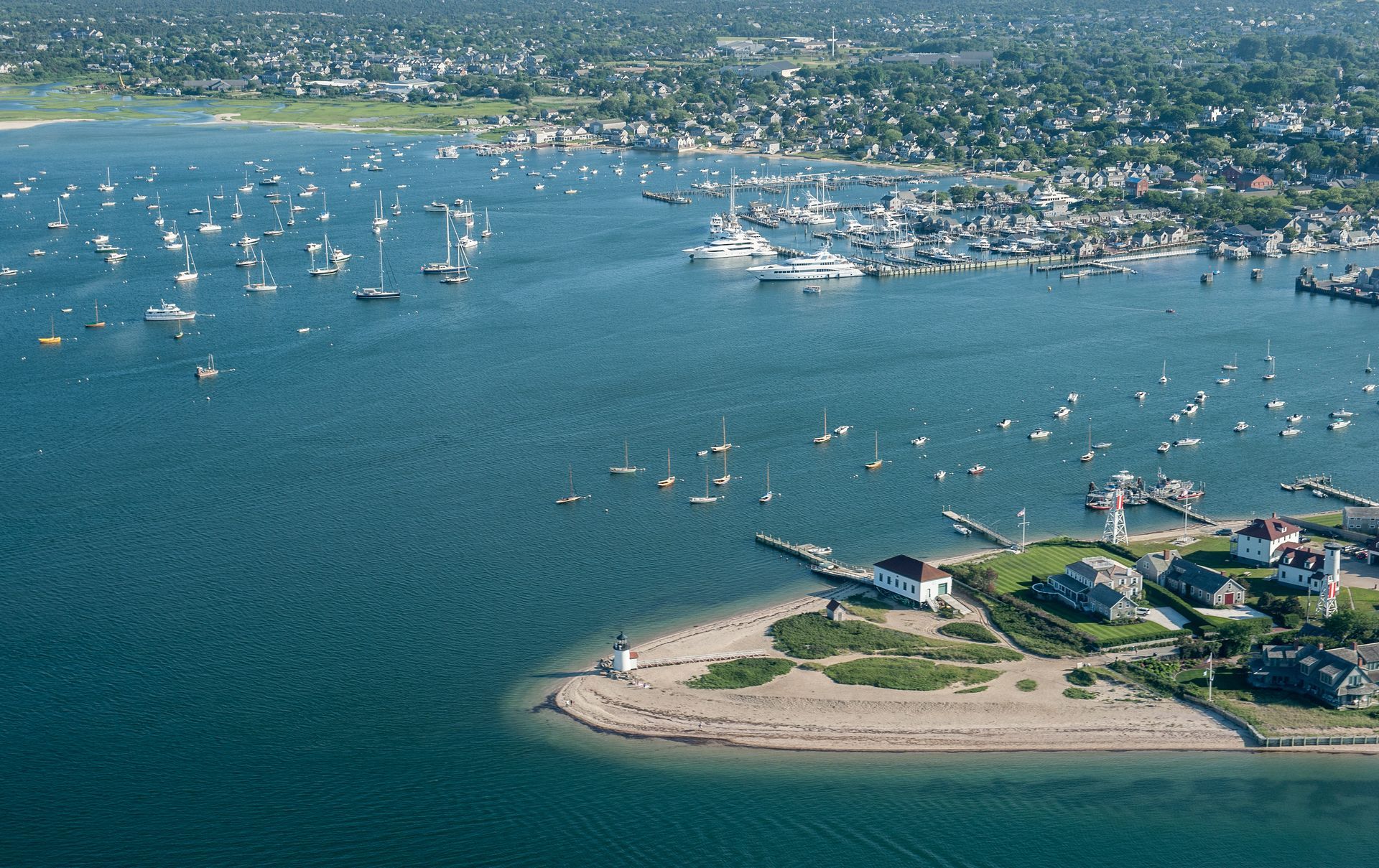
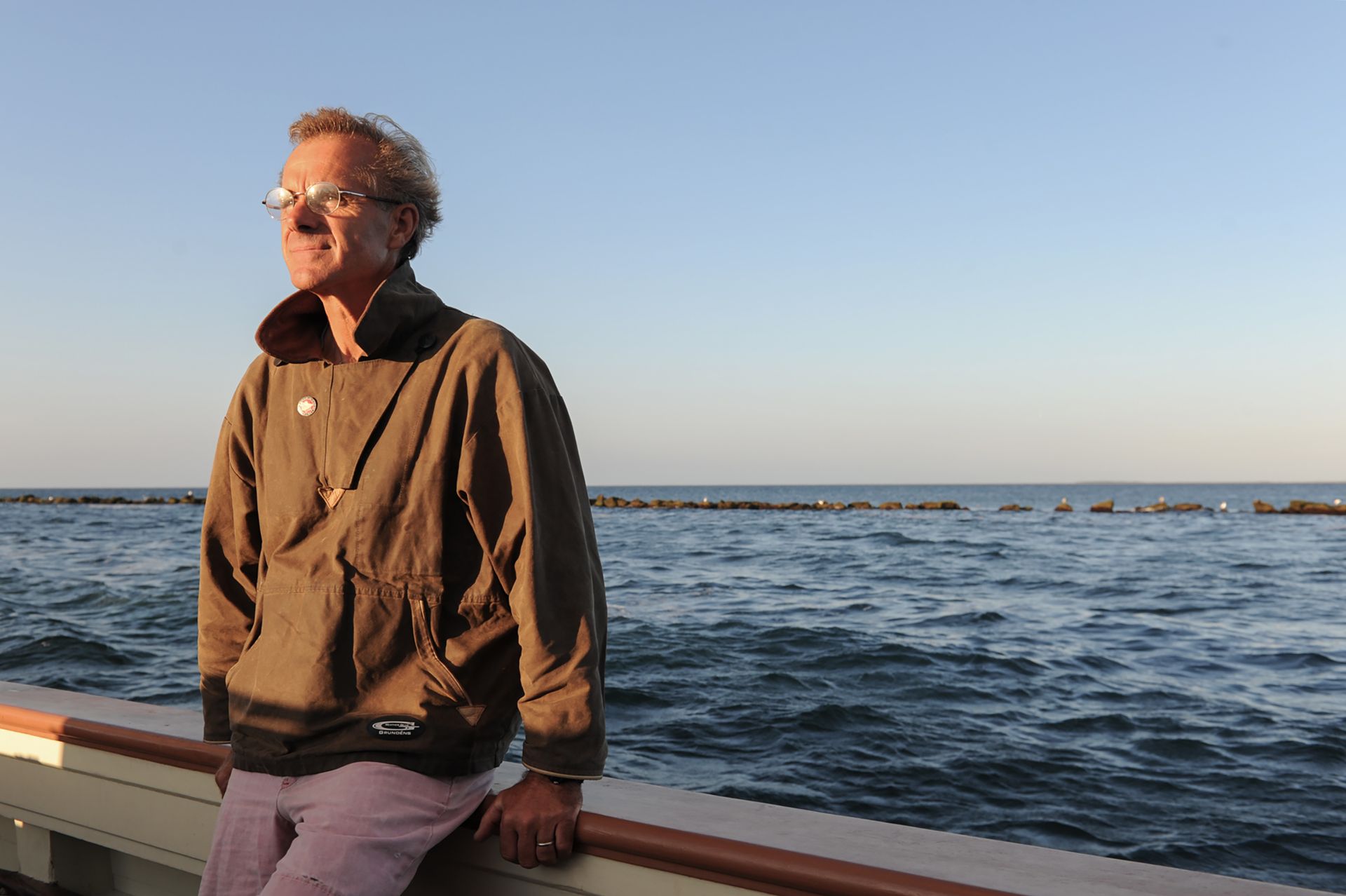
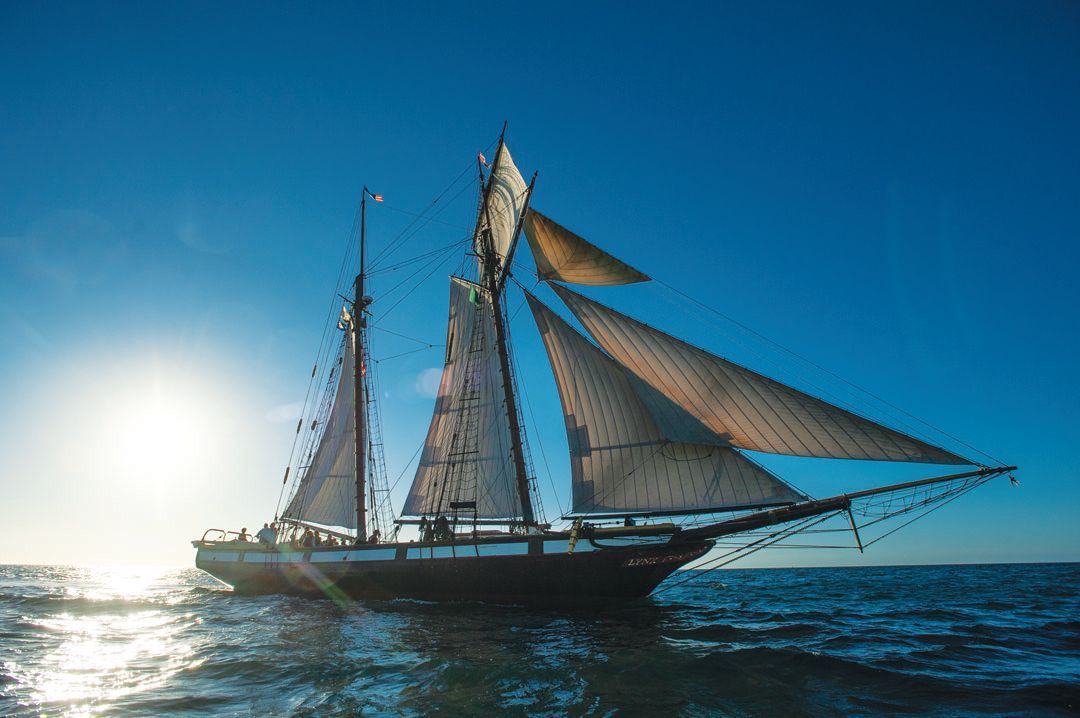
More than two centuries after that battle, the tall ship Lynx spends its summers in Nantucket Harbor, serving as a floating memory of those fast ships that helped turn the tide of the war for the new nation. To commemorate the 250th anniversary of the Revolutionary War and the nation’s maritime history, Lynx Captain Don Peacock is sailing the tall ship along the Eastern Seaboard, through the Cape Cod Canal and into Boston Harbor as part of Sail250.
The event is similar to any number of tall ship parades in the past, including the Bicentennial Tall Ships parade in 1976. Peacock can remember watching a tall ship event in the 1990s from a vantage point in Boston. “The fleet was anchored near the islands in Boston Harbor and it was a forest of masts,” Peacock said. “It was an amazing sight and made you think how important these sailing ships were to a young America.”
There often comes a moment, he said, when the Lynx is heading out of Nantucket Harbor, around Brant Point, tracing the movements of a whaling ship leaving the island for the Pacific, when you can feel that reflection of history.
In both the Revolutionary War and the War of 1812, Nantucket’s official stance was neutrality, a decision fueled by the island’s large Quaker population and the fact that the whaling industry did business in London. The obvious geographical reason was the island’s isolation. In his book, The History of Nantucket, Obed Macy described the result of that simple but devastating truth of island life: “There is no place within the limits of the nation more exposed to the ravages of an enemy, and none more out of the reach of the protection of government than this.”
The British naval blockade provided a harsh lesson for Nantucketers during the revolution. The whaling business was all but shut down, as whaleships and their oil were seized and their crews jailed or forced to serve in the British Navy. Heavily armed cruisers flying the Union Jack patrolled the waters off the island, preventing packet sloops from delivering provisions, fuel and even mail.
A few years into the Revolutionary War, Nantucketers found themselves frigid and starving. At Town Meeting, residents decided the only choice they had was to cut a deal with the British. The terms, in part, had Nantucket agree not to take up arms against Great Britain, surrender its arms and ammunition and “make no opposition against any British vessel into this harbor to refresh.” In exchange, a limited number of whaling ships were allowed to continue working without harassment and the British would issue passports for a handful of coasting schooners to bring supplies to the island from Boston and New York. The British found the terms agreeable.
In the middle of the Revolutionary War, Nantucket had crafted its own treaty with a foreign power. When the war ended, Nantucket began to rebuild its fleet. The Brant Point Shipyard was built and the whaler Rose launched. Soon the fleet numbered some 116 ships, including 46 whaleships.
But another war with the British was on the horizon, and memories of those hard times during the Revolutionary War were fresh in the minds of many islanders. The War of 1812 promised to be déjà vu, complete with a decimated fleet and starving citizens. This time, town officials didn’t wait for armed ships flying the Union Jack to fill the Sound. In May 1812, they petitioned the federal government to reconsider entering another war. If war must be declared, they asked that the cod and whale fisheries be exempted from wartime strictures. The petition was ignored, and war was declared on June 8, 1812.
It did not take long before the deprivations of what was then recent memory once again became the reality of life on Nantucket. One August morning in 1814, the British ship HMS Nimrod was seen at the sandbar, and a skiff came to shore under a white flag, offering a deal from Admiral Alex Cochrane that was similar to the previous agreement. Nantucket’s official stance, once again, would be neutrality.
When the morning dawned after the October battle between the Endymion and the Prince de Neufchatel, 33 men from the British ship had been killed against only six on the privateer, including a Nantucketer who had earlier hired on to pilot the ship through local waters. The wounded from both ships and the captured British sailors were sent into ’Sconset and carted off the beach and into town—a town, of course, that was under British control.
The captain of the Prince de Neufchatel, a Frenchman named John Ordronaux, sailed his damaged ship and wounded crew into Boston, where he retired a wealthy man. The prize ship he had captured, the Douglas, ran aground near ’Sconset. Her cargo was carried away by Nantucketers, who considered their good fortune, in the face of the starvation rations they were living on, just another kind of privateering.
In London, speeches were being made in Parliament arguing that the war was not worth the expense. Repairs were made to the Prince de Neufchatel, another captain was found and the privateer set sail again. Eight days out of Boston, it was captured by the British. The war ended later that month.
Latest Stories