Even Keel
Nantucket One Design at 100 Years
Written by Anne-Carter Riggs
Photography by Kit Noble
To sail competitively is to accept a certain level of discomfort. Damp clothes, cold wind and the strange positions sailors contort into—all of these factors are pillars of the sport. Even in a modern age of sailing, there might not be a more uncomfortable boat than the Nantucket One Design, a small skiff better known as an Indian that is celebrating 100 years on the water this year.
Almost exclusively sailed in Nantucket Harbor, the Indian holds more than just sailing in its design—it holds history. “I think the people who do join the Indian fleet are not doing it purely because they love racing or because they love sailing, but they love Nantucket and they want to be a part of something that is associated with the history of the island,” fleet captain Anthony Schweizer said.
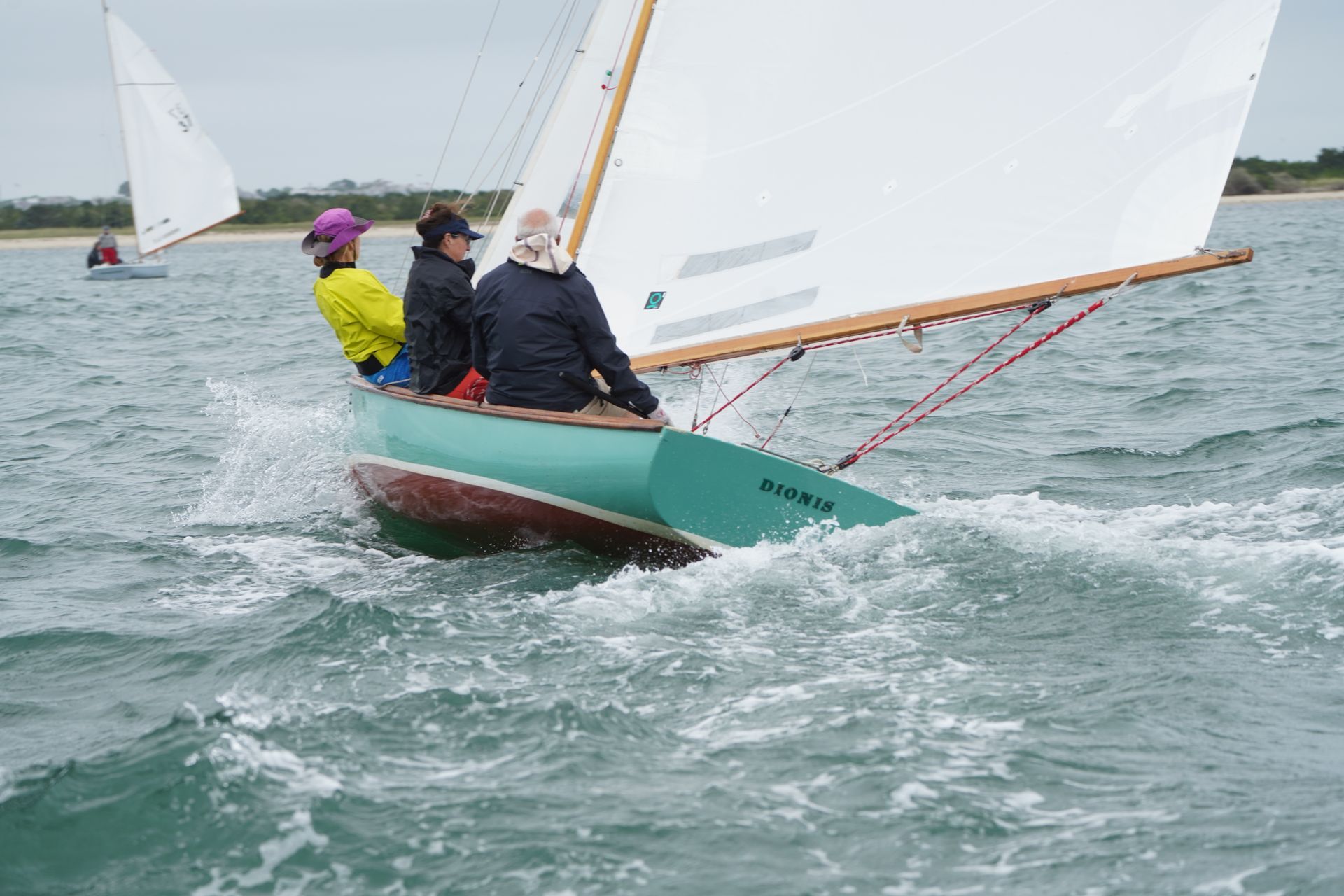
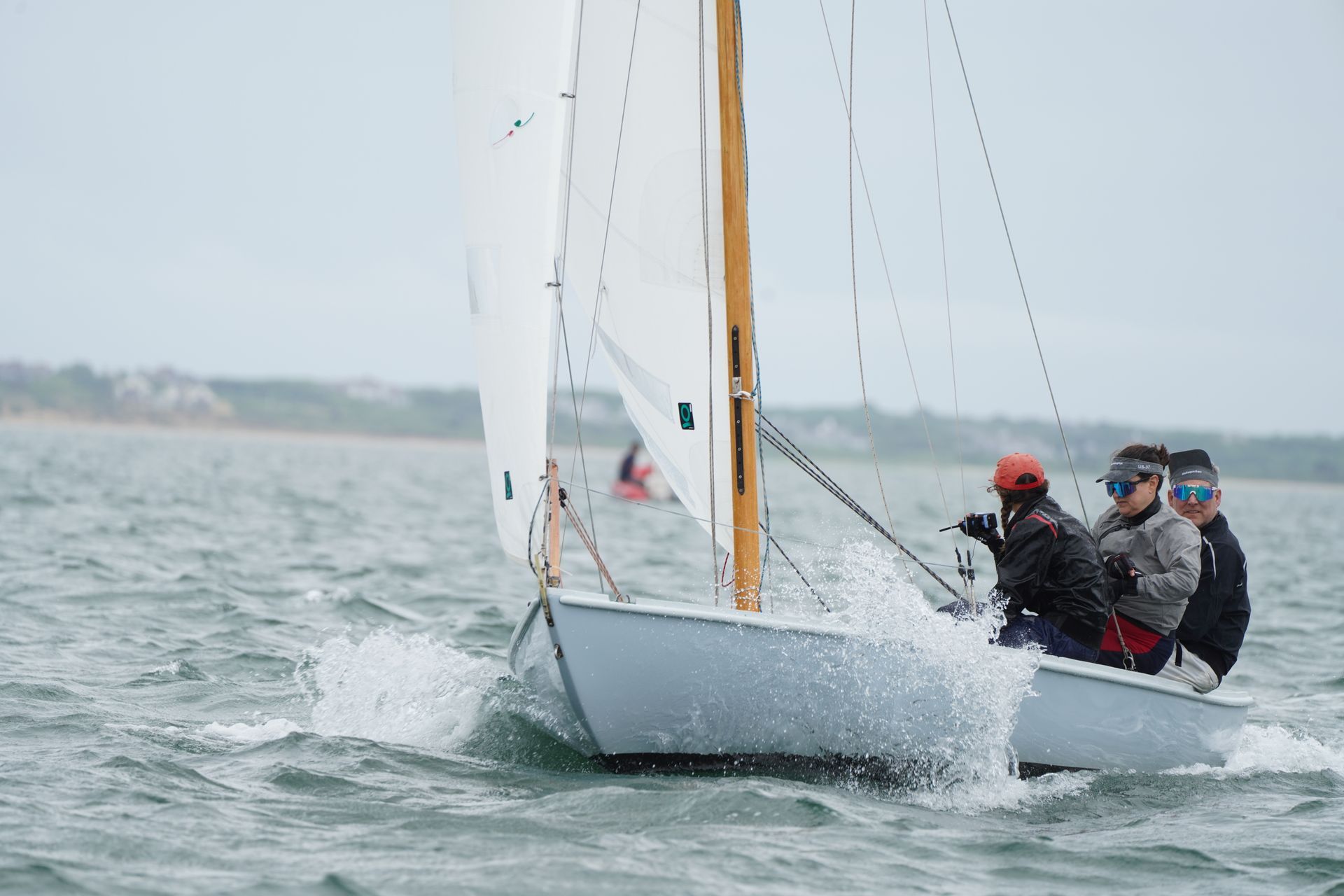
The Indian’s hull, with the tall centerboard trunk and low boom, forces its sailors to squeeze through a small gap when tacking. The gunwale pokes out and is directly where the sailors sit, giving sailors dark bruises on their thighs. Despite the discomfort, the sailors of the Indian fleet have been competing weekly every summer since its creation in 1926. The boats bear Wampanoag names: Capaum, Dionis, Madequecham, Nippanoose, Polpis, Quaise and Sachem. Each 21-foot-long hull is a distinct color, manned by two to four people, and each boat’s wide mainsail is topped with two feathers.
As all old wooden things do, the boats began to fall apart, and by 1986, the fleet had dwindled to two boats, helmed by George Constable and Vladi Kagan. Even with just two boats, the fleet’s competitive nature was still alive and well. “It came down to the last day of the year, to see who got to win the season,” Constable’s son, Bobby, said. “Apparently it was such a big deal that a whole lot of spectators went out just to watch the race because they knew it was these two old legends battling it out.
The tenacity and uniqueness of the fleet, even with its aging boats, caught the eye of the late Alan Newhouse. He took it upon himself to revive the fleet and, with the help of Dan Avoures in Florida, took the wooden hull of one boat, Nippanoose, and made a fiberglass mold.
One by one, Alan and his wife, Virginia, would tow the newly built Indians from Tampa to Nantucket. He ensured these boats went to good homes, making people promise to race them and that they would never take them off the island. In the end, approximately 20 boats were personally delivered by him just in time to race in the summer of 1987. His daughter, Nancy Newhouse, has a photo of her father wearing a shirt that says: “There is nothing—absolutely nothing—half so much worth doing as simply messing about in boats.”
The One Design subsequently made a comeback. On some nights, known fondly as Moonlight Madness, the fleet would sail to the Head of the Harbor at sunset, returning under the light of the moon. One summer, the fog shrouded the harbor, so they anchored in the fog, only able to hear one another. Nancy Newhouse’s son, also named Alan, came to rescue the crew, but “we said no,” Nancy recalled. “I don’t know why we said no. Those were the things that we just loved to do.” They only returned at six in the morning.
The fleet also participates in traditions like the Constable Cup, a three-day regatta that includes a skit as a mandatory aspect of the competition, as well as a yearly sail to the beach fora picnic, both of which get non-racers involved in the fleet. By drawing in the sailors’ families, the Indian fleet has become more than just competitors—they are friends. Whether the sailors grew up on these uncomfortable boats or were invited to race later on—the fleet has prospered because all its members have a fierce love for it.
West Riggs, chairman of the Race Committee at the Nantucket Yacht Club, became an Indian sailor at 20 years old because Vladi Kagan needed another crew member. Schweizer began sailing when he was 10 years old, invited by George Constable who was “appalled” that he had never been on one. Both now own their own Nantucket One Designs and have passed down their love for the fleet to their children. “Nothing endures for that long without bringing joy” Schweizer said.
Latest Stories