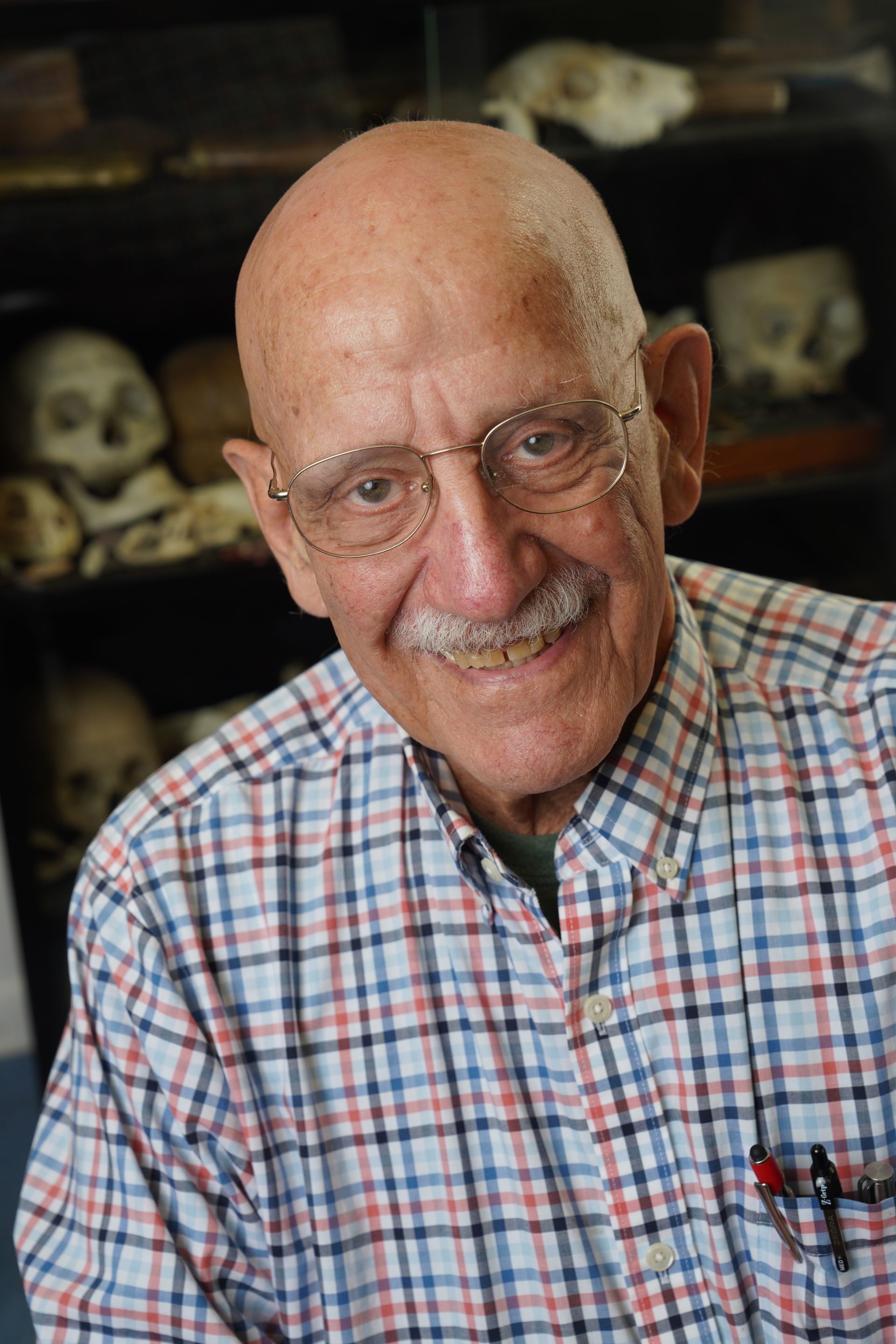
In 45 years on Nantucket, Dr. Tim Lepore has treated tens of thousands of people, from some of the richest in the world to longtime islanders struggling to afford a place to live
Written by Brian Bushard and Bruce A. Percelay
Photography by Kit Noble
Everybody has a Tim Lepore story. There was the man with appendicitis who Lepore operated on only to realize the man didn’t have health insurance, so he paid with a batch of oatmeal raisin cookies. There’s the man who was stabbed in the heart by his wife after he forgot to pick up potatoes at the store. Lepore rushed him to the operating room, stuck his finger in the man’s heart to restart it and tied it back together using an 1800s technique involving black silk thread, earning Lepore a reputation as an “encyclopedia of arcane facts” by
The New York Times.
In 45 years, he’s treated tens of thousands of people, from some of the richest in the world to longtime islanders struggling to afford a place to live. He’s become the foremost tick expert on Nantucket, worked as Nantucket High School’s athletic doctor and continues to serve as a member of the School Committee, which he calls the “most important job on Nantucket.”
For the past 20 years, he’s run Addiction Solutions out of his office at Nantucket Cottage Hospital, treating drug and alcohol misuse on the island. He was the firstever recipient of the Dreamland’s Fred Rogers Good Neighbor Award. For his four-plus decades of work in the community and his countless contributions to life on Nantucket, he is N Magazine’s person of the year.
Lepore, who graduated from Harvard in 1966 and from Tufts Medical School in 1970, has worn a number of hats since moving to Nantucket in 1981 with his wife, Cathy, and their three children. Several years in, he was named the hospital’s head of surgery, and when he had time, he took on primary care. “Then it got out of hand,” he said. Four decades in, Lepore has met tens of thousands of patients, from summer residents to year-rounders, second homeowners and homeless people.
He’s taken care of some of the wealthiest people on the planet, and even more patients without health insurance. Where a typical primary care physician will see roughly 2,000 patients each year, Lepore alone sees more than 7,000. He’s been known to offer free service to patients so many times that his staff jokingly says there’s an internal rule at the office never to let the doctor talk about payments. In addition to cookies, he’s taken lobsters, littlenecks and a photographer’s framed photo when patients didn’t have insurance. “Does the government take a quarter of a lobster from me?” he said.
In 2005, he added another job to his resume, founding Addiction Solutions. “Addiction is an equal opportunity disaster,” he said. “You’ve got people sleeping around the cars, and you’ve got people worth a million bucks, and they’ve all got the same problem. Everybody here has had someone, a brother, sister, cousin or whatever, that has a drug or alcohol problem. Nobody should die of it. If people want help, we can help them.”
Like a lot of Lepore’s work, Addiction Solutions didn’t fit the idealized image of Nantucket seen on the big screen or more recently on the feed of social influencers’ pages. But for years, the problem around drug and alcohol misuse continued to rear its head, from cocaine to synthetic opioids like fentanyl. “I was on the School Committee, and I was seeing kids that had graduated who I had given diplomas to, coming in dead, overdosed,” he said.
For more than 20 years, Lepore has not only been treating addiction, but has made it his mission to fight the stigma around addiction and make care accessible, going so far as putting his personal cellphone on his radio ads to make it easier for someone struggling to connect with him. “I don’t want people that are calling me for addiction to get a secretary. I want them to get my [personal] answering machine,” he said. “You strike while the iron’s hot, and so if somebody’s calling me for help, I can meet them. We can talk. I can get them set up. I can prescribe things for them. It’s an opportunity to help people without barriers.”
Beyond Nantucket, Lepore has become renowned for his expertise in tickborne illnesses. He’s been called on by publications and programs from The Boston Globe to 60 Minutes to explain the myriad efforts to curb tick-borne illness, from proposed expansions to the deer hunting season to an ambitious effort to introduce genetically engineered mice immune to Lyme disease.
Over the past year, however, the attention has moved from deer ticks to lone star ticks, a faster, more resilient and more aggressive tick whose bite can trigger alpha-gal syndrome, which can cause an allergy to mammalian meat. Like deer ticks, adult lone stars cling to white-tailed deer as hosts. With an estimated population of between 7,500 and 10,000 deer on Nantucket, researchers say it’s only a matter of time until Nantucket sees an explosion in alpha-gal cases, though as of October, Nantucket Cottage Hospital had seen only 80 positive tests for alpha-gal, compared to more than 1,200 on the Vineyard.
“The people who get ill with alpha-gal are actively sicker, but not everybody gets horribly sick,” Lepore said. “Some people get a big rash, wheezing, diarrhea and muscle aches. Those people are at a bigger risk of having problems. There’s already been somebody that died of anaphylaxis [caused by alpha-gal in North Carolina]. But with Lyme disease, you don’t die.”
While Lepore said the Asian long-horned tick is actually the most prevalent tick on Nantucket, his concern is that the lone star ticks are more aggressive. When asked why Nantucket isn’t seeing the case load the Vineyard has, Lepore said the tides have started to turn. “We are in the middle of it,” he said. “If I’m seeing two or three people a day [for alpha-gal], then I would consider [it] an explosion.” This year, Nantucket Cottage Hospital announced the creation of the Nantucket Tick Center, a facility to be built on the hospital’s campus that will support the evaluation and treatment of patients with tick-borne illnesses. The Tick Center will also provide space for research and community education on preventive measures.
According to Lepore, any conversation on the tick problem must inherently start with deer. “If we get the deer population down to 10 to 15 per square mile, the tick diseases pretty much go away,” he said. The state has recommended reducing the population to 12 to 18 per square mile. “We currently have possibly as many as 200 per square mile, and that is a problem.” “How do you control them? If you use darts, the birth control guys aren’t going to want to eat the deer because they’re injecting these hormones in them. If you bring in sharpshooters, it would be like Apocalypse Now,
and the thing is, they want about $1,000 a deer. That’s not going to touch [the population],” he added. “Hunting is a good way to do it. But you’ve got to open up a lot of these lands that are privately owned that have hunting signs.”
As long as he’s involved in tick research, and as long as he’s working with Addiction Solutions, Lepore said he’s going to keep his office. “And if I’m going to be in the office, I might as well see people,” he said. “I’m not under any time constraints except my office staff yells and bangs on the door. But I meet interesting people, ask them where they’re from, how
they got here. They’re all interesting stories.”
As Nantucket’s doctor, it’s clear Lepore is a source of comfort to the entire population. While he was speaking with N Magazine, a former island resident came in just to catch up with him, and of course, Lepore brought her a seat. "It's just comfortable being here," Lepore said. "I mean, all of the stuff, everything in this office has a story—the giant rat from the dump, the armadillo, the picture of when the Blue Angels came out. My parents are on the wall. I like it here. Nantucket is a beautiful place. I get to spend a lot of time roaming around the woods.” As much as Nantucket means to Lepore, Lepore means even more to Nantucket.