Reading the Financial Tea Leaves
A CHAT WITH NANTUCKET SUMMER VISITOR ANDREW SORKIN
Interview by Bruce A. Percelay
Photography courtesy of Andrew Sorkin
Just weeks before the Great Depression, investors, bankers and politicians could not control their optimism about the economy of the Roaring Twenties. The crash that ensued reshaped the American economy for decades to come. Nearly 100 years later, Andrew Ross Sorkin, author of the book 1929, believes a new artificial intelligence bubble couldbring the United States into another recession if the proper precautions aren’t taken.
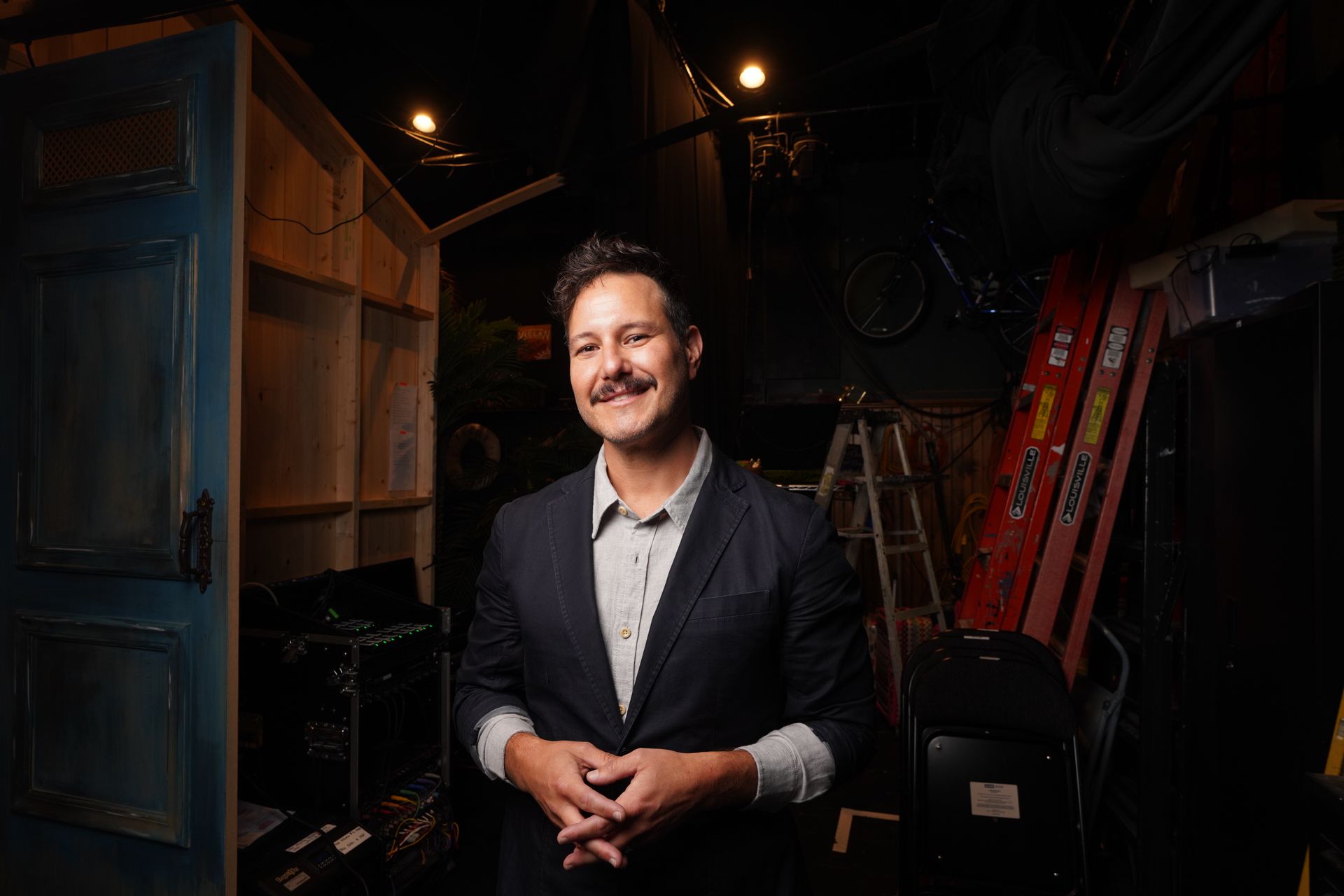
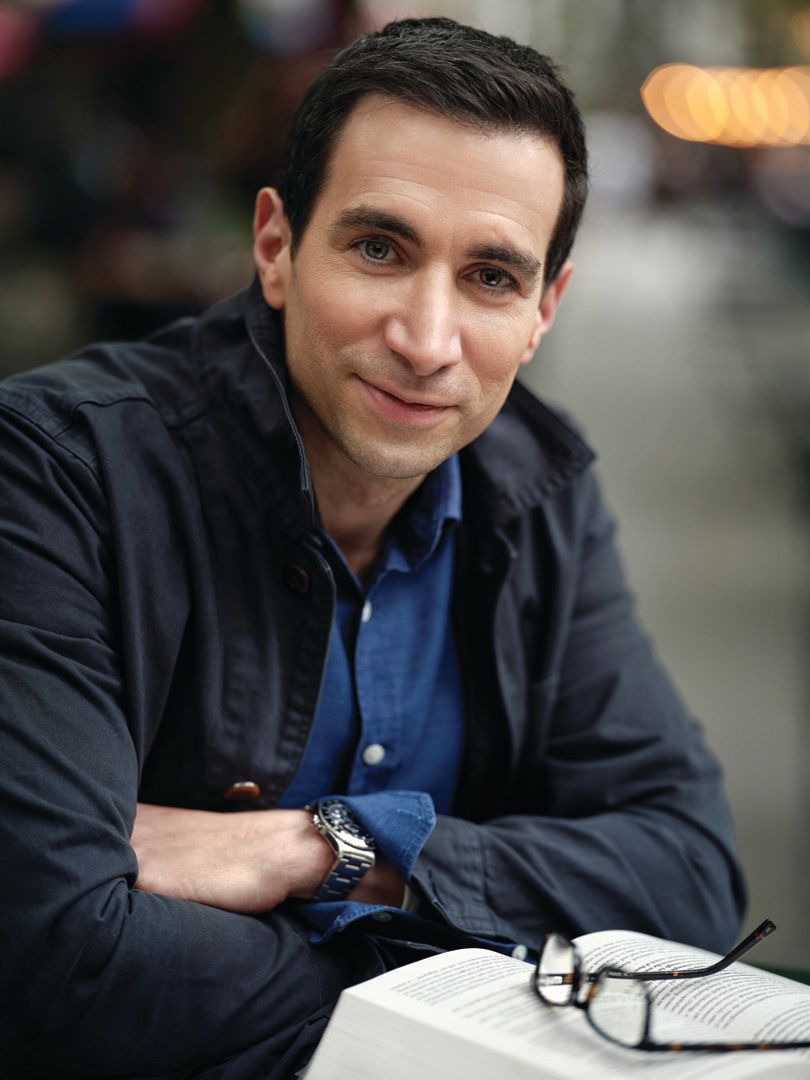
Sorkin, a regular visitor to Nantucket, is a financial columnist for The New York Times, a co-host of CNBC’s Squawk Box and the founder of DealBook, The New York Times’ financial news service and summit. He has also spoken at The Nantucket Project and has written several books, including the bestseller Too Big to Fail. N Magazine caught up withhim for the second installment in our newest feature, Financial NSights, to discuss Wall Street’s obsession with AI, the rampant investing in new technologies and the downstream effects for Americans.
Your book 1929 suggests that an economic crash is inevitable, but you stay away from predicting when it will crash. For investors, how do you apply your warning to a long-term investment strategy?
ANDREW SORKIN: I resisted the temptation to predict the next one, because anyone who tells you they know the timing is usually selling something. What the archives convinced me of is that excess always finds a way to punish itself, usually long after the people who warned about it have lost their credibility. So what do you do with that? You don’t sit in cash waiting for the apocalypse; the people who did that after 2009 are materially poorer for it. But you do keep a margin of safety. The most useful exercise any investor can do is ask themselves honestly: What will I actually do if my portfolio is down 40%? Write the answer down now, while you’re calm.
Betting against the American economy and the stock market has not paid off for pessimists; however, do you think this is the time to allocate resources that are either totally defensive or are located in other countries?
SORKIN: Betting against America has been one of the great losing trades of the past century, and I’m not inclined to reverse it lightly. The words “this time is different” are, as Sir John Templeton said, the four most expensive words in investing. What I would say is that concentration risk in U.S. mega-cap technology has quietly become one of the biggest portfolio decisions most Americans are making without realizing they’ve made it.
Looking at AI, could businesses become so efficient with AI that they lay off a significant percentage of their workers? If that’s the case, would those layoffs eliminate their target demographic for efficiently created goods because they no longer have the income necessary to buy them?
SORKIN: This is the Henry Ford question, and it’s a good one. Ford paid his workers enough to afford the Model T, not out of charity but out of cold self-interest. If a company automates away its own customer base, it’s won the battle and lost the war.
By 2030, if layoffs from new technologies are significant, what do you see as the social and economic impact?
SORKIN: The honest answer is we don’t know. The history of technological transitions is that they destroy jobs faster than they create them in the short run and create more than they destroy in the long run, but the transition period can be brutal, politically and socially. What worries me more than the economics of it is the question of meaning. Work isn’t only income; it’s identity.
The unemployment rate among recent college graduates is higher than the general population, and a recent study found 40% of college graduates are accepting jobs that don’t require a degree. Is this part of a trend of people working in trades versus education-based jobs?
SORKIN: The four-year-degree-as-default model was built for a mid-20th-century economy that no longer exists. What kind of work is durable? Work that’s physical, relational or judgment-intensive in ways a model can’t replicate. That holds its value. I’d rather my kids learn to fix something—both with their hands and their minds—than only memorize something.
What is going to happen to four-year colleges with the proliferation of AI?
SORKIN: Elite institutions will be fine. They sell networks, credentials and signaling. The schools I’d worry about are the ones in the middle—the $65,000-a-year private colleges without either the brand or the endowment.
With so many AI platforms, how many search engines can survive?
SORKIN: Search as we knew it is already over, and I’m not sure most people have fully internalized that. When you ask a model a question, you don’t get 10 blue links; you get an answer. That’s a fundamentally different business.
Do you feel that places like Nantucket that cater to the very highest end of the economic ladder are essentially immune from the economic forces felt in other real estate markets?
SORKIN: No market is truly immune. 2008 taught us that the highest end can correct sharply too. What’s true about a place like Nantucket is that the buyer pool is global, largely cash, and driven by lifestyle and trophy dynamics that don’t track interest rates in the normal way. The potential demise of Iran as a powerful terrorist troublemaker may cause a sea change in the Middle East and beyond.
How might this go well for the region and the world, and conversely, not so well?
SORKIN: I’m skeptical of scenarios where everything goes right and equally skeptical of scenarios where everything goes wrong. The truth is almost always lumpier and more surprising than either.
Do you see the spike in oil prices lasting beyond the eventual resolution of the Iran conflict?
SORKIN: Probably elevated, and for reasons beyond the immediate conflict. The Strait of Hormuz disruption has forced a repricing of risk into every barrel, and that kind of repricing doesn’t reverse neatly.
Are you surprised at how resilient the stock market has been in light of Iran and other geopolitical issues we are now facing?
SORKIN: There’s a real disconnect between the geopolitical picture and the equity multiple, and historically those disconnects close—usually not in the direction anyone wants.
If the mid-term elections shift the political balance heavily in favor of Democrats, how do you see that impacting the economy, particularly those at the high end of the income ladder?
SORKIN: I’d be cautious about taking a strong view on an election that is still a ways away.
Are our best days ahead of us or are they in therear-view mirror?
SORKIN: I’m an optimist, though friends would call me a constructive worrier. The American capacity for reinvention is the most underestimated force in the world economy. That said, the country I spent years inside for 1929 had something we have less of today: a set of shared civic institutions capable of absorbing shock. The technology is ahead of us; the politics and social cohesion are the open question.
Latest Stories