The Last Drummer Standing
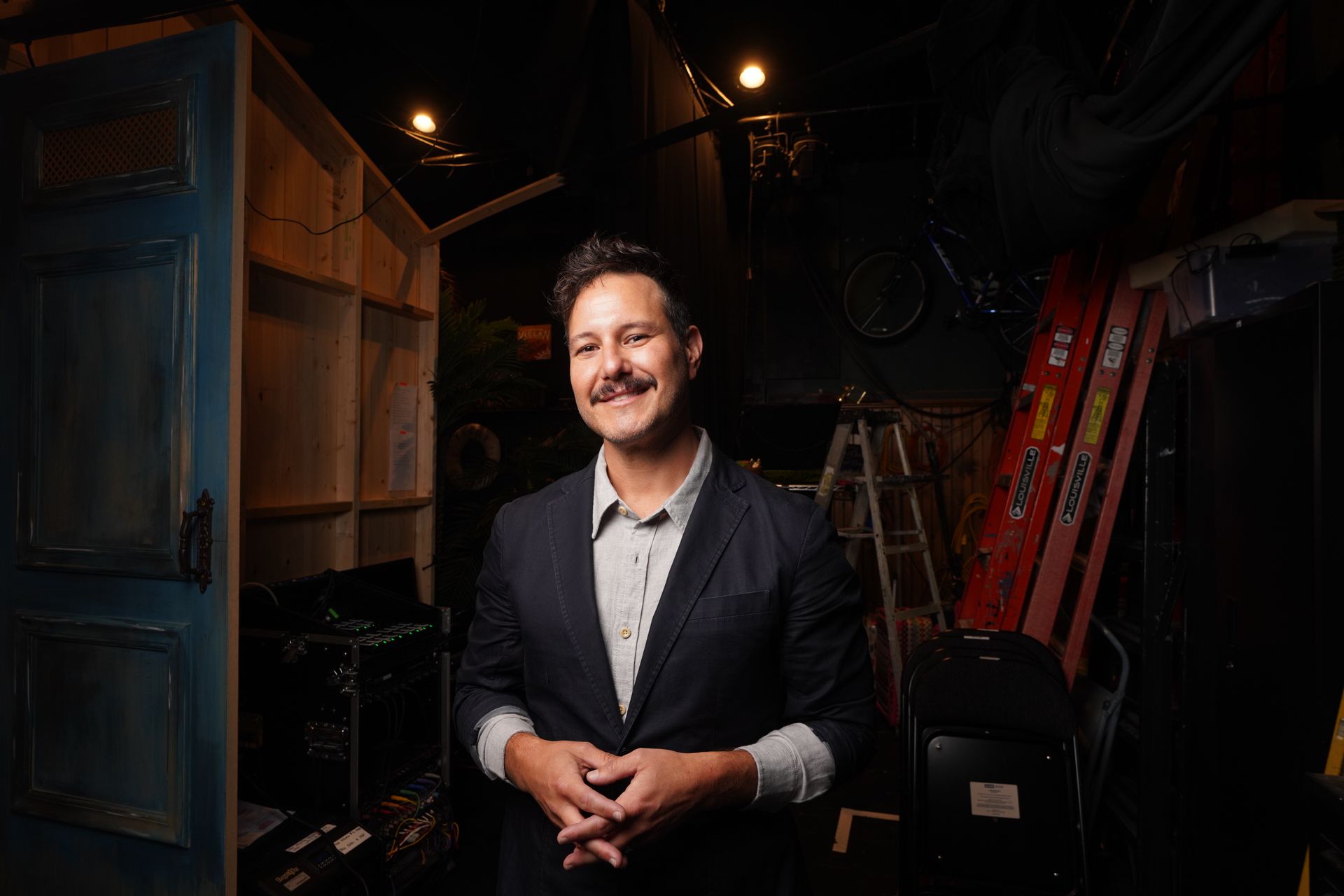
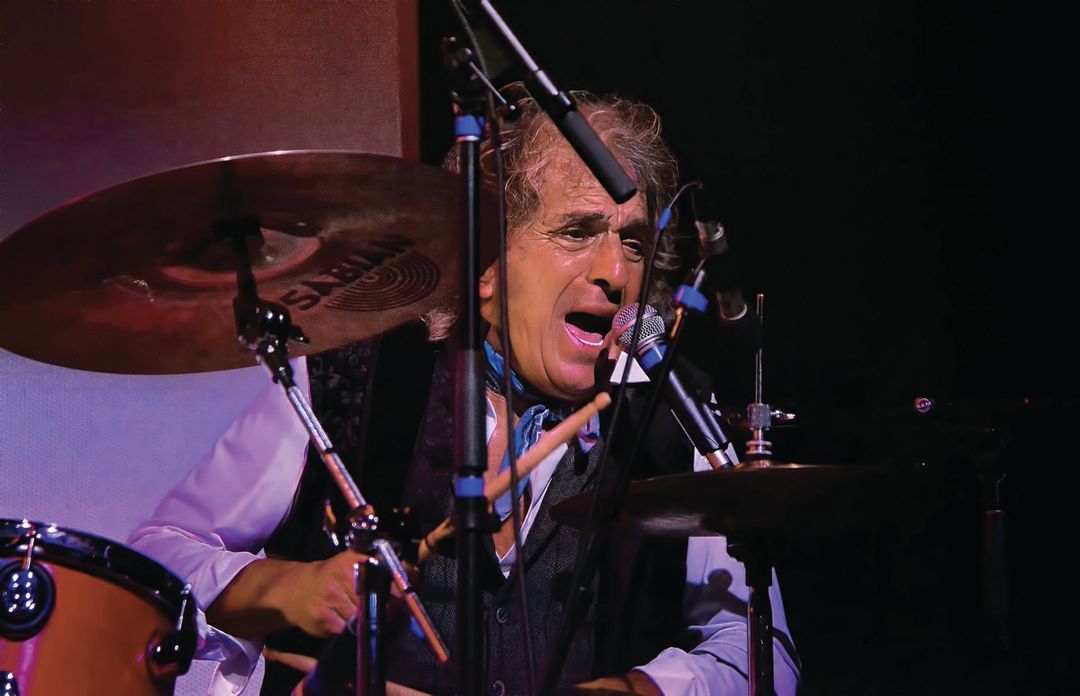
Drummer Corky Laing plays the Dreamland.
Written by John Stanton
Photography by Janette Vohs
It is both island lore and rock history that on one hot summer night in 1969, at the legendary Nantucket night club Thirty Acres, a power outage meant that the band on stage had only one instrument that could still make music because it was not electrified, the drums. The 21-year-old drummer, who had wandered down from Montreal with a band made up of his childhood pals and found a gig as the summertime house band, kept up the beat. Seeing one of his friends dancing with a beautiful woman to that solo beat on that hot summer evening, the young drummer could not stop himself from adding some impromptu lyrics.
The drummer was Corky Laing. The rock radio staple “Mississippi Queen” had just been born. “We were playing someplace in Massachusetts and we got a call from our agent,” he said. “He said, ‘There’s a place called Nantucket. You have to get there by boat. There is a club that’s firing the band that is there now, and they have to replace them by next week.’”
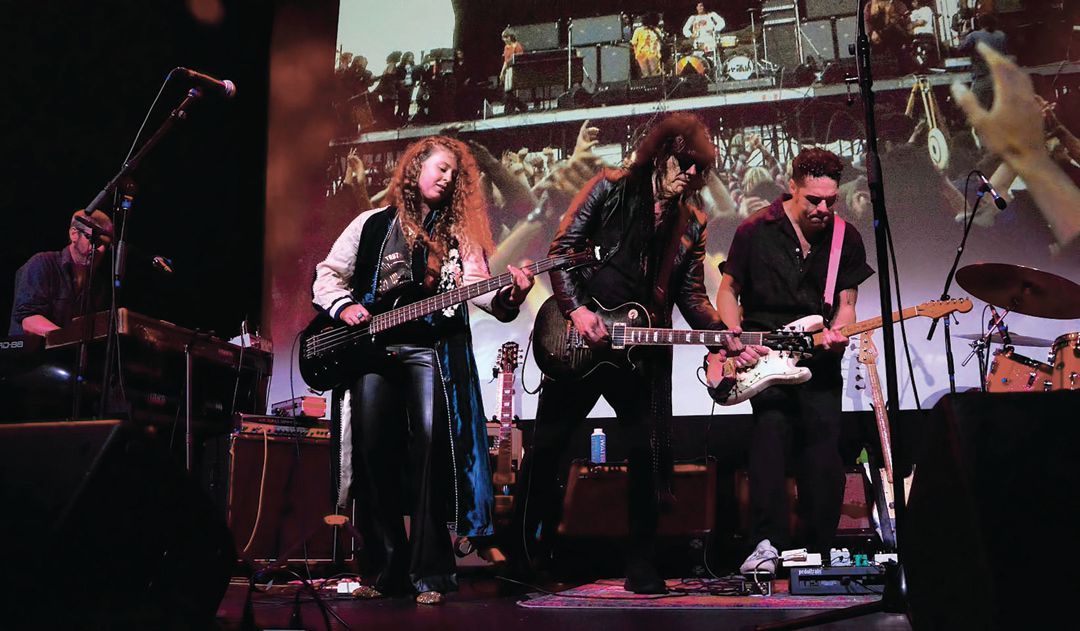
The gig lasted two summers. Thirty Acres fired him when he started playing original songs. The friend, artist Roy Bailey, and the woman who inspired Laing’s lyrics, Carole Webster, have both passed. Thirty Acres is now just the name on a street sign. But Laing, now77, still gets behind the drums every day. Laing returned to Nantucket for a show at the Dreamland Theater that he called “Corky Laing’s rock Review,” which he performed with several musicians from the Finnish bands he now plays in, as well as Nantucket musicians Floyd Kellogg, Jake Vohs and Jeff Ross.
“This is the third time I’ve been invited back to play Nantucket,” Laing said. “I grew up with my audience here. I don’t have Jersey like Springsteen does, but to me the soundtrack for my life is in Nantucket. And it’s the same for a lot of the people who come to my shows. It’s areal wonderful feeling."
If you turned on your car radio in the early 1970s, or spent time thumbing through albums in a record store, you knew Mountain. A hard blues power trio, the band released their first album, Mountain Climbing!, in March 1970, and it spent 39 weeks on the Billboard 200 charts, rising as high as number 17. The album earned a gold record that year.
Laing made it when he was young. He had his moment of fame when he received his first gold record at only 22. He has been a really good drummer for a really long time now. Laing went from Energy, the band playing on that long ago summer night, to Mountain, joining Leslie West on guitar and Felix Pappalardi on bass.
“It’s a great journey—brilliant,” Laing said. “I had my rough times; fell off the wagon, was miserable. But as soon as I sit behind the drum set everything is okay again,” he said. “I’m just trying to get better. One of these days I’m going to be a really good drummer.”
The 1970s and early 1980swere powered by heavy drummers like The Who’s Keith Moon, Led Zeppelin’s John Bonham, and Ginger Baker, who played with a number of bands including Cream and Blind Faith. All three have died. Laing’s old bandmates West and Pappalardi are also gone. In many ways, Laing is the last great rock drummer from those days. Mountain never became a legendary rock band like Led Zeppelin or The Who. But music ran through his veins, and he kept playing and found a way to make it work, playing with Mountain as well as joining with West and bassist Jack Bruce to form another band that helped define the hard blues vibe of the early 1970s—West, Bruce and Laing. It was a sort of musical coincidence that Bruce also played bass and sang for the legendary band Cream, alongside Eric Clapton on guitar and Ginger Baker on drums. Cream’s first record, Disraeli Gears, was produced by Pappalardi.
“It was all just coincidental. I knew Leslie and Felix, and when Energy got fired from Nantucket, we went to New York with our tails between our legs,” Laing said. “Felix had this loft where bands practiced and he let us sleep there. It was the summer of ’69. To me it is luck. I was lucky to be able to play with the very top-of-the-line rockers,” he said. “All I ever did was try to keep up.” As soon as Mountain began making money Laing bought a house on the island and made it into his refuge from life on the road. He lived on the island until the early 1990s. “Nantucket always had a lotto do with my inspiration,” he said. “It still does. Now I travel around playing Nantucket Sleighride and explaining to people in Lithuania what it means.”
"I never thought I’d be close to 80 years old playing songs I wrote and played when I was 21 years old,” he added. “It’s great when you think of it. The sad part is, I seem to be the only one around from those days. I feel like the last man standing, but the music, the repertoire, is still there. It is what it is.”
Laing could make the drums rock as hard as any of them, playing so hard he often broke his sticks and simply tossed them into the audience and picked up anew pair to keep the beat going. Sixty years later he is still making his way through life by banging on those drums. “Performing hasn’t changed. When I’m on the stage in Nantucket, I am 18 years old again. The people in Scandinavia give me the same thrill. It’s not even really me; it’s the songs. Plenty of people in Finland, in those audiences, don’t even speak English, but they love the music.”
These days, Laing tours Europe with a band called Corky Laing’s Mountain. “They play about a dozen Mountain and West, Bruce and Laing songs,” Laing said. “They’re in Italy and I’m going over next month to tour Italy with them. Then maybe Germany and Austria while we are there. We just drive around in a van, like an old-school tour.”
Is it tough for him to be on the road at his age, well past the days of sex, drugs and rock ‘n’ roll? “Was it Dizzy Gillespie who once said he didn’t get paid to play, he got paid to travel? I’ll play for free if I don’t have to go anywhere,” he said. Corky Laing seems to be having a great time doing what he has always done. “If you love playing music, you will keep playing music. You might not pay for the house or the car with it, but I’ve learned that really isn’t the point,” he said. “I’m lucky because I always made a living.
Latest Stories