A Chat with Rashida Jones and Will McCormack
Actor Rashida Jones and writer Will McCormack are being honored this year at the Nantucket Film Festival
Interview by Brian Bushard
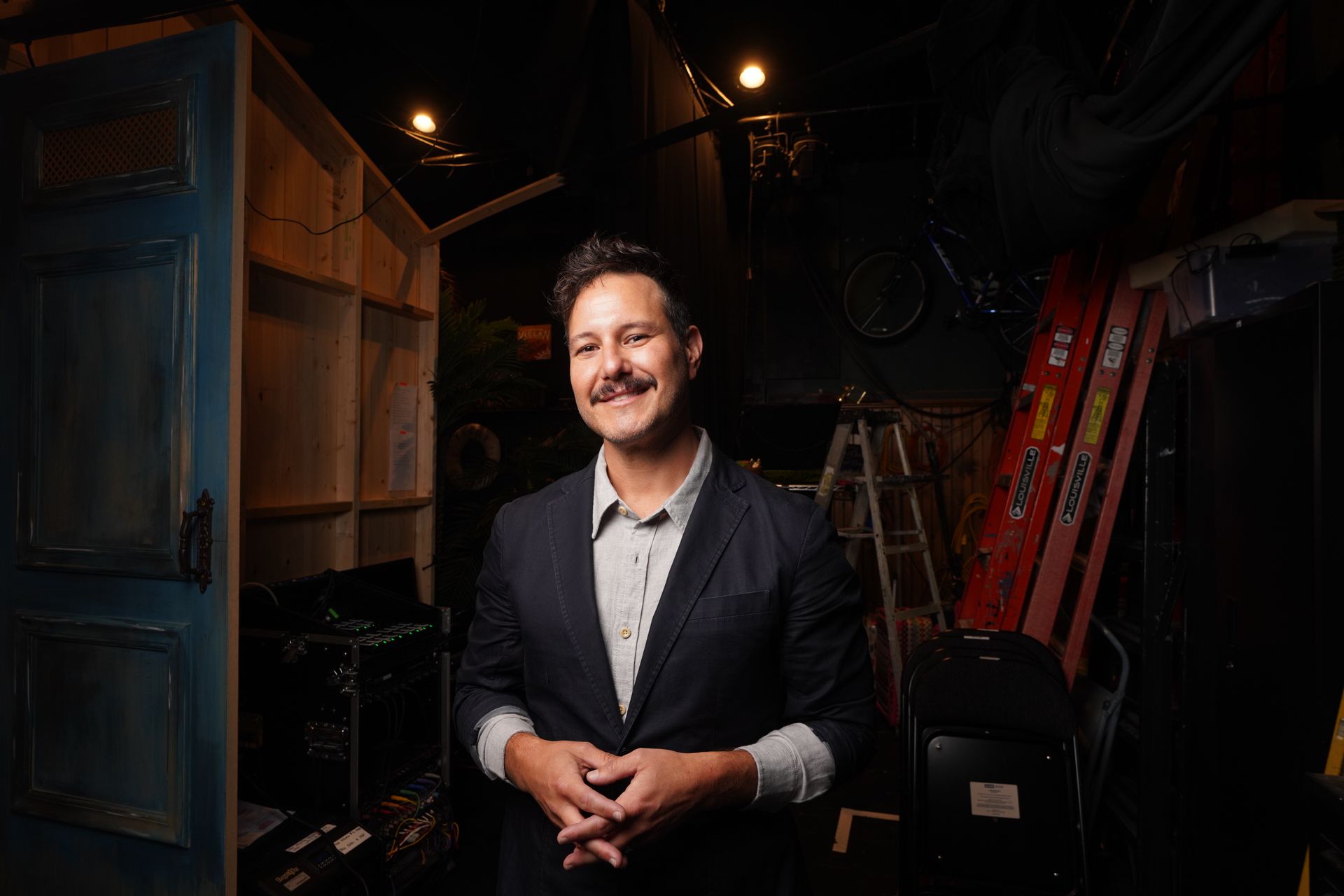
Photography courtesy of the Nantucket Film Festival
Rashida Jones and Will McCormack have worked together as actors and writers since 1999. Jones is a Golden Globe nominated actress and filmmaker who played Ann Perkins in NBC’s long running sitcom Parks and Recreation and Karen Filippelli in The Office, while McCormack has written several short films and features, and won an Oscar for his short film, If Anything Happens, I Love You, about parents’ grief after the loss of their daughter in a school shooting. Jones and McCormack are currently working on a new animated feature, Tom & Jerry, and will be honored this June at the Nantucket Film Festival.
What drew you two together as writing partners?
JONES: Maybe it’s that we’re not a couple.
MCCORMACK: My whole life, I wanted to be a writer, and never had the courage to write, and felt like maybe I’m not. Then I met Rashida and we started to work together, and I really credit her with giving me confidence. When you’re with someone and you’re aligned creatively, you’re able to express ideas and not feel insecure about them and feel like they have a landing spot. For someone to accept them creatively and see you, I think it makes a big difference and I think it was just fun too.
JONES: I think that we're compatible in our contrast and in our similarities, and in the way we work, in the way we think and what we want to put out into the world. It’s like no other partnership I’ve ever had in my life. We’ll take breaks, we go do other things, and then we always come back to each other, because we have this destined creative life together.
The Nantucket Film Festival has been a producers’ and writers’ festival from the beginning. When you’re selecting new projects, what kind of stories are you looking to tell?
JONES: We’ve gone through so much together. We’ve gone through being single and young and ambitious. We’ve both gone through marriage, kids, parents dying, and we have a tendency to find what’s funny and fundamentally human about those experiences. I think we look for that in projects. If there are things that we’re adapting or producing, or shepherding and we’re not doing things we’re doing ourselves, I think we’re looking for that little kind of nucleus where you’re like, ‘That's it.’ That’s an emotion that is encapsulated in such a beautiful way that we’ve never seen it done exactly that way on screen, either in television or film.
MCCORMACK: I think we’re both into heartache, heartbreak and longing. Whether it’s Celeste and Jesse Forever, a short documentary swim lesson, or The Invite, I think that there’s so much longing, heartbreak and heartache just in being alive. I think that we’re always looking for the surprise and the humor within that. Stories have met us at certain times in our lives that have been crucial and revelatory, and I think that if you’re open to it, the story will meet you, and you just have to open your arms. Hopefully that continues to happen, but I feel like projects have come into our lives when we felt attuned to meet them, and that’s an exciting process. As a storyteller, you just have to keep your eyes and ears and heart open, and listen.
What is the story behind If Anything Happens, I Love You?
MCCORMACK: Rashida and I had worked at Pixar, and we love animation. It’s a great medium to tell stories. I’ve always been interested in how animated stories can impact us. I was becoming a father at the time, and it was just incomprehensible tome that you could send your kids to school and they could not come home. I couldn’t do the math on that. I had heard about that forever, but becoming a father at that time, it hit me in a whole new way. I wanted to write about something that was impossible to write about, because I think when that happens, interesting stories can emerge.
It’s been reported that Parks and Recreation was on the brink of cancellation nearly every season. How did it survive and become such a fan favorite?
JONES: To me, Parks and Recreation is the greatest job of my life, because it didn’t feel like a job. It gave me a life and a whole group of friends, and we’re all still really good friends. I can attribute that to the fact that we weren’t this big swinging success. We were fighting for our lives, and we were all holding on to each other and really valuing every single moment we got to be together. The thing that we were making—we weren’t sure how long we’d be able to make it. Not to be overly didactic, but it is a testament to a lot of people who come up to me and say, it’s the first show that they’ve binge watched with their kids, their teenage kids.
I'm concerned that television isn’t setup for shows like this to be made in this way anymore. We were given many, many shots. We were considered a failure, and still, somebody liked us enough. Somebody thought the show was good enough to keep going, not because we were a commercial success, not because we hit it right out of the gate...It was because somebody believed in us and thought we were great. I really hope that somebody in Hollywood continues to be brave enough to make decisions based on quality and not just on profit growth models and algorithms, because if not, we’re never going to get shows like that anymore.
Has streaming changed the way you write or produce new shows?
JONES: Of course. We have to be aware of the nature of our business and the evolution or devolution of our business. For us, our metrics are the way we like to work and what we like to work on. We’re old enough—that’s how we work. We hope that what we make can connect with an audience, and maybe it’s a smash hit, and maybe 10 people really love it. But I think the goal now is to just be able to continue to make things. It feels like this idea of having a monoculture where you can capture everybody with the thing that you make. There’s a lot of luck involved in that. And in a way, for us, I think it’s more important that people connect deeply with something and keep thinking about it way after they’ve seen it, more than actually just being like a big old hit that people eat and binge very quickly and then move on.
MCCORMACK: Ultimately, like Rashida said, if it’s exciting to us, we hope that it’s going to be exciting to an audience, and that’s usually how we roll.
At the same time, you’re working on a Tom & Jerry feature? How did that come about?
MCCORMACK: I can’t say too much about it, but I will say that it will surprise people. It’s the greatest buddy duo of all time, Tom and Jerry. I think the movies that were inspirations for us for the screenplay were Planes, Trains and Automobiles, Toy Story and The Odd Couple. They’re up to their hijinks and shenanigans of course, but I think people will be surprised because there’s also heartache and longing embedded.
Is it hard to find heartache in a story that’s originally so goofy and lighthearted?
JONES: No, I think Will and I can find pain in everything. That’s where we first bonded. Life is filled with pain, and then you have humor to deal with the pain, and then there’s more pain, there’s more humor, there’s more pain, there’s more humor. There are no better characters to illustrate that than two completely different species that are stuck with each other. What’s a more relatable story right now in the world?
Latest Stories