Disaster at Sea
Written by Brian Bushard and Bruce A. Percelay
Photography by Kit Noble and courtesy of Jock Gifford
The Giffords reflect on the sinking of the Andrea Doria
"Man the lifeboats, women and children first.” It is the last line you want to hear when you are on a cruise ship 45 miles from shore. So began the story of the Gifford family’s last day of the European trip their parents designed to expose their children to the world. After traveling around Germany, France and Italy in their Volkswagen bus during the summer of 1956, the family was making the final leg of their journey from Naples, Italy, to New York City on what was billed as the newest, safest and most luxurious ocean liner to sail the high seas.
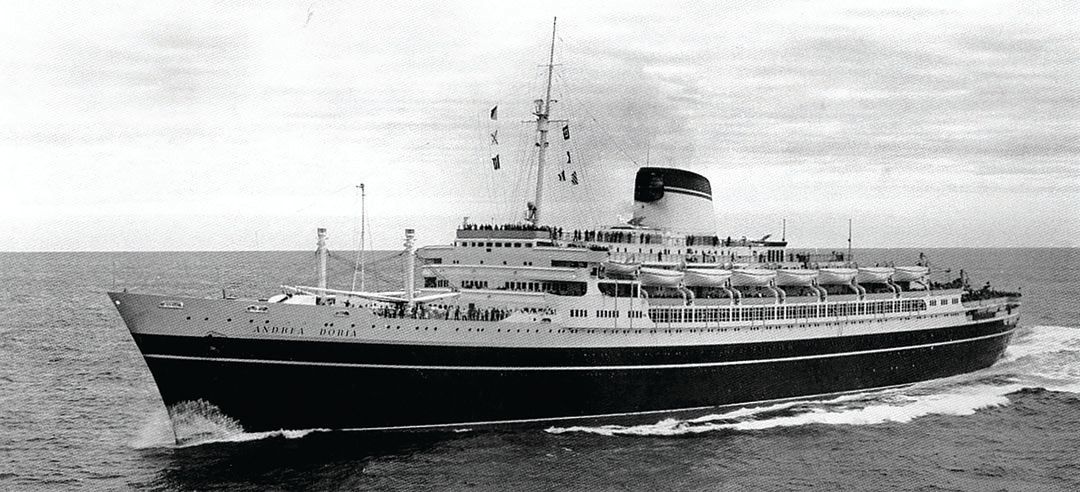
The Andrea Doria was the pride of Italy, built with the latest radar and 11 watertight compartments beneath its decks designed to make it unsinkable. The ship redefined luxury travel, with an art collection that rivaled many museums. The glitz and glamour surrounding the Andrea Doria attracted celebrities like Cary Grant, Orson Welles and Joan Crawford, as well as affluent travelers from around the world. Touted as a self-propelled city and the world’s most lavish cruise experience, the Andrea Doria set the high-water mark for bespoke luxury travel and ironically presented itself much in the same way as the ill-fated Titanic 44 years prior.
The Gifford family could not have been more excited to cap off their Europe trip with an experience that saw young Chad Gifford and his brothers, Jock and Dun, along with their sister, Bambi, wearing black-tie attire at dinner, sleeping in luxury state rooms and living in a world that few people would ever see. The rooms were replete with nods to Italian Renaissance icons, with hallways painted with murals and lined with sculptures. Spending the trip in first class, the Giffords enjoyed the luxuries of swimming pools, reading and gaming rooms, gymnasiums, salons and a ballroom. The ship’s owners spared no expense making it one of the most lavish vessels the world has ever seen. The ship cost $40 million to build and another $30 million to decorate.
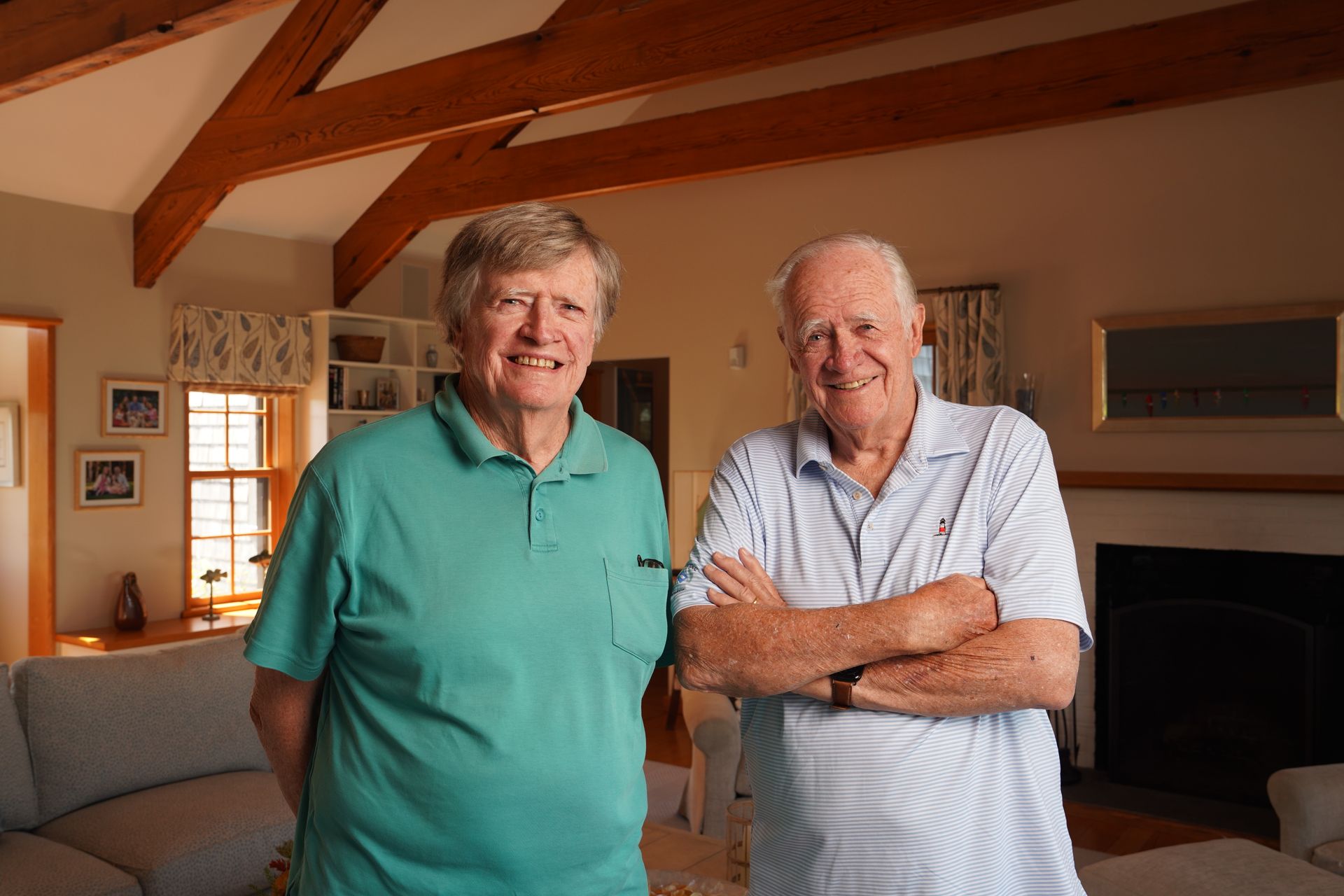
Chad and Jock, who have been summer residents on Nantucket since childhood, had vivid memories of the spectacular ship, on which they spent nine days with their siblings and parents, Clarence “Bud” and Priscilla “Wink” Gifford. As they approached the shipping lanes south of Nantucket, the end of the trip was in sight, and passengers were instructed by an intercom to pack their luggage in the hallways for the crew to collect.
At 11 o’clock on July 25, a calm but deeply foggy night, Jock and Chad were finishing packing their suitcases when all of a sudden, they heard it. A thunderous crunch that echoed through the ship. “I was sitting on the bunk when it happened, and I ended up on the floor,” Jock recalled. Smoke and an acrid electrical smell of short-circuiting wires permeated through the hallways. The elegant light fixtures that dotted the ship immediately went dark, and the blinding emergency lights came on. “We went from a luxury liner to a disaster area in a heartbeat,” Jock said.
The crunch they heard was the steel bow of the Stockholm—designed to penetrate North Sea ice—ramming directly into the starboard side of the Andrea Doria, cutting a 40-foot gash in the “unsinkable” ship and causing it to list. But in the thick fog, the boys still had no idea what had happened. Looking out the window, they couldn’t even see the water below them. Fearing a boiler had exploded, Chad and Jock raced to their parents’ room, where Bambi was staying. “We knew something was wrong, and it really was wrong,” Jock said.
As quickly as possible, Bud, Wink and the kids scrambled up two flights of stairs to the promenade deck—a difficult task with the ship starting to list drastically to its side. In a rush to higher ground, Wink dropped her Nantucket lightship basket down a flight of stairs but instructed her children not to retrieve it. Bambi did anyway, hightailing down a staircase that had become topsy-turvy.
On the promenade deck, Italian passengers exclaimed, “Mamma Mia!” while the American passengers cried, “Oh my God!” “I didn’t key off [our] mom’s anxiety until somebody came over and gave us last rites,” Chad said. “This was an hour and a half after the collision and in Italian, and I didn’t know what last rites were. I saw Mom get really shaken then. She said, ‘OK, children, when we’re going to have to jump into the sea, we’re going to have to be in a circle and hold hands.’ That got to me.”
But they never had to jump. Roughly two hours later, they received instruction for women and children to head to the lifeboats. Bud stayed behind with the other men, while the children stumbled to the gunwale to careen down the ship on a wobbly ladder to the lifeboats. With a heavy list to its starboard side, half of the lifeboats had been rendered inoperable. Bud later said in a 1988 interview with NBC that at that moment, he “didn’t want to hold up” his family, saying to them, “Good luck, and God be with you” as his wife and children were whisked away.
“We pushed off from the Andrea Doria, and it was as pea soupy as you’ve ever seen on Nantucket,” Chad said. Coming from the listed ship, he saw “the search lights from the Andrea Doria tipping over a little bit on you, but it was also a glassy sea.” The lifeboat navigated away from the ship and the fog. Had the seas been choppy, the lifeboats would have been swamped. “We came out of the fog bank to the crystal clear night, and look over there, and there was this big ship and broadway lights, Ile de France.”
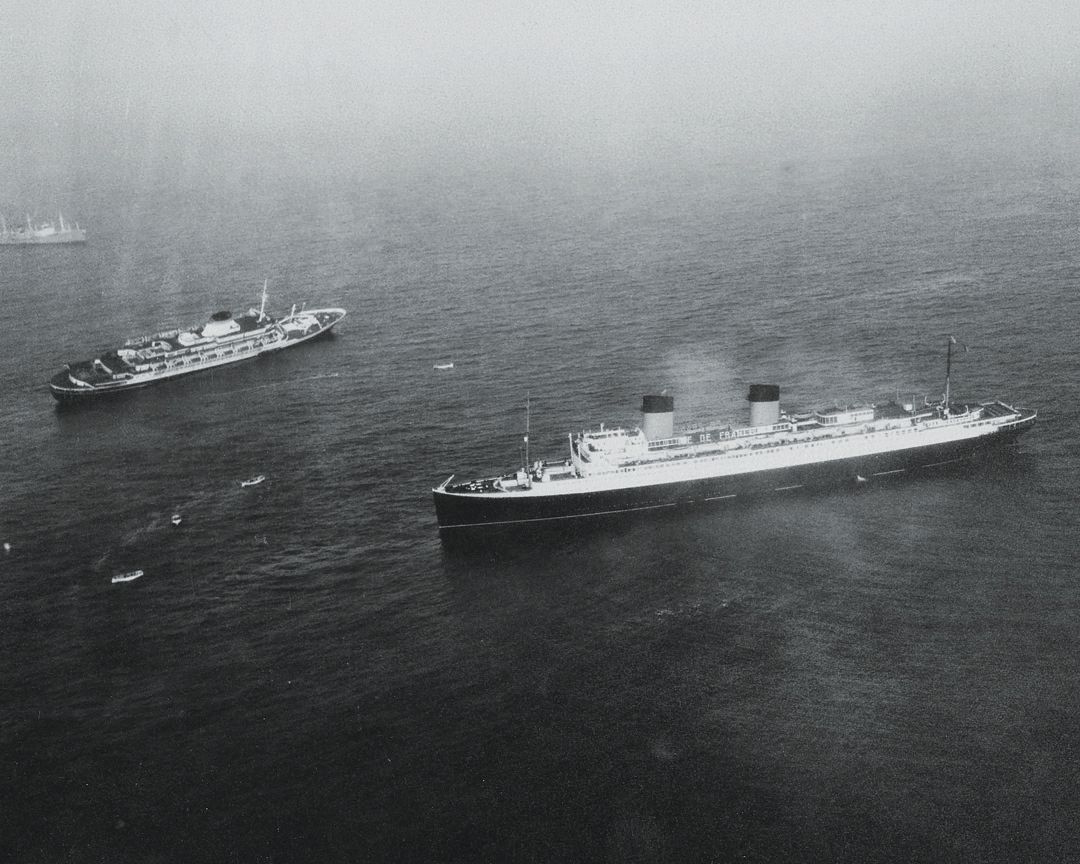
As their lifeboat approached the Ile de France, a large door opened allowing them to board the ship. With Wink and the children safe on board the French ship, the only question left was when they would reunite with their dad. “I said to mom, ‘I’m going to go find dad,’” Chad remembered. “I didn’t know what I was doing, but I knew the elevator we got out of. I went over there, damn sure I was going to get him, and out walked dad.” It was 3 a.m. Nobody slept that night.
Before leaving for New York on the Ile de France later that morning, Chad and Jock took a final look at the Andrea Doria. “The miracle of the ship is that it floated for 12 hours,” Jock said. “The Titanic went down in half an hour. If this boat had gone down within an hour, we wouldn’t be here right now.”
Some 51 passengers and crew members died in the collision—46 of the 1,706 people on board the Andrea Doria and five from the Stockholm. Years after the sinking, Chad couldn’t stop thinking what would have happened if the Stockholm had rammed into his family’s rooms. What if the Andrea Doria left Naples just three seconds earlier or later—would his family have made it out alive? Neither captain of the two ships was ever assigned fault for the collision.
The Andrea Doria’s captain, Piero Calamai, was an experienced navigator who had captained the ocean liner dozens of times over. He was familiar with the busy shipping lanes south of Nantucket. Before the collision, he had been tracking the 524-foot Stockholm on the radar from nearly 20 miles away. The Stockholm had been traveling due east toward the Andrea Doria on its journey back to Sweden. Calamai, believing the two ships would pass parallel to each other on their starboard sides, later testified that he steered to the left to avoid a collision in near-zero visibility. The Stockholm turned to its right, believing the ships would pass on portside. By the time the captains were close enough to make out the other ship through the fog, it was too late.
Two years later, the insurance companies for the two shipping lines agreed to an out-of-court settlement. The owners of the Stockholm received $1 million for repairs to the bow of the ship, and the owners of the Andrea Doria were awarded $16 million for the loss of the vessel. According to Chad: “It was an incredible cacophony of errors. When you have radar, [the fault] falls on both sides. It’s inexcusable with the radar they had.”
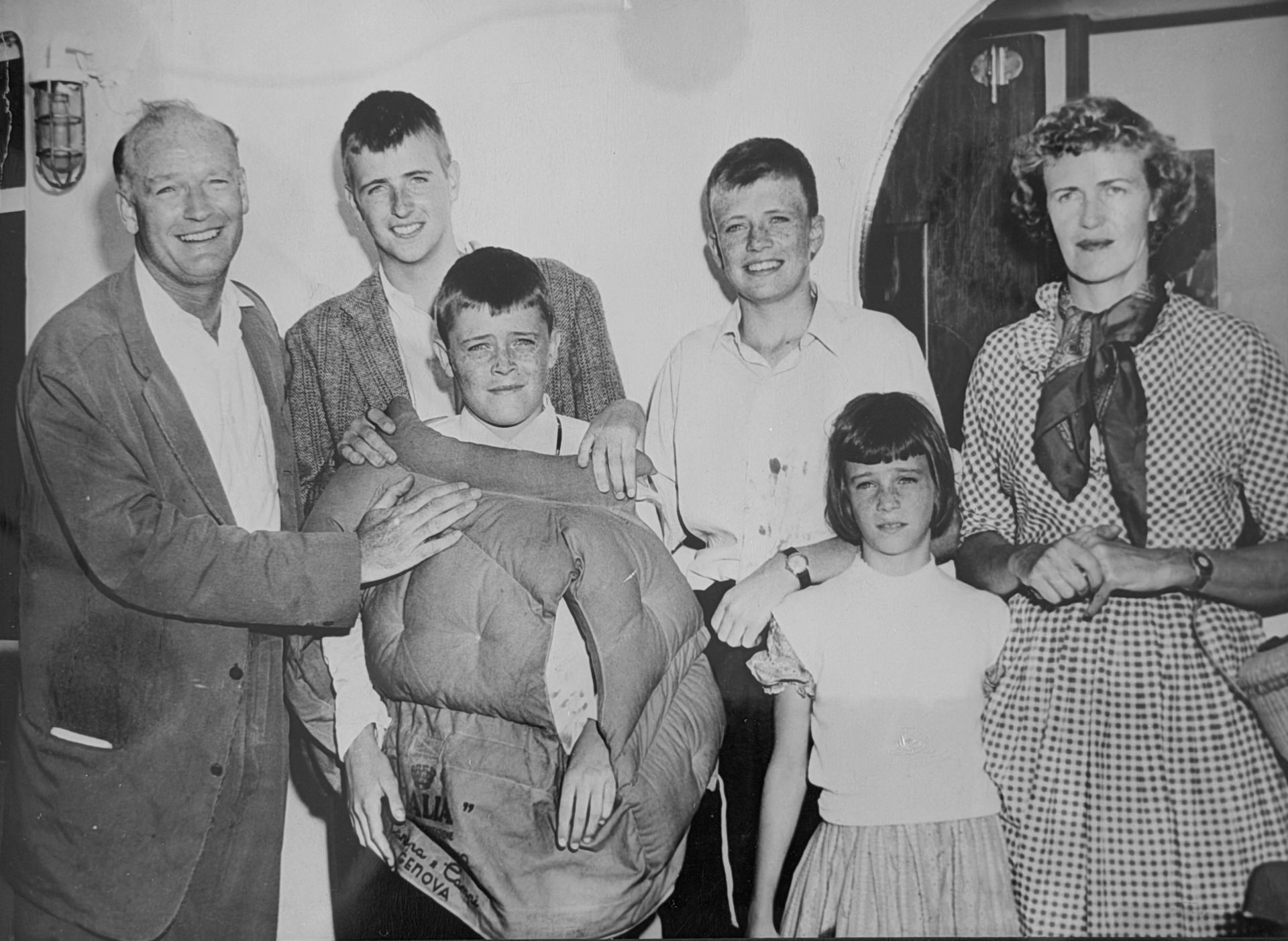
The Andrea Doria sank on its side into 250 feet of water, bringing with it nearly all of the Giffords’ luggage, as well as the family Volkswagen, which still sits on the seafloor 46 miles offshore. During a clean-up effort weeks later, the U.S. Coast Guard happened upon a floating carry-on bag with a Delft pitcher in the water above the wreck. Its luggage tag read “Clarence Gifford.” Besides the lightship basket and a life preserver, it is the only souvenir from their trip.
In the aftermath, the Andrea Doria has come to be regarded as the Mount Everest of Northeast shipwreck diving, an incredibly dangerous dive even for experienced professionals. More than a dozen divers have died while exploring the wreck. Artifacts have been retrieved, with some on display at the Shipwreck and Lifesaving Museum, ranging from plates and cups to a life preserver.
For some, the disaster might discourage them from taking to the ocean ever again. That was not the case for the Giffords. Dun went on to join the Navy and was a competitive sailor, navigating the Constellation in its successful title defense in the America’s Cup. For Chad and Jock, they boarded another ocean liner two years later and kept sailing as if nothing had happened. “It didn’t lay a glove on us,” Jock said. “When you’re 15, the word immortal is what comes to my mind. I didn’t see myself dying anywhere.”
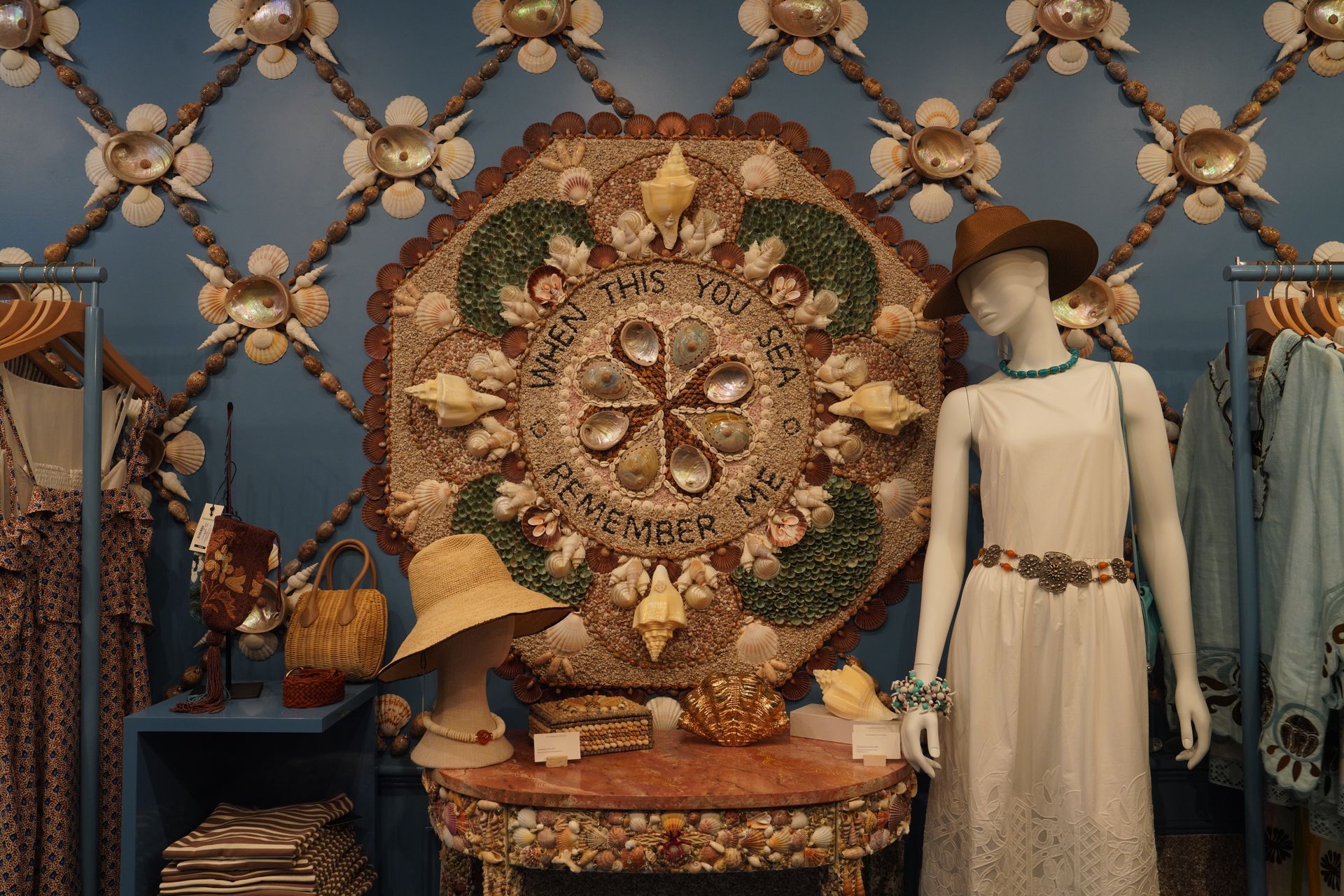
Bambi Gifford Mleczko passed away earlier this year after a life split between Connecticut and Nantucket, where she owned and operated the Together clothing store. Dun Gifford died in 2010, after working in the nonprofit space serving as an aide to the Kennedy family. Over the years, the entire Gifford family would commemorate the anniversary of the sinking on July 25. Sometimes, they would meet at Straight Wharf Restaurant, which Jock opened in 1976. Other years, the family held a dinner at Bambi’s house, where she kept a six-foot barrel the Coast Guard had attached to the Andrea Doria to track it before it sank. That barrel had been retrieved and brought to Bambi’s house.
These days, however, Chad and Jock don’t think back to the ship very often. “I would say that I have no fear of the ocean or being on a boat, but I do have a respect for the ocean,” Chad said. “Any time the kids want to use a boat, I make sure they know where the rocks are and where the tide is. But if there’s something that I’ve got that has affected me and is part of me is a respect for something called fate,” Chad added. “There is a destiny. Having said that, that doesn’t mean you don’t have to take precautions or you don’t have to be thankful. But there was somebody who was shining pretty darn strongly on the Gifford family that night.”
Latest Stories