The Last of the Scrimshanders
The Scrimshaw Artists of Nantucket
Written by Jack Bradner
Photography by Kit Noble
Down a bluestone path that winds through her Miacomet garden, scrimshaw artist Lee Ann Papale etches and inks her signature floral designs on all sorts of ivory. Scattered across Papale’s studio are walrus-tooth belt buckles, elephant-ivory tops for lightship baskets and the fist-sized teeth of sperm whales. But despite steady demand and no plans to retire, Papale says scrimshaw is a dying art—even on Nantucket.
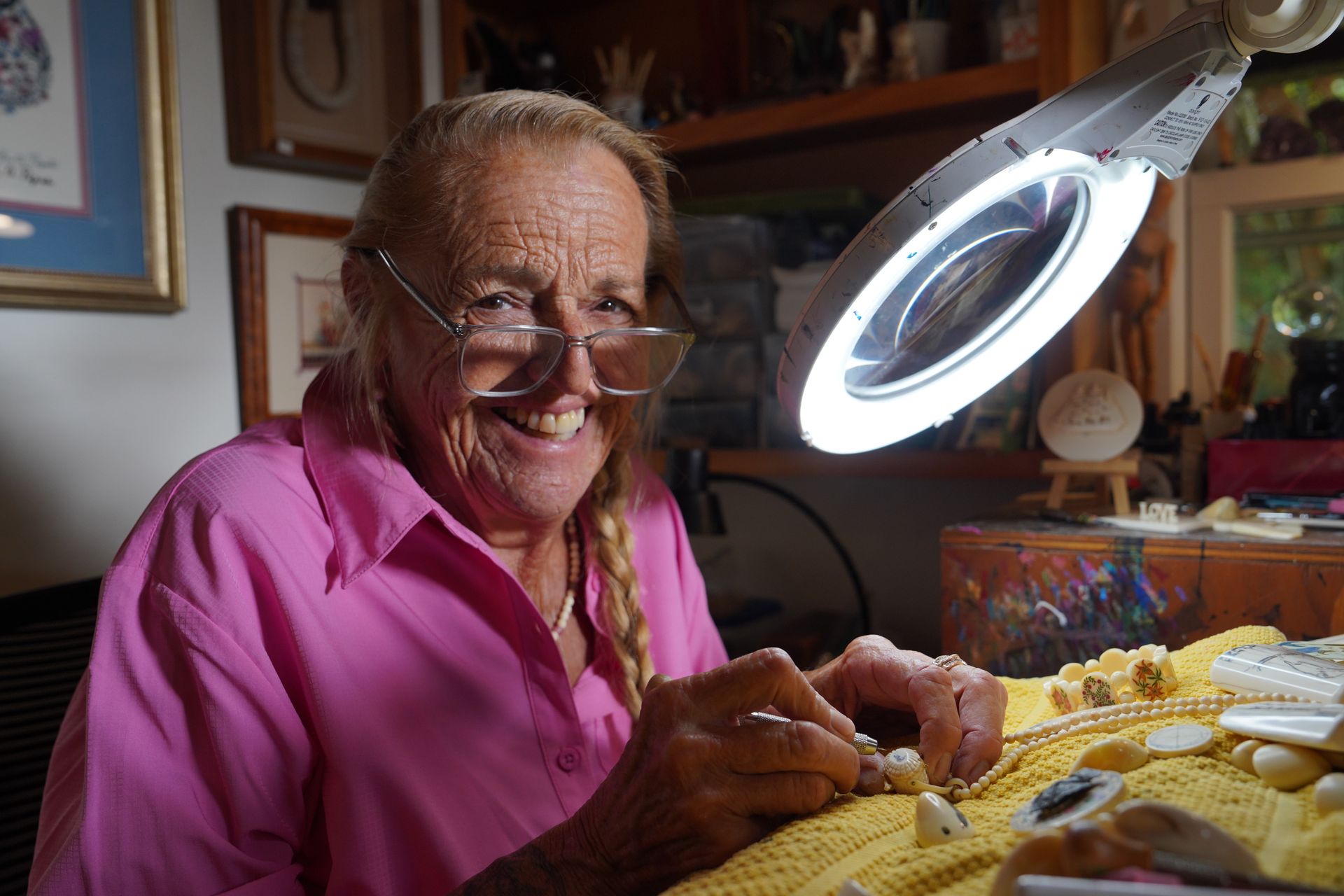
"There’s nobody coming behind me, none of my family, and I’m from a family who [did] this,” said Papale, a Nantucket native and master scrimshaw artist who’s been honing her craft for more than 50 years on the island. “It’s my lineage. I come from whaling people, like all the way back. I am living history, and I’m the last Nantucket native to do what I do, and I don’t take that lightly.”
Papale learned the craft as an apprentice in her aunt Nancy Chase’s studio. A renowned ivory sculptor whose work was commissioned by former First Lady Nancy Reagan, Chase first taught her niece to turn ivory on a lathe. When a purse with fading scrimshaw needed repair, Chase encouraged Papale to try her hand at re-etching. Since then, Papale’s scenes of island flora and fauna have distinguished her work from the naval battles and whaling hunts conventionally associated with scrimshaw.
But as much as practicing scrimshaw preserves her own family’s history, Papale’s work is also about preserving the histories of her clients. Decades after she took up scrimshaw, some of her original clients’ grandchildren now return for commissions. “A lot of my own work is coming back through new owners, so people come in with a fabulous bag with somebody else’s name in it,” Papale said. “It used to be [that we would] sand off the name and put our name there, but now they’re keeping the other person’s name as provenance.”
Since the beginning, scrimshaw has always been about recording and remembering. From whaling in far-flung seas to learning from Indigenous artistic traditions in the Pacific, whalers found themselves in a wider world of unfamiliarity, according to Michael Harrison, chief curator at the Nantucket Historical Association. Inspired by their surroundings, whalers would use scrimshaw to record their lives at sea for those back home. They also carved domestic scenes to remember the people and places they missed while they were on yearslong voyages.
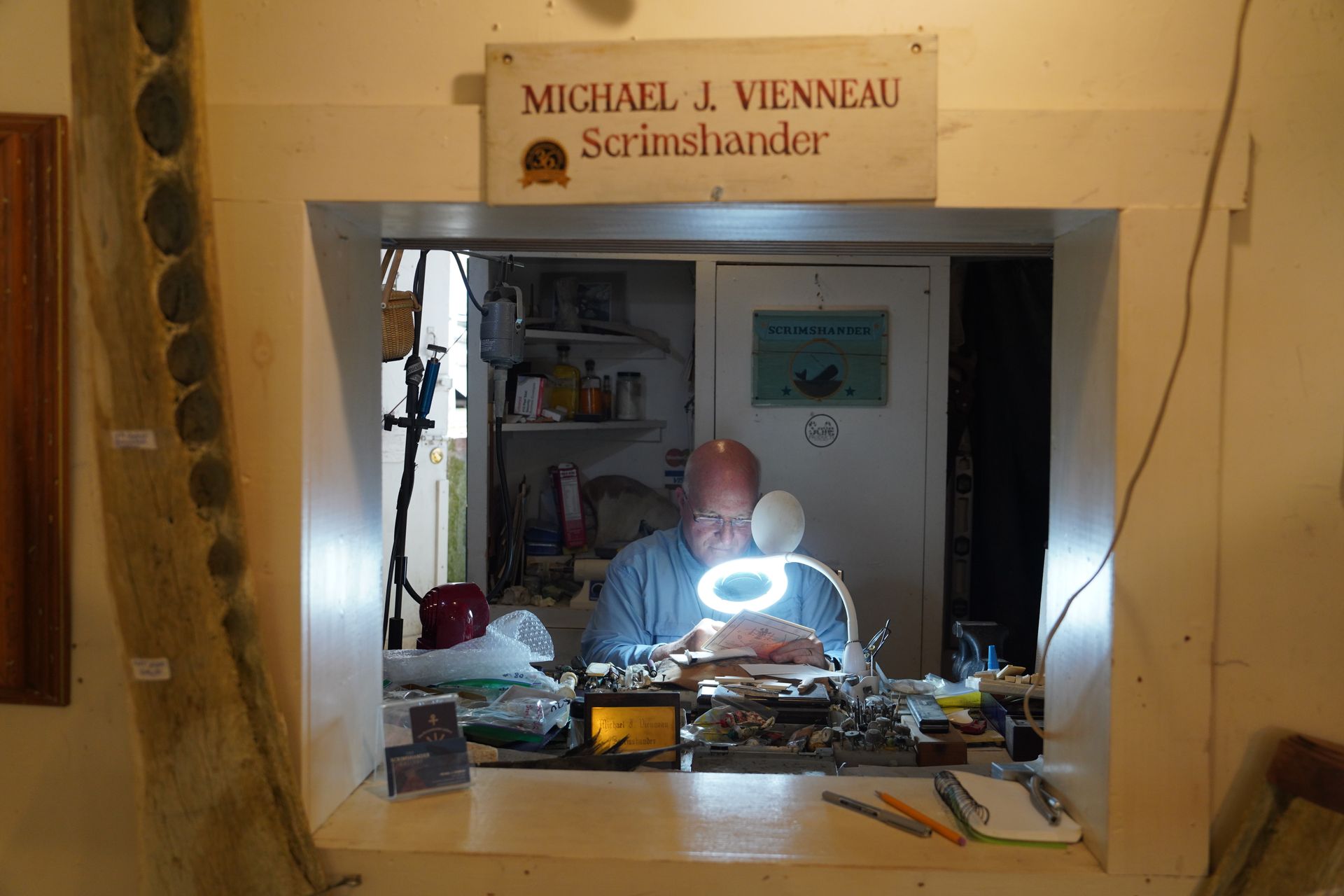
Even though the American whaling industry collapsed in the 1920s, artists inspired by the craft kept scrimshaw alive on land. According to scrimshander Michael Vienneau, everyone knew about scrimshaw in the ’60s and ’70s. “Back in 1968, when I started, you could buy whales’ teeth out of the barrels up and down the street,” said Vienneau, his dog chewing on an unpolished sperm whale tooth in the background. “That’s what was available. That was the cheap ivory, because it was a by-product.”
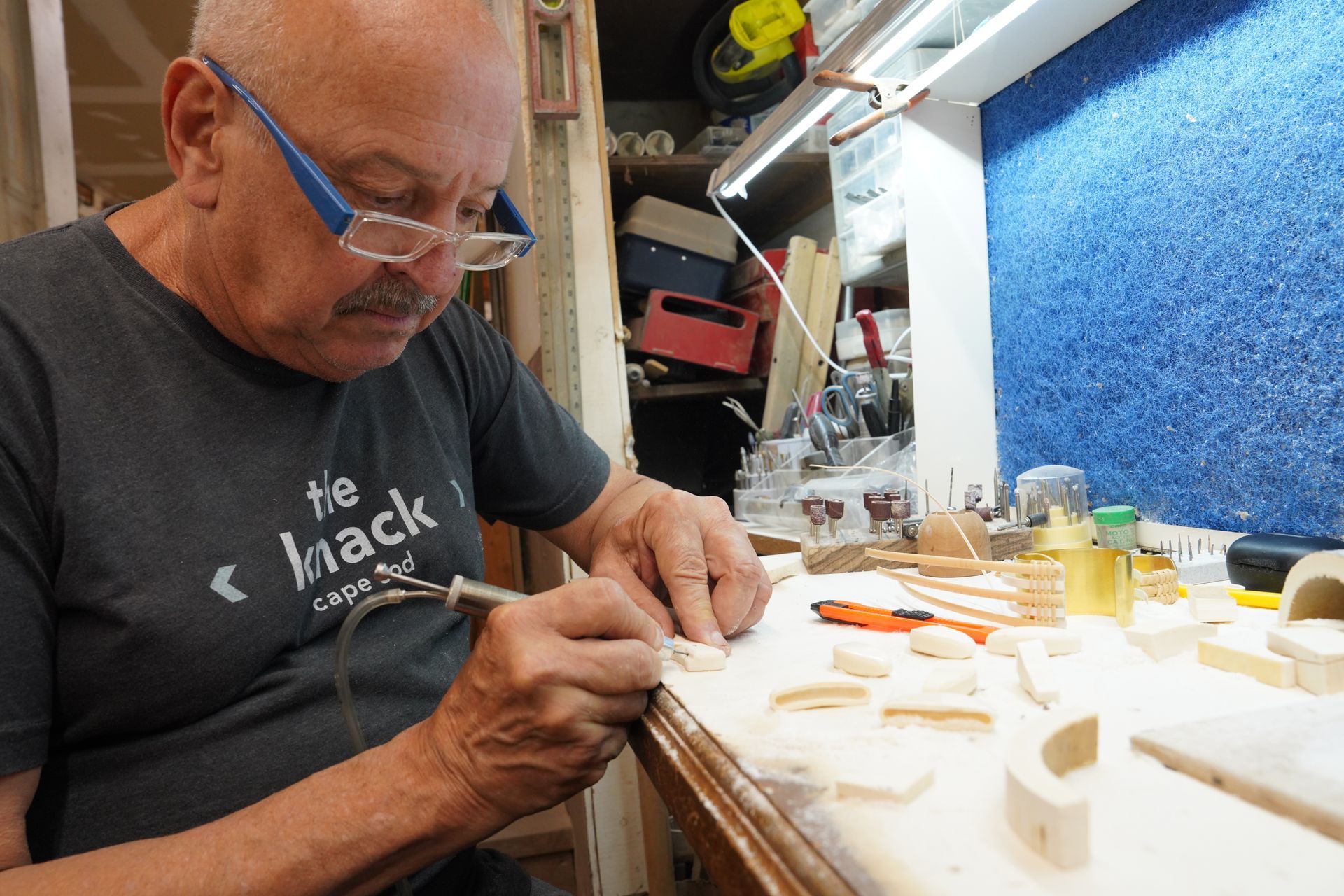
Famously, former President John F. Kennedy displayed an engraved whale tooth on his desk in the Oval Office. “It was the JFK influence,” Vienneau said. Despite scrimshaw’s deep historical ties, the folk art seems to be veering toward extinction. After the Marine Mammal Protection Act of 1972, which banned commercial whaling and the importation of whale products, scrimshanders were restricted to only whale teeth already available before the ban was enacted. On Nantucket, scrimshaw artists like Papale and Tim Parsons, who’s also a master basketmaker, work only by commission. After nearly 60 years, Vienneau plans to close The Scrimshander Gallery in 2027, though he’ll still make scrimshaw at home.
But this year, something changed: Papale welcomed an apprentice into her studio. After getting engaged last summer, Katie Michels came to Nantucket to plan her wedding and get a lightship basket to honor her lifelong connection to the island. When Michels went to Papale for the basket’s scrimshaw, they bonded right away. “It was kismet,” Michels said, taking a break from polishing a whale tooth. “Lee’s told me now she’s been wanting an apprentice for years and years, and I have been wanting to get back into arts for years and years.”
Inheriting the craft from Papale—who learned it from her aunt Nancy, whose ancestors were whaling captains—Michels is continuing a tradition that goes back generations. “When I was nine, I remember doing a scrimshaw class in the basement of the Whaling Museum on PVC,” said Michels. “To now be 30 and get to actually do scrimshaw and learn from the last native scrimshantress is so cool.”
“Say that again,”Papale chimed in from behind her desk.
“The last native scrimshantress,”Michels repeated.
Latest Stories