ELECTRIC AVENUE


July 31, 2022

Is this the ferry of the future?

story by Jason Graziadei and Eliza Bowman

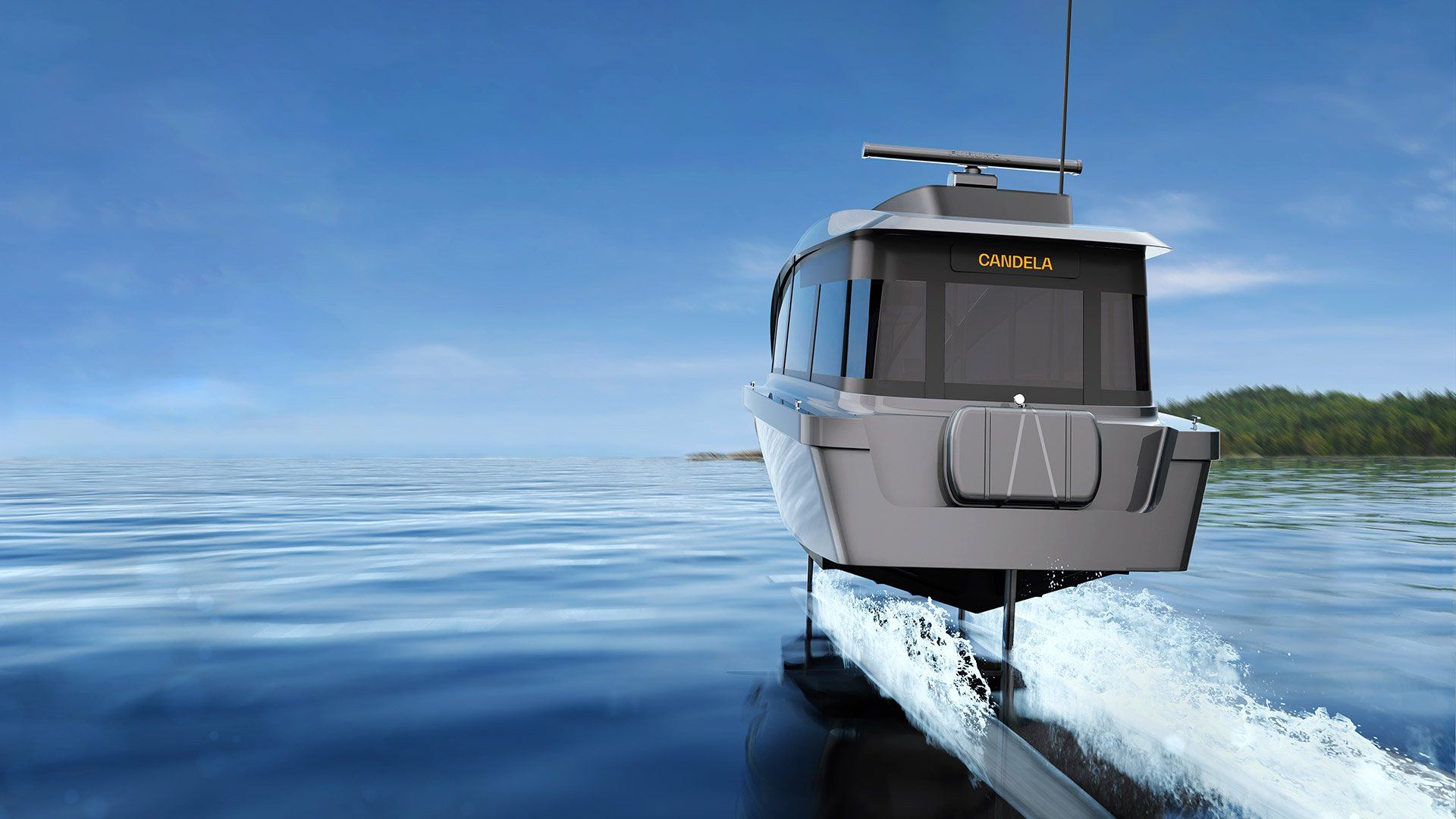
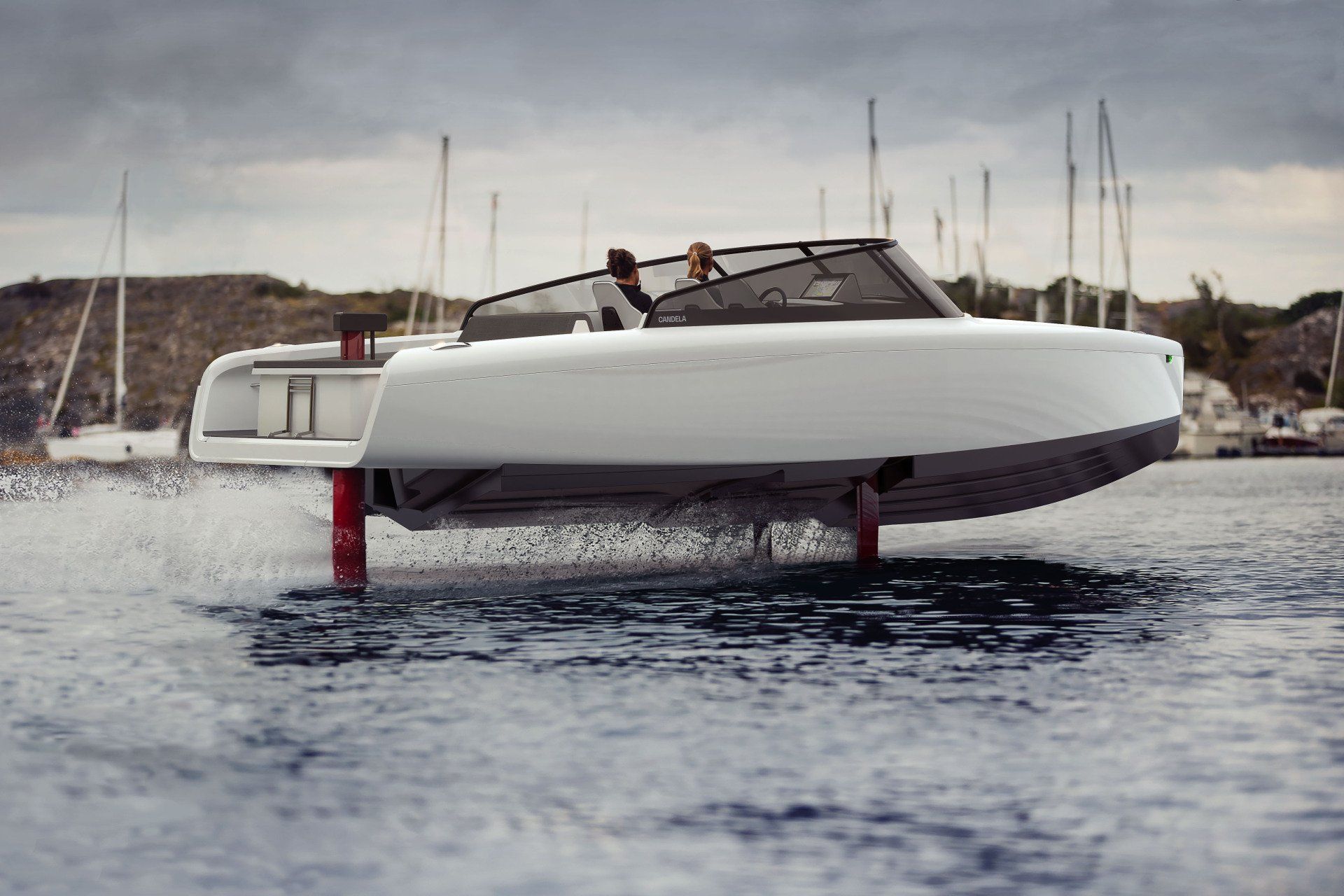
Earlier this summer, Sweden made a splash when it announced that electric ferries in Stockholm would soon be commuting passengers to and from the nearby island of Ekerö. Cruising at up to thirty-five miles per hour, the battery-powered Candela P-12 represents the new frontier of green energy gradually sweeping across maritime communities in Europe. Here in the United States, with fuel prices surging and with Cape Air recently introducing a fleet of electric aircraft, one might wonder when electric ferries will be docking on Nantucket.


The Steamship Authority is exploring the feasibility of operating electric ferries, but the possibility of implementing such technology on the Nantucket route—at least at this point—seems to be a distant dream. All-electric ferries would require significant capital investment both for new vessels and the infrastructure to support them, and would be far more feasible on the Steamship’s Martha’s Vineyard route than on the Nantucket route due to the greater distance involved.


Those are among the conclusions of the Hybrid Propulsion Study commissioned by the Steamship Authority and recently presented by its consultant, the Elliott Bay Design Group, a naval architecture and marine engineering firm. “We keep coming back to energy,” said John Waterhouse, the founder and chair of Elliott Bay Design Group, regarding the challenges of going all-electric on the Nantucket route. “The Vineyard route uses significantly less energy than Nantucket because it’s shorter. The drawbacks of Nantucket are, first of all, can you get rapid charging on both ends of the route? Our feeling is that’s not possible on the Nantucket route and at this current time.


The Steamship Authority’s fleet of ten ferries and freight boats currently runs on diesel fuel, and together they consume roughly three million gallons in an average year on the Nantucket and Martha’s Vineyard routes. As some coastal communities on the West Coast and elsewhere begin to adopt hybrid and electric propulsion systems for their ferries to reduce emissions, the Steamship Authority’s study was undertaken to explore a handful of options and provide cost estimates.
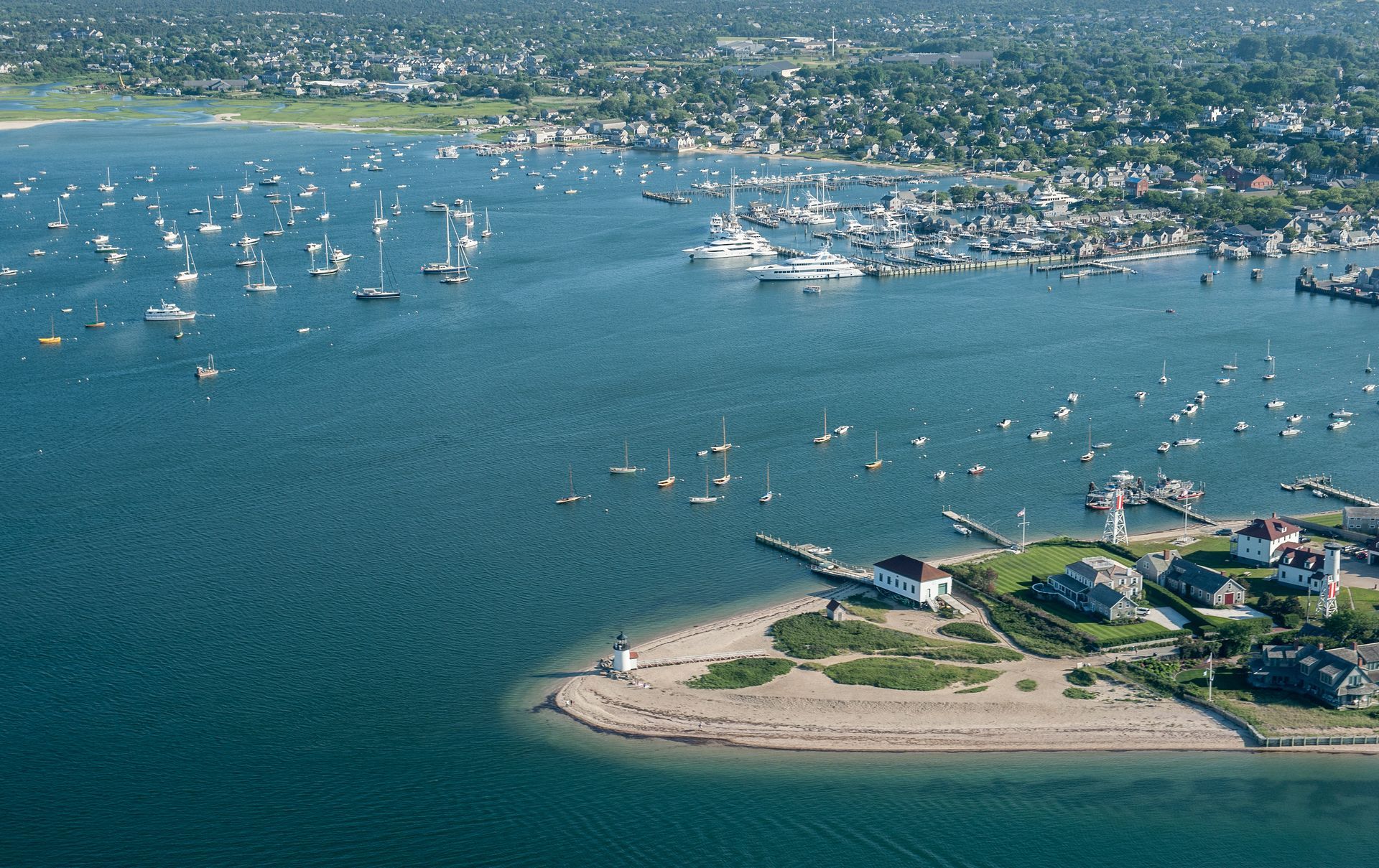
Those options included diesel hybrid systems and an all-electric option, but as the study noted, “the Hyannis to Nantucket route is not being considered for all-electric propulsion at this time.”


The Elliott Bay Design Group estimated that both the capital and operating costs of all-electric propulsion were the highest of the options it explored, including the baseline of a diesel mechanical system. The study looked at an equivalent of the Steamship Authority’s M/V Woods Hole ferry to examine the alternative propulsion configurations—a vessel that would be a 235-foot passenger ferry intended for service on both the Nantucket and Vineyard routes.
To go all-electric on the Vineyard route with a boat of that size would require at least $12.2 million in capital costs and $17.7 million in operating costs over a ten-year period. There was no corresponding cost estimate for Nantucket to go all-electric. Another factor Waterhouse touched on was the source of electricity that the ferries would need to draw from through their “shore power” charging stations. In Washington State, where ferry operators are in the process of implementing all-electric vessels (albeit on shorter routes), they are drawing electricity from hydroelectric sources. That wouldn’t be the case in Massachusetts. “If your electricity is coming from burning coal, and that electricity is powering your ferry, how green is that?” Waterhouse said.
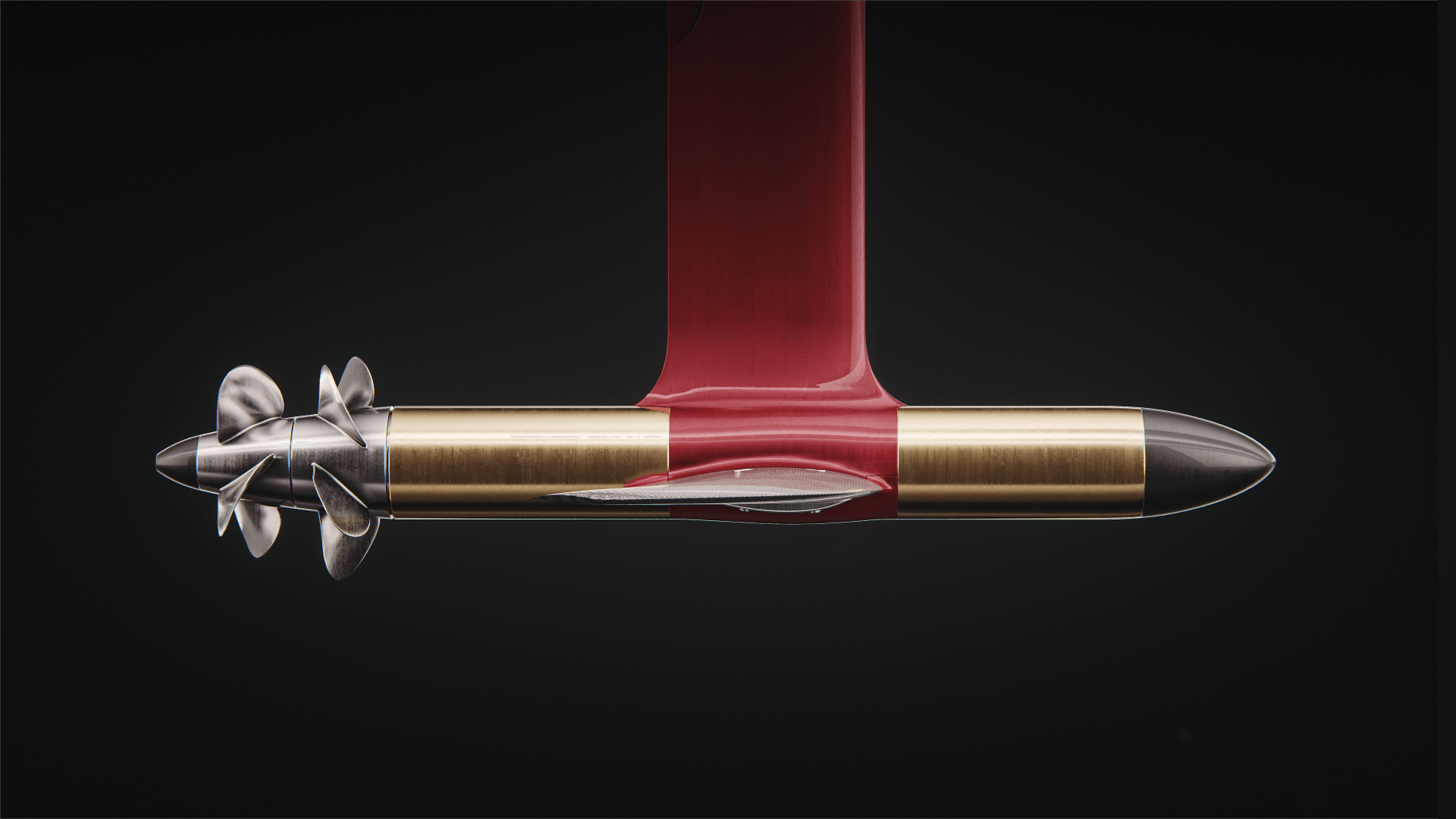
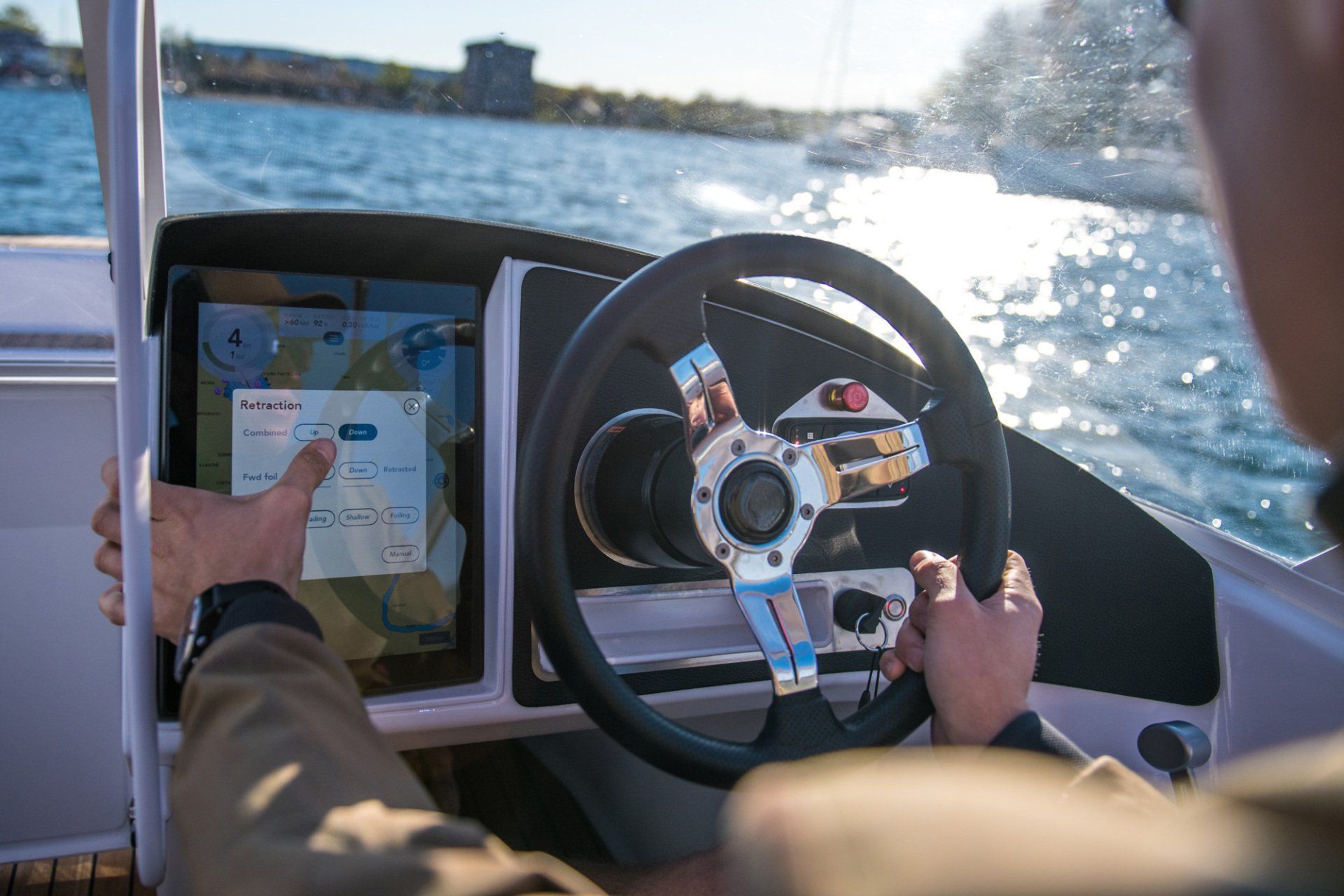
While electric ferries might not be landing on Nantucket in the near future, the harbor might soon be dotted with fleets of e-powered watercrafts. Electric boats are growing in popularity as technological innovations move at lightning speed alongside growing environmental consciousness. Personal chargeable watercrafts are being developed all around the world with the goal to revolutionize the boating industry. The Swedish marine technology company Candela—which is responsible for the P-12 ferry slated to serve Stockholm—introduced its new C-8 leisure boat this spring, a model that glides on top of the water’s surface with hydrofoils. These fins reduce energy output as well as virtually eliminating wake behind the boat.
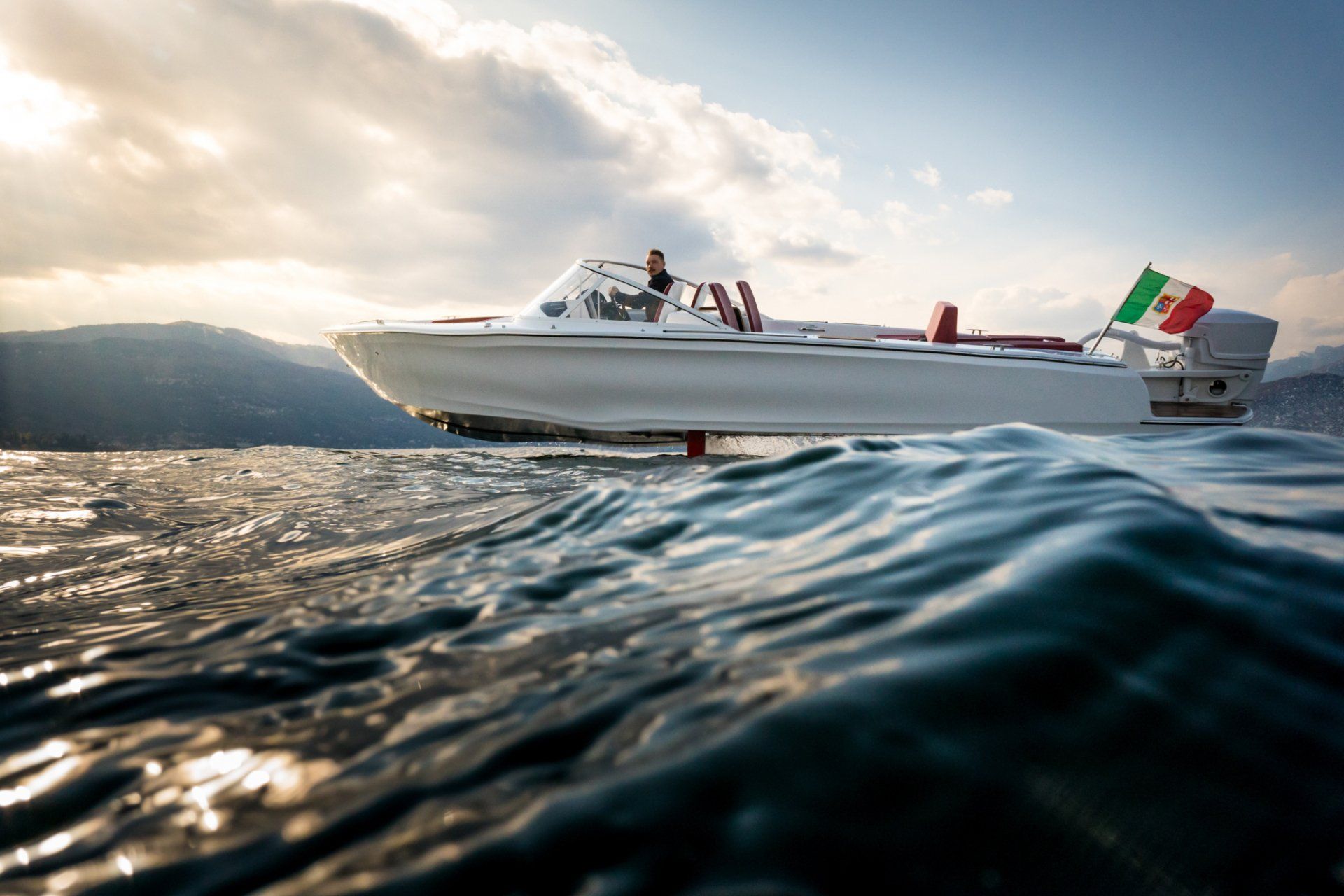
Hydrofoils are a key component of the rise in electric watercrafts because of how they provide speed and energy efficiency by keeping the body of the boat above water. In Maine, the Lyman-Morse shipyard is currently overseeing the building of the Navier 27, an electric dayboat that will also employ retractable hydrofoils. Set to launch this fall, the Navier 27 is designed to achieve sustainability while prioritizing high range on its charge as well as energy efficiency without compromising on speed. It will reach a top speed of thirty knots and have a seventy-mile range at twenty knots.


Pure Watercraft is another company embracing a turn toward electric boating with its various models of electric pontoon boats, bass boats and launches powered by a battery-charged electric motor. The goal of these innovations is to achieve greater energy efficiency by reducing the amount of fuel needed to power such vehicles, as well as minimizing disruption and noise in the surrounding water. Although personal electric watercrafts come with their obstacles, like access to charging stations and actual time to charge, they are an appealing alternative to conventional engines powered by diesel or gasoline by offering an avenue that is more efficient, sustainable and environmentally friendly.

Latest Stories

By brianbushard August 3, 2026
Written by Brian Bushard Photography by Kit Noble While they may not be household names in the true Hollywood sense, Nantucket’s summer population includes powerful producers, screenwriters and editors who are behind the scenes on the movies we all recognize. Indeed, Nantucket has an underground entertainment community that is in effect a hidden Hollywood.“I got involved in the Nantucket Film Festival before we bought a house on the island,” said Marc Resteghini, a producer with Amazon MGM Studios who executive produced the series Young Sherlock. “As I started to learn a little bit more about the festival itself, I started to realize there were a lot of people who either lived on the island or vacationed here from the entertainment industry.” Resteghini was named the new chair of the film festival this June. While Nantucket has a reputation for attracting politicians and Wall Street titans, lesser known is the fact that dozens of leaders in the entertainment industry have also found Nantucket as their summer refuge, just not the names you might know. “It’s like Sergeant Pepper Lonely Heart Club Band,” actor John Shea said. “We see each other but the last thing we want to do is talk about the film business. It’s more of a quiet acknowledgement of a fellow traveler thana fellowship.” “The Vineyard is where all the actors and the writers go, the creatives,” documentary film producer Annabelle Dunne added. Dunne summers on Nantucket. “I think a lot of people that work in Hollywood come here to be with their families, relax and enjoy Nantucket, not to network. But it is a small island, and sometimes when you take away the work component and you say we’re just getting together to get together, then things can happen.” 
By Jack Bradner August 3, 2026
Written by Jack Bradner Photography by Kit Noble At Cru, expect to spend $50 on a lobster roll from the lunch menu. At Bartlett’s, one pound of lobster salad goes for a whopping $74.99. On an island where dinner and cocktails for two will make a significant dent in your wallet, lunch prices have been creeping up. This year, N Magazine ’s Lobster Roll Index puts the average roll over $42. Cru’s $50 premium is still the highest. On the other hand, B-ACK Yard BBQ reduced its price from $46 to $38 this year. But across the board, prices have soared, going for $49 at Brant Point Grill, $48 at Galley Beach Restaurant, $47 at Tavern, $45 at The Lobster Trap, down to $35 at Walter’s and—for the brave—$7.99 at Stop & Shop. “I can remember getting $2.50, $3 a pound for lobsters when we were younger,” veteran lobsterman Dan Pronk said. “Now, on the mainland, it’s probably doubled in price.” Whether you associate lobster rolls with summers on Nantucket or Instagram travel blogs, the dish is central to the island’s cuisine and culture. Cru’s $50 premium is still the highest. On the other hand, B-ACK Yard BBQ took the untraditional step of reducing its price from $46 in 2025 to $38 this year. It’s unclear whether the lobster portions also shrank. But across the board, prices have soared, going for $49 at Brant Point Grill, $48 at Galley Beach Restaurant, $47 at Tavern, $45 at The Lobster Trap, down to $35 at Walter’s and—for the brave—$7.99 at Stop & Shop. Though lobster rolls are known as a luxury item, these current prices weren’t the norm 20 years ago. In the 1984 Nantucket Restaurant Guide , Sconset Cafe boasted a $6.50 lobster roll, which, when adjusted for inflation, comes to $21.38 today. And even across six restaurants, the average lobster roll in 1994 comes at a reasonable $24.76 in today’s economy. “In the old days, there were 1,500 guys in southern New England lobster fishing,” said Pronk, captain of the fishing vessel Black Earl and one of only two lobstermen on the island. “Now there might be 200 tops.” Of those 200 lobstermen, Pronk estimates a meager 18 are allowed to fish 800 traps under federal law. In recent years, he has had to spend extra not just on his boat but on state licensing, just to get back to where he was. “They took my 800-trap license and cut it to 400,” Pronk said. “I spent $42,000 buying that piece of paper back so I could fish 800 traps again.” “You’re the mechanic, the weatherman, the captain, the fisherman, the organizer and the business owner,” Nantucket’s other lobsterman, Jim Sjolund, added. Even with these hurdles, Pronk maintains the cheapest lobster rates on the island, at $14 per pound. Though both Pronk and Sjolund deliver to a handful of restaurants—The Lobster Trap, Sayle’s Seafood, Sea Grille and The Fairgrounds—Pronk estimates that less than 1% of Nantucket’s precious delicacy is sourced locally. “[Lobster] comes here on a boat,” Pronk said with a chuckle, “but not a fishing boat.” Despite high prices and the perceived wealth around lobster rolls, the lunch staple wasn’t always considered elite fare. In the 1980s and 1990s, fancy French lobster dishes covered the pages of Nantucket’s restaurant menus. But one lobster dish was curiously absent from most of them. In a 1981 restaurant guide, only Claudette Pearl’s catering service featured lobster rolls on the menu, listed under “Party Sandwiches.” Comparing Claudette’s listing with the French titles on The Chanticleer and The Club Car menus reveals two opposing culinary philosophies: One is more informal than the other. Throughout Nantucket’s history, lobster rolls have been less about luxury and more about community. During the 1956 St. Paul’s Fair, as described in The Inquirer and Mirror ’s edition that August, Mrs. Wanda Glidden prepared lobster rolls, among other delights, for a lunchtime feast. A September 1988 issue of The Inquirer and Mirror credited Elsie Grieder, wife of former Great Point lightkeeper Frank A. Grieder, as the inventor of the lobster roll. This year, on the evening before Father’s Day, a crowd gathered at the Town Pier around Pronk’s Black Earl to purchase lobsters. Peopled with customers from diverse occupations and backgrounds, the crowd matched Pronk’s positive charm. Younger families walked down the dock. Older couples cracked jokes. A friend of Dan’s crew dished out cans of Lagunitas. A former golf pro bought a couple pounds of lobster. Some chatted in Spanish, and others talked in English. Some were first-time customers, and others had been buying from Pronk for years. At the center of this uplifting expression of community were Dan and his lobsters.
By brianbushard August 3, 2026
Written by Brian Bushard Photography by Kit Noble There are family vacations and there are family vacations. Some people take their kids to Disney World, some take their kids to a Caribbean resort. But Dan and Sarah Gault have taken family travel to an entirely different level. This August, the Gault family will take an 11-month trip of a lifetime from their house on Nantucket to 18 countries on three continents, traveling like vagabonds through Africa, Asia and Australia. Their four school-aged kids will join them for the entire length of the vacation, ditching the comforts of life on Nantucket for an education they would never receive in school. “On this trip, forget about watching a big screen TV,” Dan said. “We’re talking about things like clean drinking water and having electricity 24 hours a day. Showing them those things gives them perspective. It plants a seed in them for a lifetime.” The Gaults, by their own admission, are not ordinary travelers. Since their trip will take nearly a year, their four children—in eighth, seventh, fifth and third grade—will be homeschooled through a math and English curriculum, as well as a healthy dose of reading, journaling and cultural visits to museums and historical sites. Instead of a beach resort vacation, they’ll be in city centers and remote parks, immersing themselves in new cultures and languages. And since the children are growing—and taking up more space in their house on the island—the entire trip will coincide with a yearlong project to lift their house in Warren’s Landing, making more space for the family of six to spread out. For the time they’re gone, Sarah, a special education teacher at Nantucket Public Schools, will be on sabbatical and set to return for the 2027-2028 school year. Dan, who owns a property management company, handed the reins to his second-in-command for the time being. “My whole team stepped up to make this possible,” he said. “I was anxious to tell two groups of people—my employees, because I didn’t want them jumping ship, and my clients in the management world, because I didn’t want them to be upset. But they were maybe the most supportive.”
By Jen Laskey August 1, 2026
Four Drinks for August Written by Jen Laskey August inspires us to squeeze every last drop out of summer. Whether you’re ticking experiences off your end-of-season bucket list or practicing the lost art of doing nothing, or a little of both, Nantucket’s drink experts have the perfect pours to help you make the most of summer’s last call—from a Cointreau-based spritz to a Portuguese white blend and a lush bourbon and beach plum cocktail. Let’s all linger in summertime a little longer. COINTREAU CITRUS SPRITZ ($19.99, 750 ML bottled cocktail at The Islander) COINTREAU L’UNIQUE ORANGE LIQUEUR ($48.99, 750 ML bottle at The Islander) Recommended by ZEINA METRI,co-owner, The Islander If August has you in the mood for ready-to-serve simplicity, Zeina Metri recommends the Cointreau Citrus Spritz. It’s made with French white wine and natural citrus flavors, and the star ingredient is Cointreau, anorange liqueur distilled in western France that’s often used in margaritas and cosmopolitans. “Cointreau is such a versatile liqueur,” noted Metri. “It’s crafted from a blend of sweet and bitter orange peels and gives cocktails a depth and balance that elevates every other ingredient around it.”The Cointreau Citrus Spritz comes in two flavors—Orange & Blood Orange and Lemon & Lime. It’s light enough to day-drink with friends on a warm afternoon or to sip while watching those last summer sunsets. With its low alcohol level (10.5% ABV) and resealable screw cap, it’s perfect for a month when all you want to do is chill. Just pour it over ice and voila! “The Cointreau Spritz is bright, refreshing and vibrant without being overly sweet,” said Metri. And if you’d rather make your own, simply pour a splash of Cointreau into something bubbly. LUÍS SEABRA, GRANITO CRU DÃO BRANCO, BLEND OF ENCRUZADO, BICAL AND CERCIAL, 2022 ($155/bottle at Galley Beach Restaurant) Recommended by IEVA ALDINS, Wine Director, Galley Beach Restaurant Every summer has that one unforgettable discovery, and this year it might just be Luís Seabra’s Granito Cru Dão Branco, a white blend of three native Portuguese grapes: encruzado, bical and cerceal. “This wine is sunshine in a glass,” said Ieva Aldins, wine director of Galley Beach Restaurant. “It [has] mouth-watering acidity, voluptuous elegance, minerality and salinity that make it a perfect summer sipper.” Seabra is one of Portugal’s top winemakers. “He used to make wines for Niepoort Winery but now focuses on his own old-vine and terroir-driven wines,” said Aldins. “His Cru series focuses on sourcing vineyard sites with high mineral content—as the name [Granito] suggests.” Aldins recommends sipping the Granito Cru by the beach and pairing it with shellfish and seafood. “I particularly love it with our crab cake or lobster spring roll, as it has both the body to hold up to these dishes and the acidity to hold up to their richness,” she said. BEACH PLUM RUSH($16 at The Fairgrounds) Recommended by CONRAD MEURICE Bar Manager, The Fairgrounds The blushy golden-orange color and tart, floral notes from beachplum honey give this cocktail an unmistakably late-summer vibe. The Beach Plum Rush is one of the most popular signature drinks at the new Fairgrounds restaurant, said bar manager Conrad Meurice. “It brings together a traditional Kentucky straight bourbon with some local flavor flair of beach plum,” he said. “We balance out the cocktail with some fresh lemon juice and add Angostura bitters for a crisp citrusy finish with a hint of spice.”A riff on the Gold Rush, a type of whiskey sour made with honey rather than simple syrup, Meurice’s Beach Plum Rush gets an additional pop of flavor from honey that he infuses with beach plum. You can buy beach plum honey at local specialty food shops, but Meurice says you can also quickly mix up your own by stirring a little beach plum jam into some local honey. Best sipped at The Fairgrounds’ new flower bar, the Beach Plum Rush is a great pairing partner for the restaurant’s beet salad with salmon or shrimp, or the tuna poke bowl. Makes 1 serving - Glassware: Rocks glass Ingredients: - 2 ounces Kentucky straight bourbon• ¾ ounce lemon juice • ¾ ounce beach plum honey• Dash of Angostura bitters Instructions:
By brianbushard July 31, 2026
Written by Brian Bushard Photography by Kit Noble A taste of New York has arrived on Nantucket. By 10 a.m. on a Saturday, the bagels at Slow to Rise Bakery’s stand at the farmer’s market have all but sold out. Down the street, Bagel Bar (opened in June by the owners of sushi restaurant Bar Yoshi, no less), is peddling freshly baked bagels. Meanwhile, Nantucket coffee conglomerate Roastd is baking bagels at its Airport Gas shop for its four island locations. And on Old South Road, the Meat & Fish Market is baking bagels every single morning. “It seems there has been a bagel explosion,” Bagel Bar owner Marc Knight said over a brunch of bagel sandwiches and Italian paninis. “This whole idea started a year ago and [Bagel Bar] opened briefly last year. But when we hatched the idea, there wasn’t as much of a bagel scene.” But over the past few years, Nantucket’s breakfast scene has started to look a lot more like something out of Brooklyn. At the Meat & Fish Market, owner Sean Ready has been baking bagels in house and serving heaping bagel sandwiches since he opened the shop nine years ago. The Meat & Fish Market even introduced a Cisco bagel, made with the brewery’s Whale’s Tale Pale Ale. Meanwhile, the duo of Tucker Puljic and Katrina Newfrock have been running Slow to Rise on Nantucket since 2022, with classics like plain, poppy seed and cinnamon sugar, to a Middle Eastern za’atar spice bagel, an English muffin bagel and an Italian-style cacio e pepe bagel with Parmigiano-Reggiano and black peppercorns. This isn’t the first time Nantucket has seen everything bagels everywhere. In the mid-1990s, Nantucket got its first taste of New York bagels, when Big Apple transplant Brad Moore opened Bagel Basin behind the former restaurant 21 Federal. Not one month later, there was a second bagel shop, The Nantucket Bagel Company, which was later purchased by Something Natural. The Gaslight even baked its own bagels for a time for Sunday brunches, serving smoked salmon or bluefish on bagels and tuna tataki or Italian cold-cuts in bagel sandwiches—with mimosas and Bloody Marys. Where Nantucket’s burgeoning bagel scene goes from here is to be seen. But if one thing is true, this is no half-baked idea. “The popularity of bagels has exploded in the last 10 years,” said Chris Dadey, a food and beverage consultant for Roastd. “It’s a little bit of New York culture moving north."
By brianbushard July 31, 2026
A Taste Of Jamaica At the Chicken Box Written by Brian Bushard Photography by Kit Noble Recipe By Peticea Murray The Chicken Box as a venue is known for its music and bar scene, but during the day thereis a completely different vibe. In June, Peticea Murray started bringing her food truck, 876 Island Cuisine, to the Box. By the time the lunch crowd arrives, the truck, which takes its name from Jamaica’s area code, is slammed with customers.“A lot of the island workforce is built by Jamaicans,” said Murray, who grew up cooking with her grandmother in Montego Bay. “I have a passion for it, but I myself did not have anywhere to buy this authentic Jamaican food [on Nantucket]. I thought I have to have a Jamaican restaurant so my people can have somewhere to have authentic Jamaican food, and not only that, to bring Jamaican culture through food to the Nantucket native people.”Murray’s truck offers staples like jerk chicken, as well as escovitch fish, rice and peas (red kidney beans are typically used, but the name comes from the local red peas in Jamaica), and coconut water straight out of the coconut. “[My grandmother] taught me all the old recipes, all the good stuff,” she said. “That’s why I cook the way I cook, because it’s coming from generations of authentic flavors.” JAMAICAN RICE AND PEAS, yields 8-10 servings Ingredients: -2 cups long-grain rice, washed -2 cups cooked red kidney beans (or 1 can, drained and rinsed) -1 can (13.5 ounces) coconut milk -2 cups water(reserved from cooking beans) -3 cloves garlic, minced -4 sprigs fresh thyme -2 scallions, chopped -1 small onion, chopped -1 whole Scotch bonnet pepper(do not cut it open) -1 teaspoon salt (or to taste) -½ teaspoon black pepper -1 tablespoon butter Instructions: In a large pot, combine the kidney beans, coconut milk, bean liquid (or water),onion, garlic, thyme, scallions, salt, black pepper and butter. Add the whole Scotch bonnet pepper and bring everything to a gentle boil. Let it simmer for about 10 minutes so the flavors develop. Cover the pot with a tight-fitting lid, reduce the heat to low and cook for 20-25 minutes, or until the rice is tender and all the liquid has been absorbed. Remove the Scotch bonnet pepper and thyme stems. Fluff the rice and gently with a fork before serving. CHEF’S TIP: The key to authentic Jamaican rice and peas is allowing the coconut milk, thyme, scallions, garlic and the Scotch bonnet pepper to simmer together before adding the rice. This creates the rich, flavorful base that makes the dish stand out. Keeping the Scotch bonnet whole adds its signature aroma without making the rice overly spicy. This recipe pairs perfectly with jerk chicken, curry goat, brown stew chicken, oxtail or escovitch fish.
MORE STORIES