Moorings That Protect Our Eelgrass
Written by Brian Bushard
Photography by Kit Noble
How could a traditional mooring possibly be bad for the environment? The fact is that the moorings that have been deployed for decades have had a deleterious effect on eelgrass in a way that has consequential impacts on Nantucket’s fragile bay scallop population.
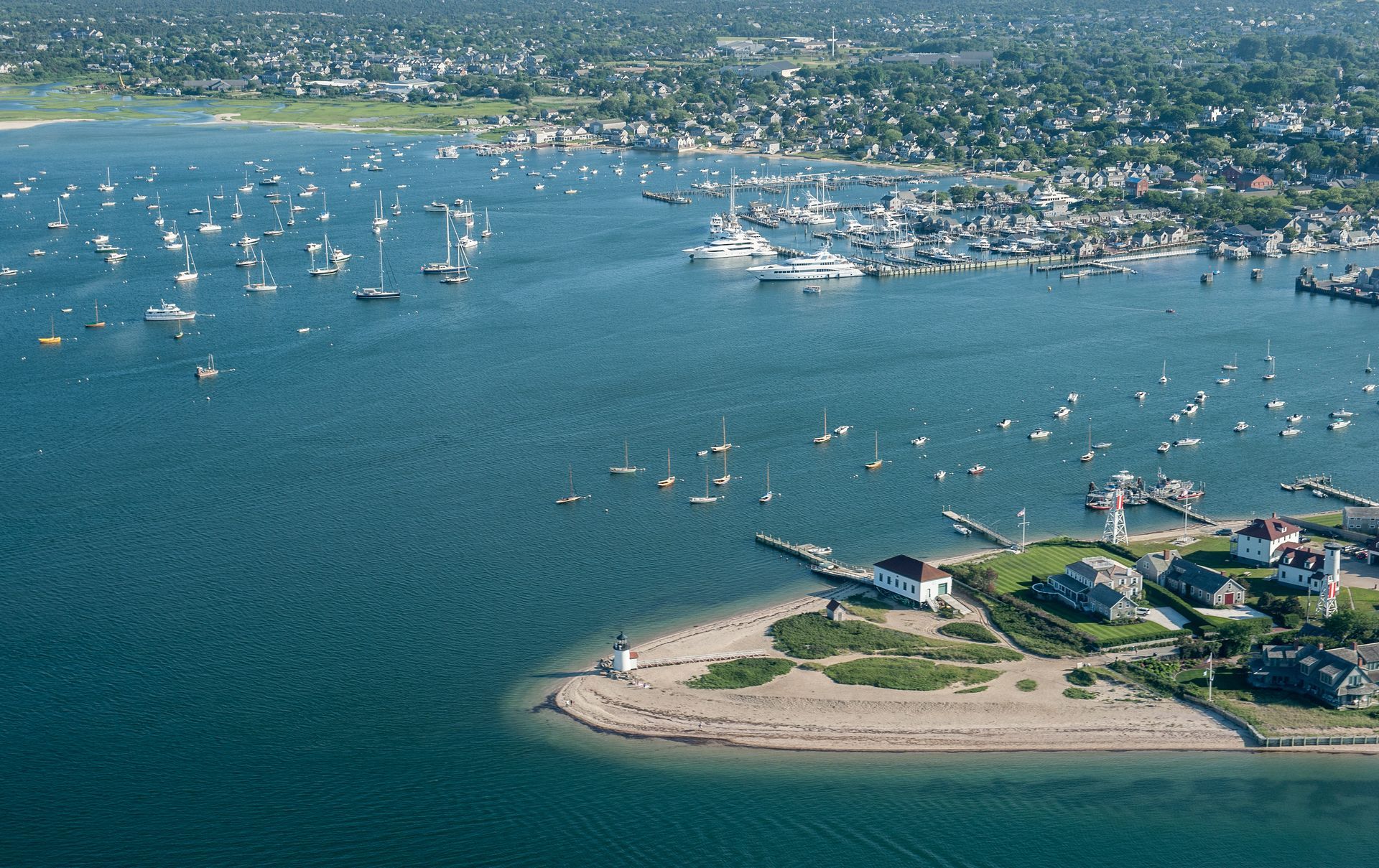
The problem with traditional moorings, according to Nantucket Land and Water Council ecologist and waterkeeper RJ Turcotte, is that after months of shifting winds, the boats they secure will pull in all directions, forcing a traditional chain to swipe at the eelgrass below—a process called scouring. The bigger the boat, the worse the damage. An aerial view shows the problem as clear as day: sandy rings around the moorings where eelgrass had been.
“We’re obviously seeing a decline [in eelgrass],” Turcotte said. “It gets worse as you go up the harbor. We’re at a point where every year, the eelgrass is getting thermally stressed and we’re having nutrient inputs causing algal growth that’s competing with the eelgrass. Anything we can do to help them along, we want to do.
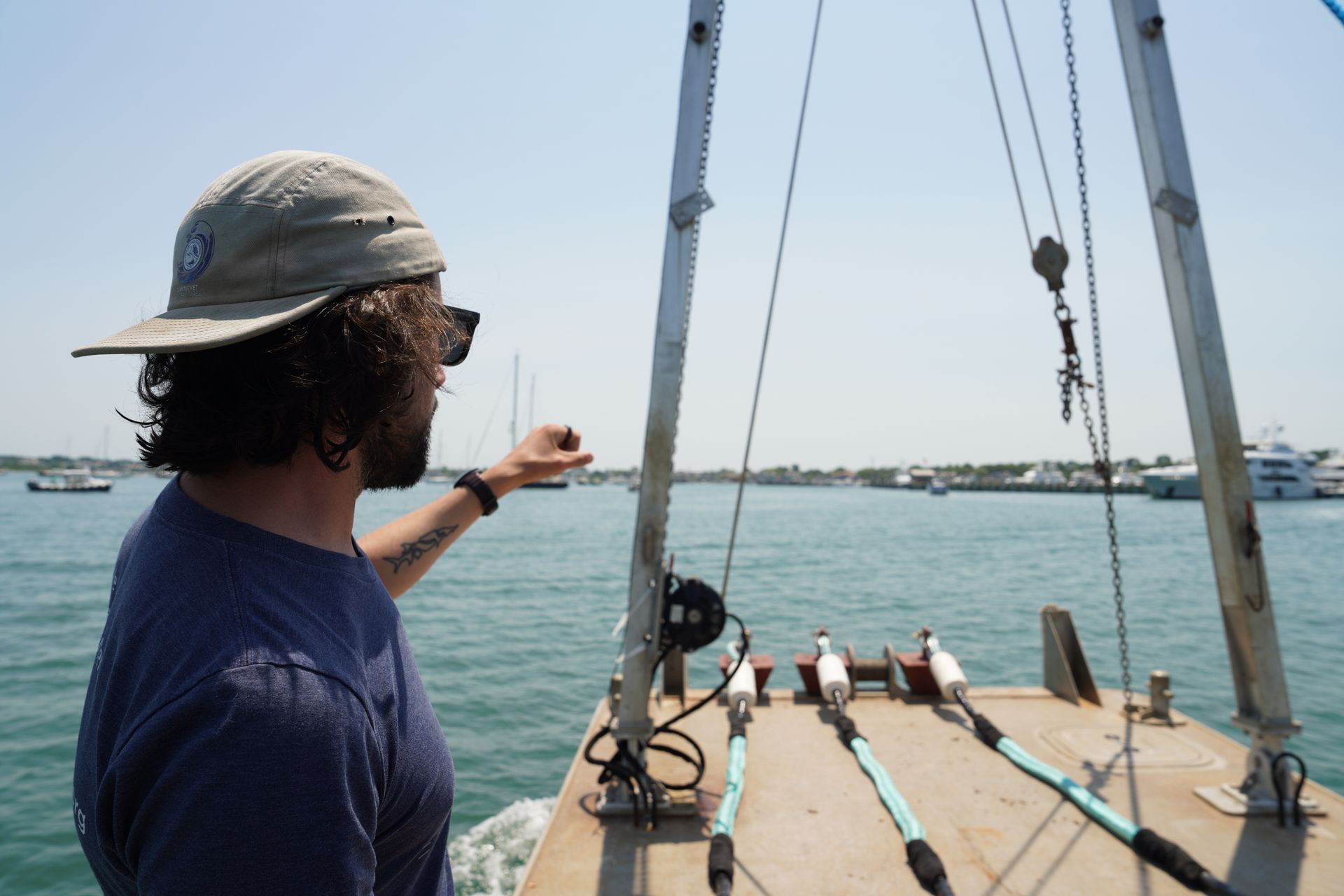
To that end, the Land and Water Council is introducing new 200-pound pyramid-shaped moorings designed to keep the eelgrass in place. Above the surface, it’s a standard mooring. But unlike the traditional moorings, which are affixed to the seafloor with a mushroom-shaped base and a heavy chain, the new moorings use a system that looks more like a bungee that can contract and relax as the boat it’s securing sways around in the direction of the prevailing wind.
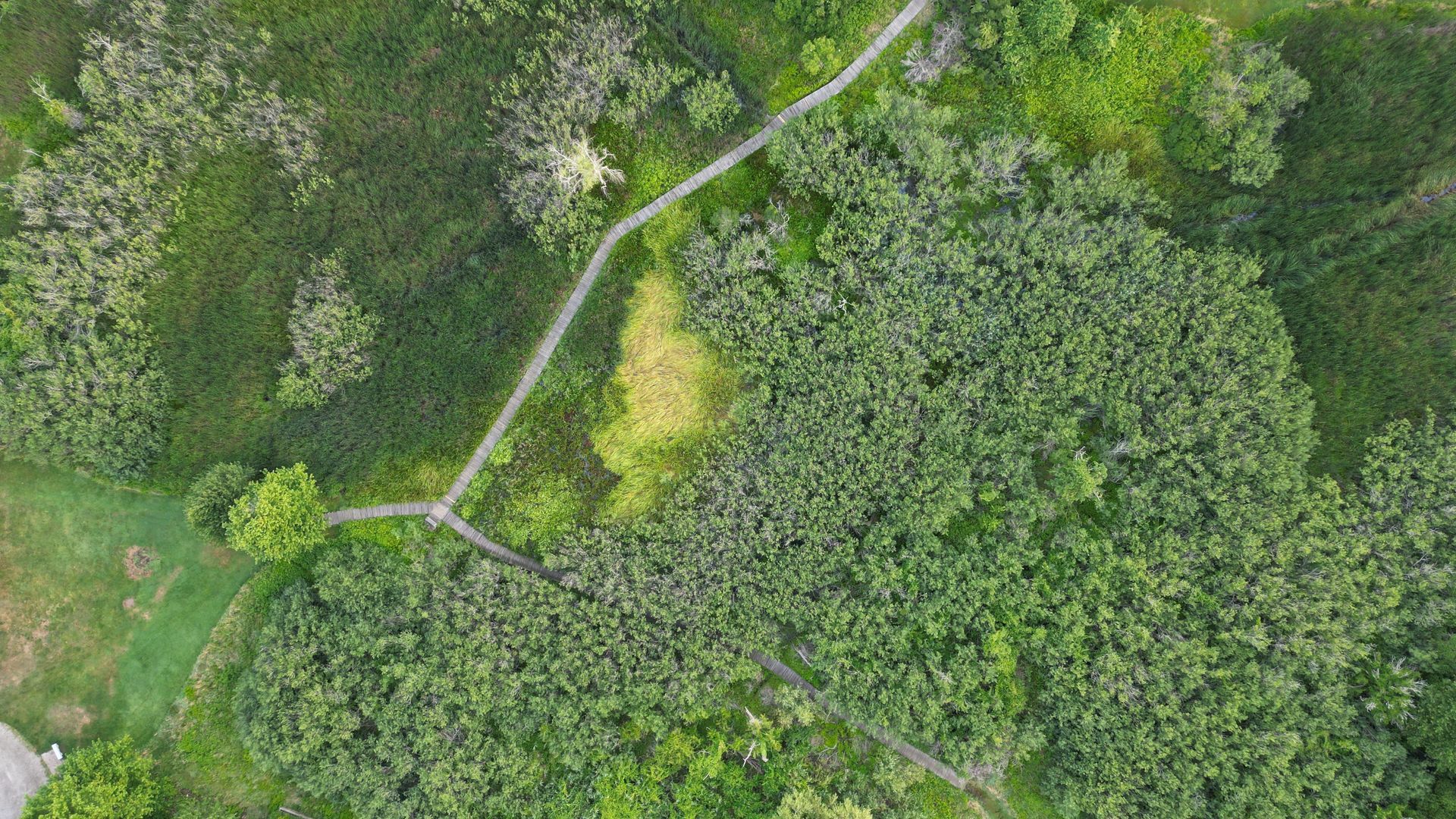
Eelgrass provides a habitat for several species, including bay scallops. It also helps to hold sediment in place, mitigating coastal erosion, and improves water quality by absorbing pollutants. But eelgrass cover in the harbor has fallen precipitously over the past few decades, reaching 14% in 2024, according to Nantucket Shellfish and Aquatic Resources Manager Tara Riley.
Preserving Nantucket’s eelgrass—and by effect, its scallop industry—is therefore a priority for fishermen and ecologists. It’s been the subject of numerous initiatives around the harbor, including efforts to reduce nitrogen loading from fertilizer use, which causes algal growth that blocks sunlight from reaching eelgrass on the harbor floor. Town Meeting has also voted to expand the town sewer to neighborhoods along the harbor, hoping to reduce runoff into the harbor. And nearly 10 years ago, the Land and Water Council undertook another project to transplant eelgrass to an area off Monomoy, which Turcotte likens to underwater gardening.
The Land and Water Council’s pilot project for the new moorings is funded by the Great Harbor Yacht Club Foundation. “There are obviously things that are out of our control, like the rising water temperature,” Turcotte said. “There’s not much we can do about that. But anything we can do, including things like this, to make gains and help [the eelgrass] out when it is struggling, we want to do.”
This year, the Land & Water Council is starting with 12 of the new eelgrass-friendly moorings as part of the pilot project. If the project is successful, Turcotte’s goal is to replace every mooring with the new eelgrass-friendly model. At the end of the day, it’s a simple fix. “Scour is physical damage,” he said. “It has a direct link and we can figure it out."
To learn more about the Nantucket Land & Water Council's new eelgrass-friendly mooring initiative, visit https://www.nantucketlandwater.org/eelgrass-friendly-moorings.
Latest Stories