Renaissance Man
DR. Bob Arnot's Latest Venture: Writing Symphonies
Interview by Brian Bushard
Photography courtesy of Bob Arnot
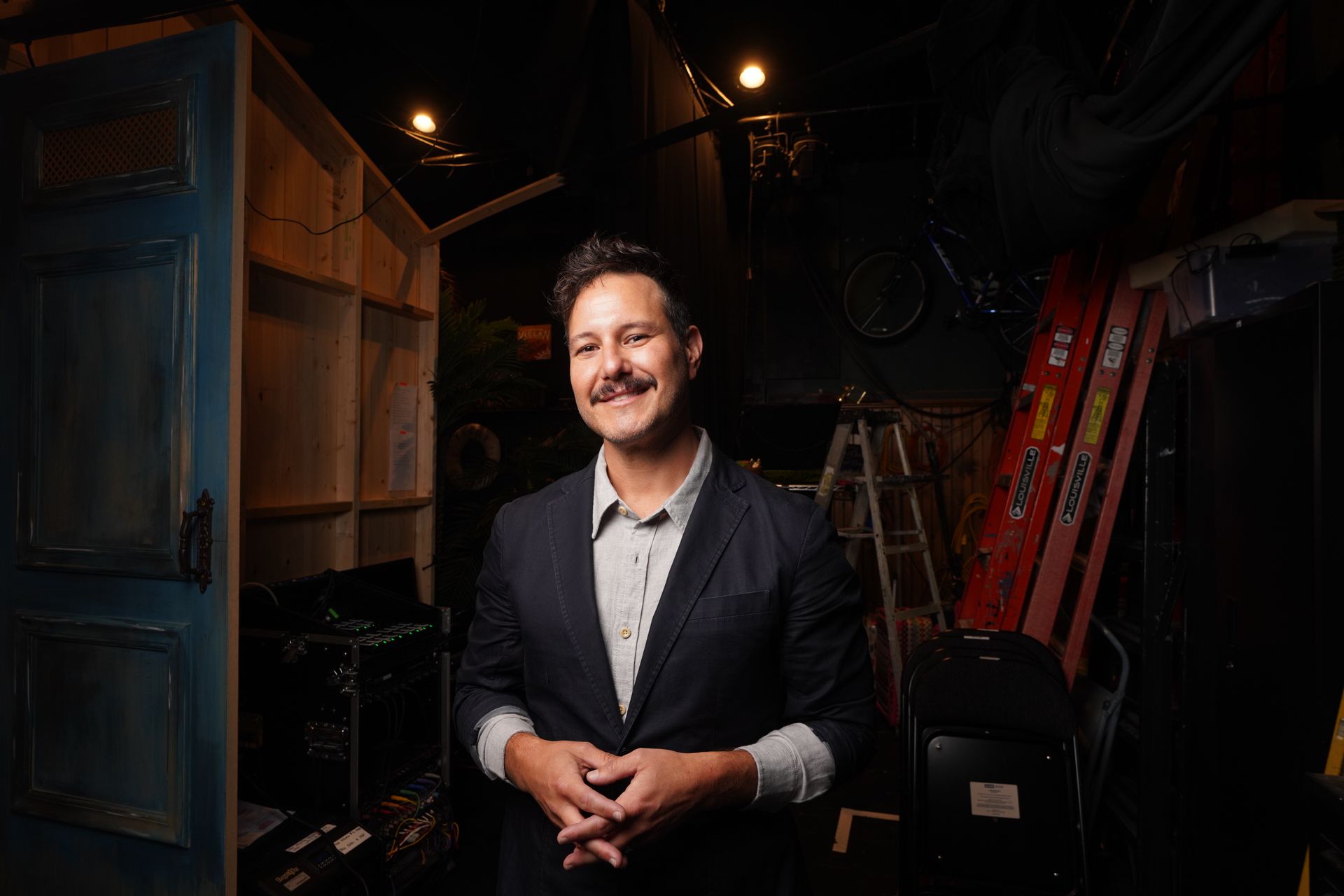
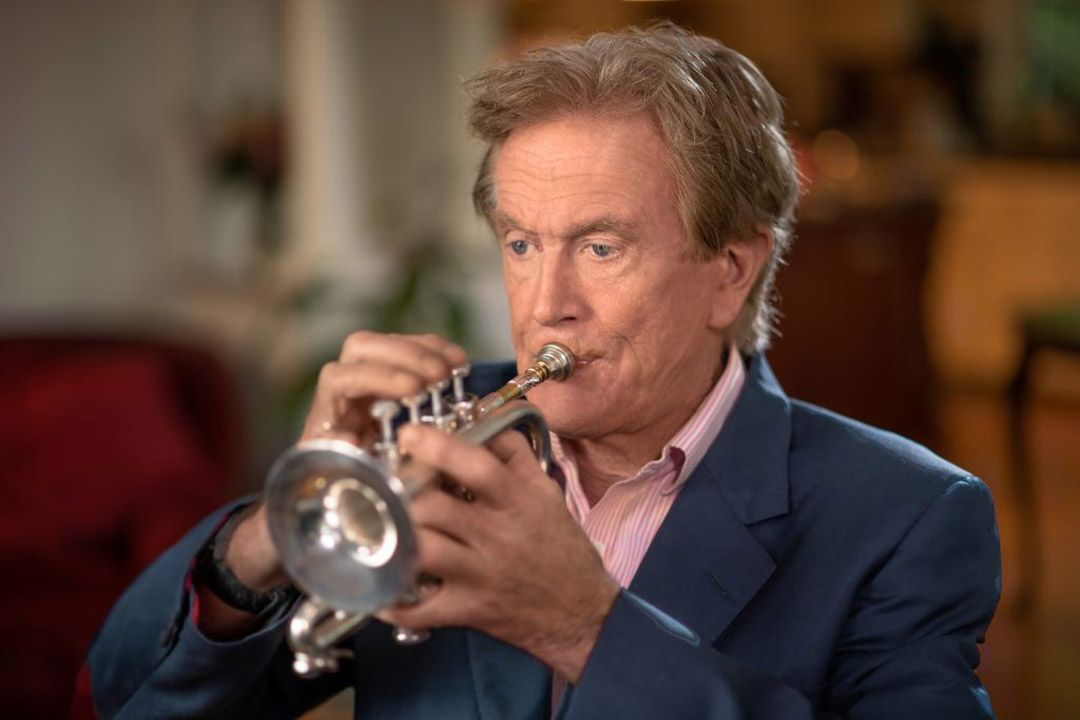
Doctor, foreign correspondent, bestselling author, humanitarian, pilot, medical entrepreneur, and now composer. After a career as a doctor of internal medicine, a New York Times bestselling author and a foreign correspondent for NBC and CBS, Nantucket summer resident Dr. Bob Arnot’s latest venture has nothing to do with TV or medicine. When COVID sidelined the world, he took it upon himself to take classes in music theory and composing, assembling a world-class group of professors to master the art of composing music for symphony orchestras. He has since written and released three albums, and recently recorded a fourth to commemorate America’s 250th birthday.
With your background in medicine, and as a bestselling author and TV correspondent, what inspired you to write symphonies?
I spent forever broadcasting, and I’m still on TV, on Inside Edition and Access Hollywood, and I love it. But with the current friction in the media, I found that music was a way of bringing joy to people, and more than anything, of inspiring people more than any other medium. When Covid came along, I thought I had always wanted to be a composer, and I just didn’t know if I could do it.
Ordinarily, you would have to get a PhD someplace, but with the onset of Zoom and online lessons, I put together a team of 12 composition and music theory professors mostly from the New England Conservatory. I use the Whoop [smart watch] to make sure I have a great night’s sleep and I use what I call “chrono nutrition,” which is having the right nutrients and dinner to get a great night’s sleep. So I dig in and start to compose symphonies. I recorded a couple of times in Prague with a very good orchestra there, and in Vienna with the Vienna Boys Choirs, which is the number-one boys choir worldwide.
Did you ever think you wantedto be a composer?
I’ve always been inspired to write music, I just didn’t know it was even possible. The interesting thing about music is that you can’t kind of read about it. You really need to have live human interaction. I learned all about cadences, progressions, chords, chordal progressions and synthetic scales, and really tried to put together a palettelike a painter would. Van Gogh would have new colors that his brother would bring to him on the train so he could paint new stuff. I learned the classical period first—Mozart and Beethoven. I’ve studied a lot of 20th century music, as well. I’m a very big believer that music is meant to bring joy and inspiration to people. Classical music has much more depth, and when you inspire people over longer periods of time, it’s the most magnificent music.
You have indicated that your symphony was inspired by paddleboarding, which may be a first. Can you explain?
It absolutely is. [Paddleboarding in Hawaii] is the most terrifying race that I [somehow] keep doing. But you work at it, and the race from Molokai to Oahu is epic. You have these big breaking waves in the middle of the ocean that could be nine or 10 feet, winds that might be 25-30 knots. The Wall Street Journal said that after you’ve done the Iron Man, this is the next big thing.
When I wrote this, I wrote about the actual race experience. It starts out very early in the morning, and you have the birds singing, there’s a little bit of wind, a little wave, and you get up and [the music] builds. You’re off to the start, and it’s optimistic. You’re rolling on the waves, and then the wind comes along and you’re cruising down in a different, more elegant style. Then you get into the middle and everything dies down. There are storms in the distance, and you really do feel this great sense of despair. With every paddle stroke, you say, ‘I’m never going to do this again.’ Then you get to Oahu, and you have these waves that are ricocheting off the island and back out at you, so that there are waves coming from every direction and it’s hard to balance. Then there's the finish line, and suddenly there’s an enormous blast furnace of wind coming at you, and it’s do or die. It’s one of the most dramatic challenges in life, and so [the music] reflects that. I look for storytelling.
At the same time, public confidence in medicine and journalism has shifted dramatically. How can that trust be restored?
So much of the media has decided that they have to have a political edge, and that they are catering to a particular audience, whether it’s far right or far left. If you say you hate the president, you have a 50/50 chance of alienating somebody. Your judgment ought to be built around having a tremendous depth of knowledge on something. I think there’s a great deal of trust in particular media right now. I read everything—The Economist, The Financial Times, The New York Times, The Wall Street Journal. I read across all these outlets and I watch very little television anymore. The mistake is that people don't trust themselves, and so they feel that they have to have a narrative.
The politicians and some of the media feed people the narrative and it gives them confidence, almost like they’re part of a club, and then they accumulate information that feeds into that narrative. People need to learn to be fiercely independent, to be able to take a large swath of videos or reporting. People have got to develop the courage that they can step outside and they can take a subject and master it.
RFK Jr. has taken an unconventional role as director of Health and Human Services. Has the MAHA movement overtaken conventional wisdom on health and medicine?
The American diet has so many misconceptions. We should look at highly processed food, portion sizes. We have a huge increase in diabetes so the concept is a great idea. But where it got waylaid is the idea of digging into vaccines. Parents and conventional doctors were upset by it. Catering to an antivax audience has lost credibility, and there have been a lot of political enemies created by the movement. I’m worried that by [MAHA]being a political movement and not being thoroughly grounded, it has run astray.
As a correspondent, you have covered cholera during the Rwandan Genocide, Ebola in Uganda, sleeping sickness in Southern Sudan, malaria in Mozambique and AIDS across the world—looking back at COVID-19, how did the virus compare for you as a journalist?
I was in Uganda for an Ebola outbreak. A patient had fallen out of bed, a doctor picked him up and he was dead three days later. It is a terribly lethal disease. With COVID, patients were dying in ventilators, but it turned out people were using very high-pressure ventilators. If there’s any lesson in this, it is to take an impartial political view. What I’ve learned is that you have to be able to give people actionable steps that work.
Six years after the outbreak, COVID feels like a distant memory. What have we learned from the pandemic? Are we better prepared now for another virus?
If you can improve the air quality, you drastically decrease the risk of spreading disease. The whole idea of closing down at that point probably wasn’t a good idea. In going around looking at this stuff, they take much more lethal diseases and shut the thing down. We could have done a better job at keeping schools and businesses open. There is information architecture with very helpful information that could have been quite helpful and it really just wasn’t used.
After decades of covering disease, conflict and disaster, what still gives you optimismin the world?
I read every article about foreign affairs. My son said, “Dad, all you care about is politics.” The fact is there is revolutionary stuff happening under our noses and nobody is talking about it. We have large-language models, we can gauge how people feel based on hundreds of data pieces you couldn’t conceptualize without a large-language model. I think people aren’t learning enough about the phenomenal stuff we’re doing in AI and companies like Nvidia. It’s a tremendously optimistic time that is completely obscured by the negative. There is every reason to be optimistic.
Latest Stories