TAKING THE LEAD
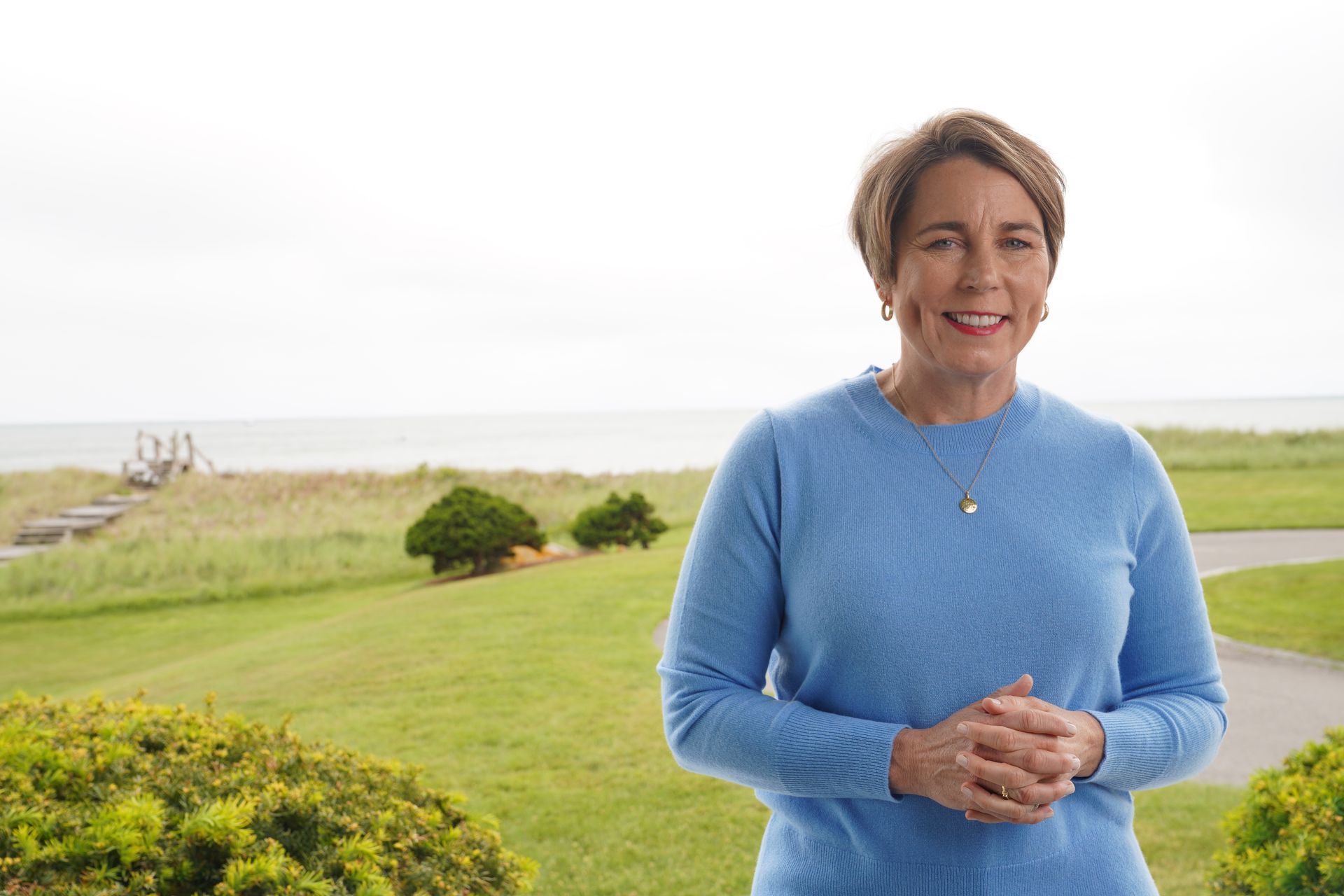
Massachusetts Governor Maura Healey discusses the challenges and opportunities facing the state.
Maura Healey is the first elected female governor of Massachusetts having won with almost 64 percent of the vote. In a state historically dominated by male Republican governors, Healey has broken the mold yet sees herself as a moderate who supports business growth and, at the same time, traditional Democratic Party positions. We sat down with Governor Healey for a broad-ranging discussion about issues facing Nantucket and the state as a whole.
Could you share with us your thoughts about Nantucket and your personal experiences on the island?
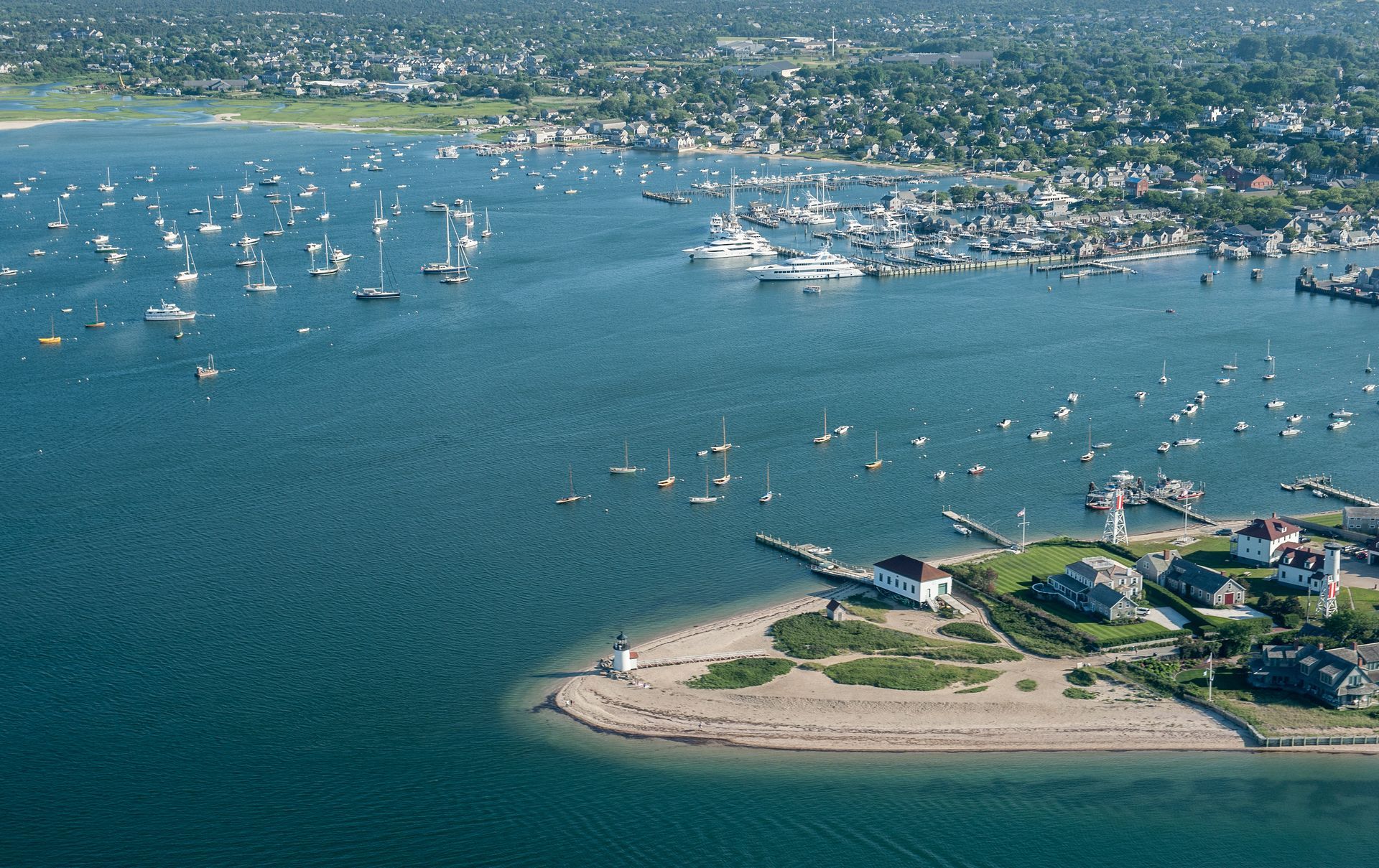
Nantucket has always been special to me and I’ve loved visiting here. I think the best part about Nantucket is just the light. The beaches are phenomenal, from Surfside to Cisco, and getting out to Siasconset is so beautiful. The history of the island is incredible, and the melding of so many different histories on the island is really special.
You are following the single most popular governor in America who managed to effectively navigate a state that is largely Democratic. What would you take out of Charlie Baker’s playbook as it relates to your governorship?
Charlie Baker and I had an excellent working relationship for so many years when I was attorney general. He governed with a very open style, open to dialogue, open to communication and listening and not being afraid to make adjustments as things moved forward as the circumstances warranted, even if that meant changing his view or position on certain things. And I respect that.
As bucolic as Nantucket seems from a distance, it shares many of the same challenges that Massachusetts does as a whole. Let’s start with housing. It is probably the number one issue on Nantucket. Any thoughts on how to address the housing crisis on the island?
Acknowledging that it’s a crisis is the first thing, and it really is. And that’s why one of the first things I did as governor was establish a housing secretary, a person and a department that was going to be solely, exclusively focused on driving housing production around the state.
When I think about Nantucket, I think about the fact that there are so many people who are needed for the island—firefighters, police, teachers, people who work in the hospital, people who make the island work. That creates the vibrancy of that island that so many flock to by the hundreds of thousands each year to enjoy. That’s not going to exist unless we figure out a way to house people. It’s an issue around the state. Rents are rising, housing prices are rising, people can’t even afford to downsize in some instances. And then COVID had a real effect in terms of driving up the housing market in certain places, I’d say, particularly in the Cape and Islands.
We’ve got to drive production, and I am committed to working alongside Lieutenant Governor Driscoll in driving production around the state. What does that mean? It means using the levers of the state government to incent development, working directly with developers, working with communities, dealing with some of the zoning issues. We’ve got to find a way to create more housing and livable communities for people on Nantucket and around the state.
Do you have any specific thoughts on how to deal with Nantucket, given that our problems are quite different from every other community in the Bay State?
We want Nantucket to flourish, but it’s not going to happen unless we have people who are able to live there. And so I think it’s a matter of looking at what’s available right now in terms of development, what the state can contribute in terms of helping incent development, helping with some of the financing and workforce development credits. And I think we really need partnering with the local community to match what their needs are. We’ve got to work together with the state on this one.
On the subject of other challenges, the fentanyl problem that is being seen now across the state has also surfaced on Nantucket. What are your thoughts on how to deal with a drug problem that is potentially more serious than anything we’ve seen?
This is an area that I know a lot about. As attorney general, I was the first to sue the Sackler family and hold them accountable for all they did to create so much of the market for opioids in this country, which then led to what we’re seeing with fentanyl, and it’s plaguing communities around the state. We know that the Cape and Islands have also been hit.
What I’m doing is looking to invest in more treatment for substance use disorder, for recovery, for prevention. Housing is also important, supportive housing, because you’ve got to give people a longer pathway to do the work to get themselves free from this incredibly serious addiction. We need mental health and substance use disorder facilities around the state in much greater capacity than we have right now. It’s absolutely true when it comes to the Cape and Islands, where it’s not as easy for folks to always get around and to get to places for help.
We’ve got to deal with making therapy more available, making medication-assisted therapy more available, making housing and supportive housing more available. And we’ve got to continue the work, of course, around prevention. I’m very focused on harm reduction as well because this is about meeting people where they are. And as it was a top priority for me as attorney general, I’m going to do everything I can as governor to address this issue.
We are all in search of renewable energy sources, and over time there have been various efforts to put wind farms in Nantucket Sound. The Vineyard Wind project that is now advancing has generated concern about its potential impact on mammal life in Nantucket Sound, particularly the endangered right whale. Have you given any thought to this project and where you draw the line between the need for renewables and protecting a resource that is precious to the island?
Both are important, and it is absolutely essential right now that we as a state, a region, a country do all that we can to move from fossil fuels to renewables. That’s why I support a diverse portfolio. Wind is certainly part of that, but we have hydro, we have energy efficiency, we have solar and other things we need to look at including storage. So, it’s really important that we do this as a state.
As a team, I made a commitment. I appointed the country’s first climate chief in any administration who’s really driving a strong climate agenda across all fronts— housing, transportation, which, of course, is key because so many of the fossil fuel emissions and greenhouse gas emissions come from transportation. So, we’ve got to look at this broadly and make sure that we are building out an infrastructure that will support a diverse renewables portfolio as we move away from fossil fuels.
When it comes to wind and offshore wind in particular, I understand the concern that people have. I think the best way to work through this, and it’s certainly something I did as attorney general, is to have dialogue with the community and with the environmental community as well. I’m certainly sensitive to the concerns out there about the impact on marine life. We’re really depending on offshore wind in order to be able to meet our climate goals.
MIT has advanced nuclear technology to a point where the level of safety has advanced dramatically from years gone by. Have you considered nuclear as a way to generate electricity at a time when the government has mandated the end of the production of the internal combustion engine by 2035?
I’m aware of certain actions in Europe, for example, where there’s been a return to nuclear. I haven’t considered that for the state. And I think right now the focus is on how we support existing technologies—wind, solar, storage, hydro. There’s a lot more we can do regionally working with other states and the Canadian provinces around some of this. So that’s really what my team and I are focused on right now. Let’s see where we get when we utilize effectively those resources that are going to take some time to build out. There’s a lot of work we’ve got to do around the grid and transmission and building up the infrastructure that is going to enable us to take advantage of those technologies.
Much of the technology that is going to be used to power our globe away from fossil fuels is actually being developed right here in Massachusetts. So, this is an opportunity for all sorts of green and blue jobs across the state and something that we will benefit from. We’re seeing unprecedented funding coming from the Biden administration for climate initiatives and infrastructure. So I think the combination of those things bodes well for Massachusetts.
You’ve walked into the governorship at a particularly challenging economic time. We’ve had a dramatic increase in interest rates, there is a looming recession and we enacted a millionaires tax before you were elected. What steps do you plan to take to position Massachusetts as pro-business to offset the headwinds impacting growth of the Bay State?
I think too many times people think of things as mutually exclusive, as a zero-sum game. I don’t see it that way. We can be a pro-business state and build healthy, livable communities. That’s what I’ve been about. One of the first things I did as governor was announce a proposed tax relief package. We need to make life more affordable for people in the state, drive down the cost of living.
We also need to make Massachusetts more competitive. It’s a competitive world out there, and I am playing for every business, every employer, every resident. I want people not only to stay in Massachusetts, grow families, grow businesses, but I want to attract more people to our great state. And we have work to do. So that’s why the tax reform package that I put forward is really important in making life more affordable and making us more competitive.
I also say that Massachusetts has so much going for us. There isn’t a state in the country that has the collection of human and intellectual capital that we have: research, our colleges and universities, our health and hospital systems, our history of innovation and entrepreneurship. And there is so much that is remarkable about this state, our educational quality and educational levels. We protect people’s civil rights. We protect access to health care. We protect reproductive justice and freedoms.
This is important right now in this time for people to remember and part of the value proposition of our great state. But the work I have to do as governor is to work with the business community and with others across communities and government to make sure that we are making life affordable, competitive and equitable for folks and businesses in this state.
That said, the state as a whole and Boston in particular are experiencing population declines for the first time in a long time. We’re seeing migration to New Hampshire, to Florida, to the Carolinas. What do you do to stem that tide now?
I think being really clear that as governor, I’m going to do everything I can to keep you and your business here in Massachusetts, and that we are open for business in Massachusetts. That out migration started back in 2019. And I think we saw some of that accelerate during COVID as people had more opportunities to work remotely. I want to create the conditions in which people can stay in Massachusetts and are attracted to come here. I don’t want to see people leave to go to New Hampshire or the Carolinas or Florida or Texas or elsewhere.
So for me, it’s been really important to work with the business community. I put forward a strong tax relief package, a tax reform package that will make us more competitive with other states, changing the estate tax, changing short-term capital gains, doing things that will make us more competitive from a business environment perspective. Also, we’re looking right now at how to speed permitting and regulatory action. If we’re going to meet my goals for housing production in this state, we need to move faster, we need to move more nimbly in order to get this done, to meet the urgency of this moment.
I think in Massachusetts, we are at somewhat of an inflection point. The decisions that we make right now are really going to determine the course of our future. And that’s why I’m focused on this drive to make us more affordable, to drive down housing costs through greater production, to reform our tax system so that we’re not giving employers or businesses or individuals a reason to leave our state. These are the things that we’ve got to see happen now.

Technology has always been one of the backbones of Massachusetts’ economy. We’ve led in the computer innovation, we led in software development, we’re now leading in the biotech world and life sciences. Are there new emerging technologies that you plan to target to try to create yet another economic engine for Massachusetts?
This is one of the reasons why Massachusetts is so great. We have so many industries and technologies that we can lean into. Massachusetts is the global epicenter for life sciences. I recently hosted the Bio-IT World Conference here in Massachusetts. I want us to remain the global epicenter for life sciences.
And you’re going to see renewed commitment to that through my administration. I also think there are other areas. Look at what’s happening with climate technology, AI, robotics. These are all spaces where Massachusetts is doing really terrific work. There is so much innovation, so much entrepreneurship coming from Massachusetts companies that it’s a very exciting time here. These are spaces that we can really lean into. It will help drive a great economic future for our state.
Every state at one point or another looks for funding from the federal government; the relationship with the White House is important. Massachusetts has had a history of being very effective in this regard. What is your relationship with the Biden administration and are you currently working on any initiatives that will bring resources back home?
We have an excellent working relationship with the Biden administration. I’ve visited and made trips to D.C. several times for purposes of engaging directly with the administration for funding opportunities. I appointed a person to head our effort to chase all those federal dollars that are out there. There are so many dollars out there right now coming through recent legislative acts. As a state, I want to play and compete for all of that funding, whether it’s the Inflation Reduction Act, whether it’s [the] CHIPS and Science [Act], whether it’s ARPA-H [Advanced Research Projects Agency for Health], which would be a boon to our life sciences efforts here.
You were a standout college basketball player at Harvard, and you went on to play basketball professionally. What are your takeaways from being an athlete and being a team leader, as it relates to your management style as governor?
When I played basketball, my position was point guard. When you’re point guard, you’re the quarterback of the floor and you’re used to kind of running the show and getting people to play together. The greatest statistic for the point guard is not points scored, it’s actually the assist. And in many ways that’s how I like to govern. It’s very much a team approach. It’s supporting the team, surrounding myself with tremendous talent. I’m really proud of the cabinet that we’ve built. These are super talented people who are out there in different realms, working hard for folks across the state.
Teamwork is how we get things done. And that’s probably the single greatest takeaway I have from my sports experience that I really see as transferable to the work that we need to do now. We need people working together at all levels of government— local, state and federal. We need people working together, government and outside of government, importantly, the business community, our NGO [nongovernmental organization] community, academia. Everybody rowing in the same direction.
We’ve had some disappointments in our local sports teams, particularly at the eleventh hour. We saw the Bruins have a shocking conclusion to their season. We saw the Celtics in the same vein. As an athlete, what advice would you give to our teams to bring back the winning ways that we’ve become so accustomed to?
We have become accustomed to those winning ways, and we’ll get back to that. And the fact that we had two of our four teams so far really in the running for championships is pretty cool. And that’s very significant, but obviously we came up short. So I think as with anything, it’s a matter of let’s regroup now in the summer and figure out what pieces aren’t in place and let’s get those pieces in place.
But the talent is certainly there and it’s just about making sure that the right things are done to bring that home. Winning breeds winning, success breeds success. And I think over the years we’ve really benefited from the vibe that the currency of our professional sports teams have created for the state and for the region. I’m their biggest cheerleader.
Let’s imagine you’ve been in office for a number of terms. Looking back, what would you view as benchmarks for success?
Simply put: that life is a lot better for people here in the state as a result of the work that our administration has done. That’s the goal every day. How do we work every day to make life better for people across Massachusetts? How do we make Massachusetts a more vibrant place to live, to grow a business, to grow a family? How are we doing in terms of public health? How are we doing with our public transit system? What is the cost of housing? What is the cost of childcare? What is happening in all these spaces that determine whether or not somewhere is a great place to live? That’s what we’re really focused on every day. Making Massachusetts a place where everyone, no matter their circumstance, feels like they have a shot and an opportunity to be great and do great things.
Latest Stories