TRIP TO THE DOCTOR


April 26, 2023

Will psychedelics help Nantucket’s mental health crisis?

story by Robert Cocuzzo

In the fight against mental illness, many believe that psychedelics offer the most promising new forms of treatment. Once rejected as dangerous drugs, psychedelic compounds such as psilocybin (commonly known as “magic mushrooms”), MDMA (commonly known as “ecstasy”) and LSD (commonly known as “acid”) have been shown to have miraculous outcomes in treating severe clinical depression, post-traumatic stress disorder (PTSD), addiction, obsessive-compulsive disorder, eating disorders and other forms of drug-resistant mental illness. So much so that the decriminalization of these substances is opening the door to entirely new therapy practices and practitioners around the country. With the island community continuing to struggle with mental illness, when will these treatments be available on Nantucket? Or are they already here?


“I have seen discussions about these drugs, but I think it would be premature to recommend them until more research is done,” indicated Dr. Timothy Lepore, Nantucket Cottage Hospital’s medical director and chief of surgery who also runs a suboxone clinic treating addiction on the island. “Medical aphorism: Don’t be the first or last to use a medication.” However, Lepore is open-minded about the potential of unconventional treatments. “I have tried low-dose ketamine in a few patients, nasal dose,” he added. “There is evidence it works for depression.”
Originally developed in the 1960s as anesthesia for animals, ketamine was approved by the Food and Drug Administration (FDA) in March 2019 in the form a nasal spray to treat drug-resistant depression and suicidality. “This is a gamechanger,” said Dr. John Krystal of Yale School of Medicine who helped pioneer the research that expedited FDA approval. “With most medications, like Valium, the anti-anxiety effect you get only lasts when it is in your system. When the Valium goes away, you can get rebound anxiety. When you take ketamine, it triggers reactions in your cortex that enable brain connections to regrow. It’s the reaction to ketamine, not the presence of ketamine in the body that constitutes its effects.”

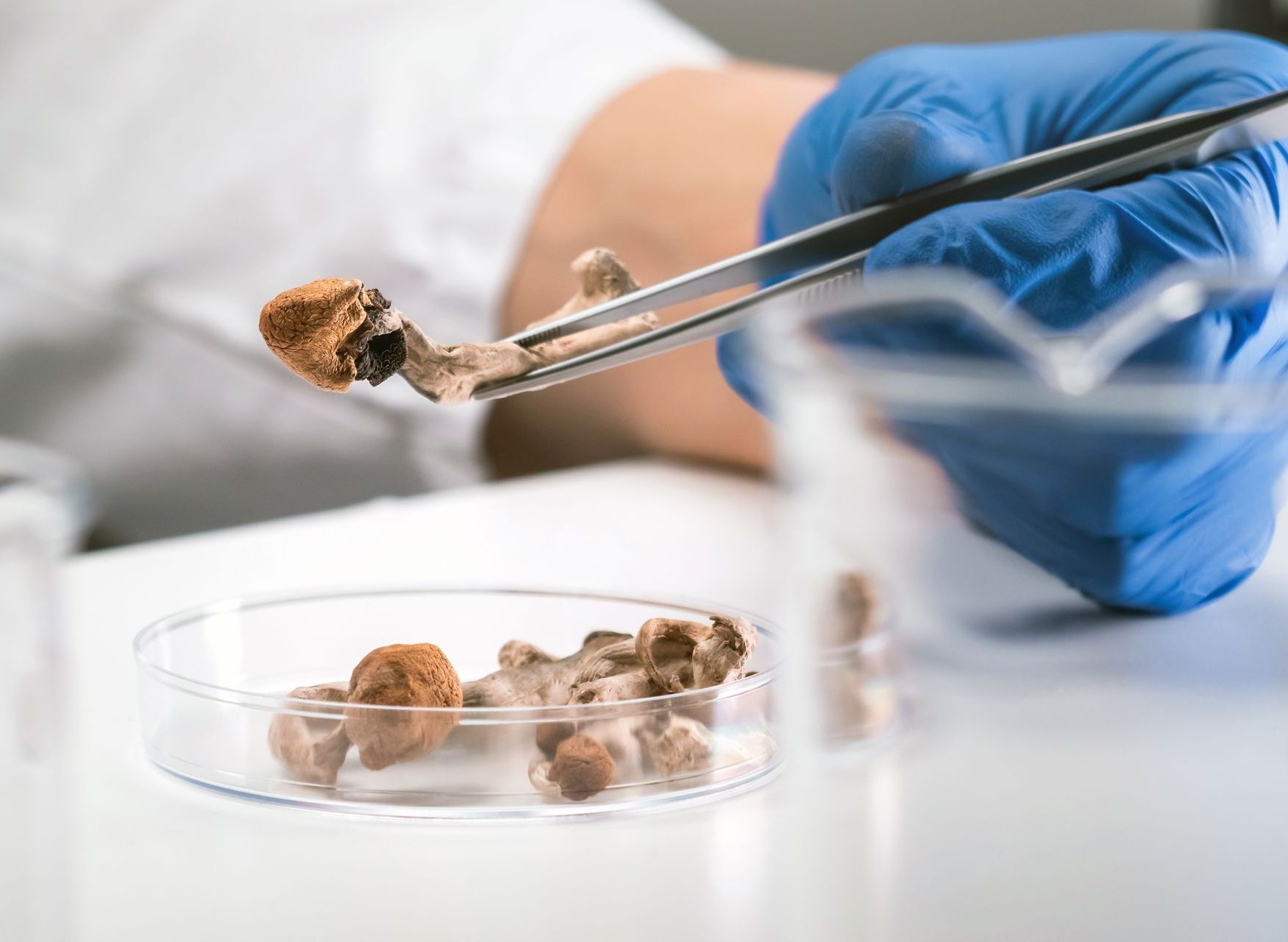
While the FDA has paved the way for ketamine clinics to pop up throughout the country where doctors can legally administer the drug to patients, those seeking treatments by way of illegal substances such as psilocybin have had to seek out “underground guides.” With their cultivation stemming back to shamans in Mexico, magic mushrooms were first popularized in the United States by Life magazine after a banker turned amateur mycologist named R. Gordon Wasson became one of the first Westerners to participate in a mushroom ritual in Oaxaca, Mexico, in 1955. Wasson wrote about his experience in an eight-page photo essay titled “Seeking the Magic Mushroom” that was read by millions of Americans. A version of this tradition of shamans or guides that Wasson encountered in Mexico has quietly flourished in the United States with a network of practitioners treating patients with some of the same ancient rituals.

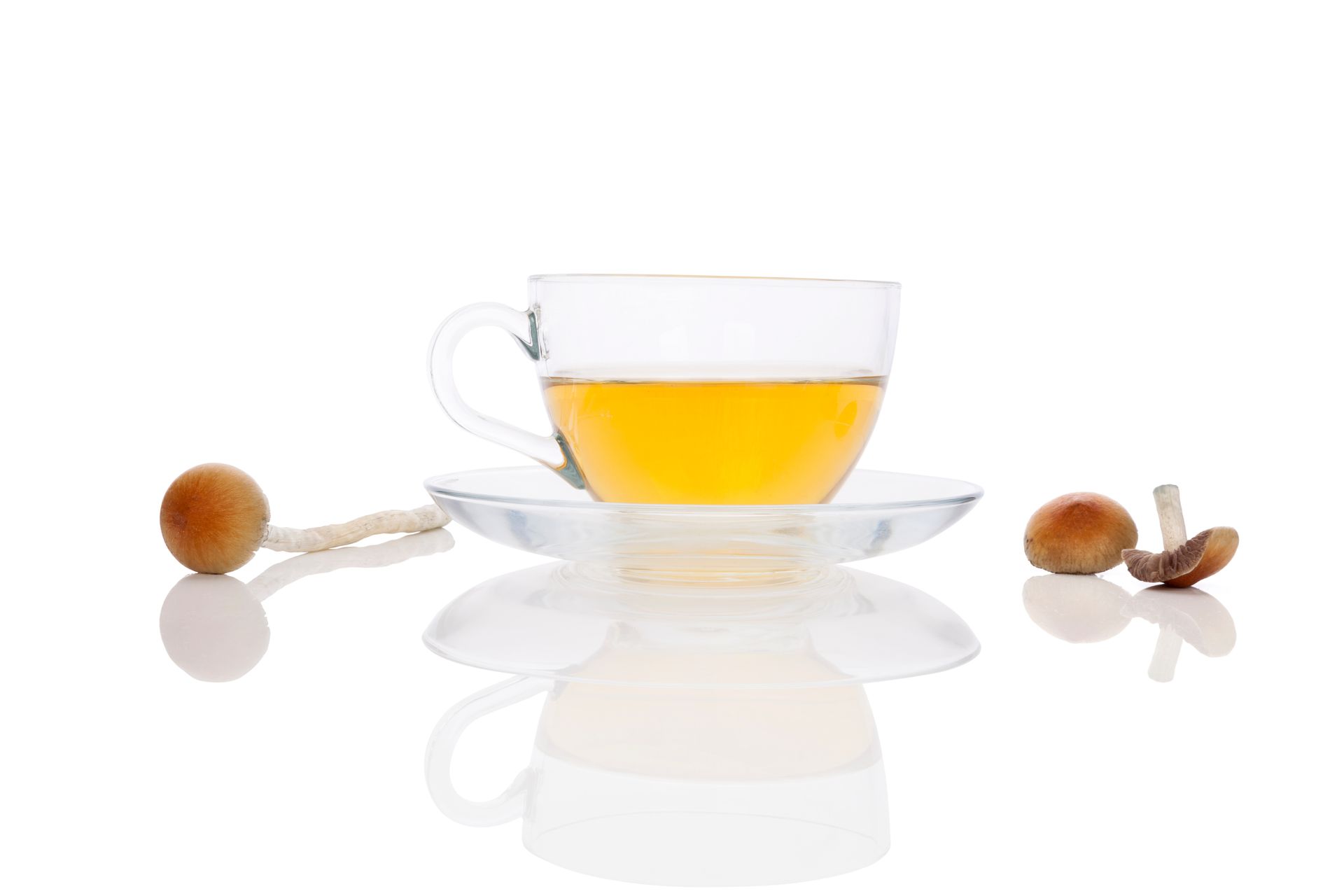
One man in his late thirties, who asked to remain anonymous, described his experience of a therapeutic psilocybin journey administered by an underground guide off island. “I had been battling bouts of depression since the age of eighteen,” he said. “I’d been seeing therapists for years and had been taking two different antidepressants as the result of a major clinical depression.” After becoming frustrated with the lack of reprieve and progress he found with the antidepressants, the man was put in touch with an underground guide by friends. Following a series of onboarding sessions in which he and the guide discussed his intentions for the journey, the man spent a day consuming higher and higher doses of psilocybin administered in the form of a tea from the guide.

“There were some very hard and intense moments during the journey,” he reflected. “But I was ultimately able to experience a new perspective—not just see it, but feel it—and something deep shifted within me.” Following the day-long session, he returned to the guide to discuss how to integrate the takeaways from his journey thereafter. Today, the man reports being completely off of all antidepressants with no symptoms of depression. “It was nothing short of life-changing.”


In recent years, at least one shaman has come to Nantucket to preside over underground group ceremonies held in a private residence where ayahuasca and peyote were administered over the course of two nights. Speaking under the condition of anonymity, a participant of one of these private ceremonies described a rigorous pre-interview with the shaman during which she voiced her intentions for the psychedelic journey. She arrived on the first night of the ceremony wearing all white, as each participant was instructed to do, and encountered many familiar faces from around the community. After a series of rituals, the participants consumed ayahuasca tea and then were shown to a mat where they would lie down for that night’s inner voyage. The following morning, they consumed peyote followed by another nighttime session with ayahuasca.
Reflecting on the impact of each session, the participant spoke glowingly of the transformation and healing she experienced. Her deep, long-held psychological pain was released and she found lasting inner peace. Although she considers the experience overwhelmingly positive, the participant was troubled by some aspects of the ceremony in retrospect, specifically the number of people who ultimately became involved. What she had originally thought was only going to be seven participants turned into around twenty by the second night. Her concern was that there were too many people in the throes of an intense psychedelic trip for one shaman and an assistant to care for at once.


In his widely viewed Netflix documentary Have a Good Trip: Adventures in Psychedelics, Nantucket-native Donick Cary featured dozens of famous actors, musicians, comedians and other public figures discussing their experiences with psychedelics. Cary is now in the process of producing a sequel to the film that hones in on the therapeutic advances being made with these compounds.
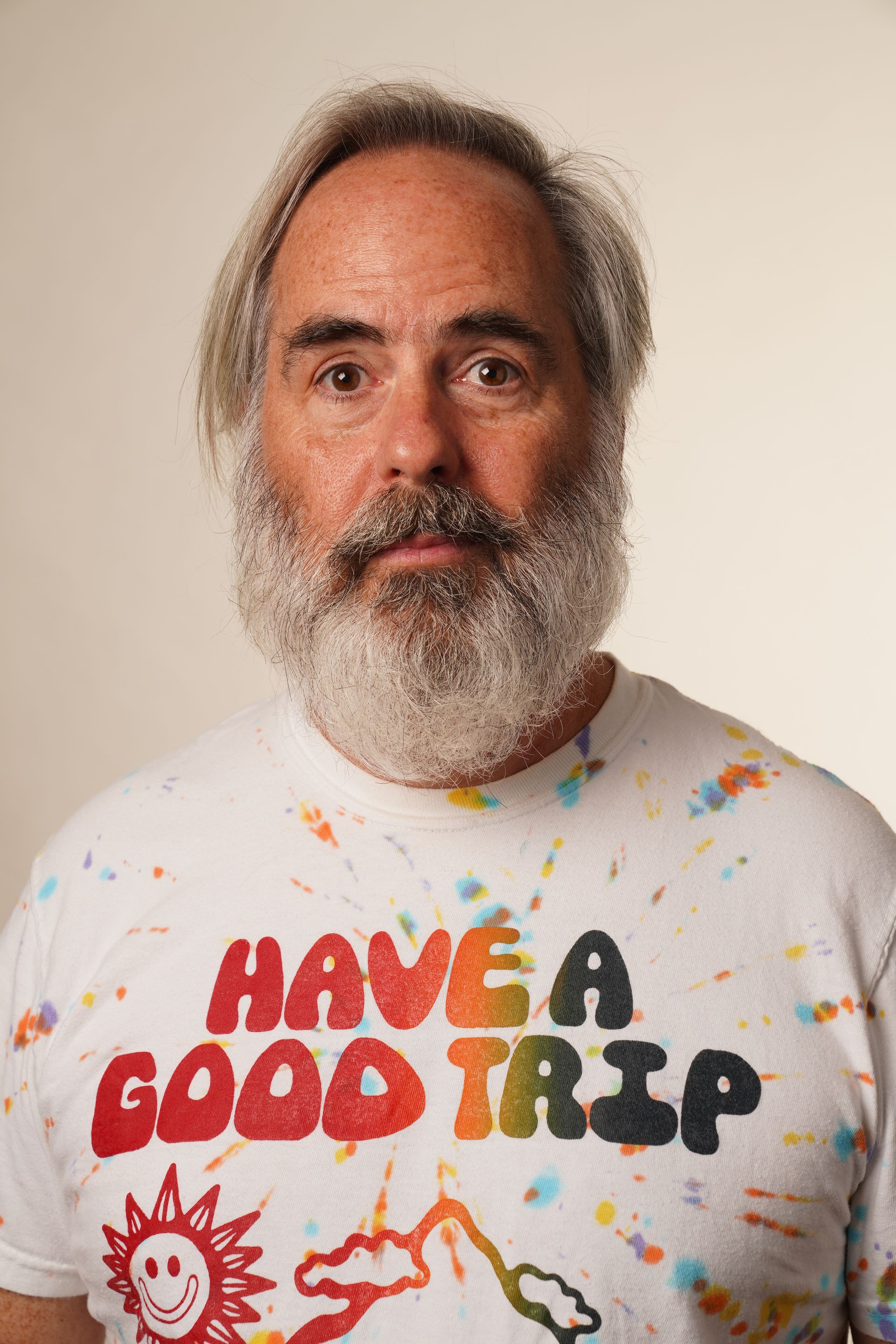
“Part of what we lost over the last fifty years by having psychedelics so stigmatized and becoming part of the war on drugs and becoming something that we were so scared of that we equated it with crack cocaine—we lost fifty years of really looking at how this can help with the mental health crisis we’re in,” he said. “So there’s a lot of stuff we don’t know, which we’re at a moment where there’s a whole bunch of possibilities where we can learn about that, discover that and explore that. But there is stuff that we do know that’s all really positive.”


Cary said that we should stop looking at psychedelics as drugs, but rather as medicines. As these psychedelics continue along the path of decriminalization and become more mainstream, he also advocates a highly careful integration. “My biggest fear is that we as humanity get it wrong, where we say ‘get this stuff out there,’ and we set ourselves up to have horror stories where people who shouldn’t be touching this stuff are taking too much of it and making huge mistakes,” he said. “And these stories scare everyone in Congress, and the war on drugs comes back.”


Massachusetts is uniquely positioned to the advent of these therapies. This past January, lawmakers filed two bills to decriminalize psychedelics like psilocybin, mescaline and MDMA statewide on the basis of their dramatic therapeutic potential. The bills, now before the state Senate, come after Somerville became the first community in Massachusetts to decriminalize entheogenic plants possessed by adults. This legislation is bolstered by the fact that one of the global leaders in psychedelic advocacy and education, the Multidisciplinary Association for Psychedelic Studies, commonly referred to as MAPS, has a heavy presence in Boston. In March 2021, Massachusetts General Hospital followed the lead of Johns Hopkins, New York University and UCLA, which have been studying the impact of psychedelics in end-of-life care for years, when it launched the Center for the Neuroscience of Psychedelics to study “how psychedelics enhance the brain’s capacity for change, to optimize current treatments and create new treatments for mental illness, and to make the term ‘treatment resistant’ obsolete.”


With all this happening, how is Nantucket preparing for the possibility of these treatments? “At Fairwinds, we are attending very closely to developments in this area but do not anticipate implementing these programs in the near future until data on safety and long-term effects are developed,” said David Barlow, Ph.D, ABPP, a board director and Clinical Committee chair at Fairwinds, Nantucket’s Counseling Center. “In the meantime, unfortunately, these drugs have been in use illegally for years often with tragic consequences, including psychotic breaks and deaths, particularly for those with existing mental disorders.”

That is not to say that Barlow and his contemporaries at Fairwinds do not acknowledge the tremendous potential of these treatments, citing that “ketamine and psilocybin and sometimes LSD are beginning to show some promise, particularly for treatment-resistant depression [deep depression that has not responded to an adequate course of antidepressant medications or cognitive behavioral therapy] as well as PTSD.” But as Dr. Dominic Maxwell, the medical director of Fairwinds, put it, “These treatments remain the subject of intensive ongoing research, and while we are hopeful that they may one day be added to our collection of tools to tackle various psychiatric conditions, for the time being we simply do not have the necessary evidence or data to advocate for their use.”


Among mental health professionals, there remains significant trepidation around even addressing these unconventional treatments. When asked for its position on the potential use of psychedelics, Gosnold, a national mental health organization treating patients on Nantucket, declined to comment, but instead shared a link to studies being done at Massachusetts General Hospital. For some practitioners, this reluctance to address these compounds is frustrating. “We’re really in pretty dire times and we need solutions that work,” said Lauren Taus, a psychotherapist based on the West Coast. “These medicines both scientifically and spiritually work to get people results that they might never get in a lifetime of pursuing help.” Taus, who treats patients with ketamine, has witnessed this firsthand. After nine years of treating patients as a therapist, Taus began integrating psychedelics into her practice four years ago and saw dramatic results. “I’ve seen people go from suicidal despair to thrive,” she said. “There’s no doubt that this is the future of mental health care if we are going to make progress. We have made so much progress in so many other verticals in medicine, but within the realms of mental health, we haven’t. And we’re not OK. We’re just collectively not OK. These are not panaceas; this is not all of a sudden cure anyone. But these interventions, when worked with well, are some of the most effective interventions for some of the most difficult pathological processes known to humans.”
Latest Stories
By brianbushard August 3, 2026
Written by Brian Bushard Photography by Kit Noble While they may not be household names in the true Hollywood sense, Nantucket’s summer population includes powerful producers, screenwriters and editors who are behind the scenes on the movies we all recognize. Indeed, Nantucket has an underground entertainment community that is in effect a hidden Hollywood.“I got involved in the Nantucket Film Festival before we bought a house on the island,” said Marc Resteghini, a producer with Amazon MGM Studios who executive produced the series Young Sherlock. “As I started to learn a little bit more about the festival itself, I started to realize there were a lot of people who either lived on the island or vacationed here from the entertainment industry.” Resteghini was named the new chair of the film festival this June. While Nantucket has a reputation for attracting politicians and Wall Street titans, lesser known is the fact that dozens of leaders in the entertainment industry have also found Nantucket as their summer refuge, just not the names you might know. “It’s like Sergeant Pepper Lonely Heart Club Band,” actor John Shea said. “We see each other but the last thing we want to do is talk about the film business. It’s more of a quiet acknowledgement of a fellow traveler thana fellowship.” “The Vineyard is where all the actors and the writers go, the creatives,” documentary film producer Annabelle Dunne added. Dunne summers on Nantucket. “I think a lot of people that work in Hollywood come here to be with their families, relax and enjoy Nantucket, not to network. But it is a small island, and sometimes when you take away the work component and you say we’re just getting together to get together, then things can happen.” 
By Jack Bradner August 3, 2026
Written by Jack Bradner Photography by Kit Noble 
By brianbushard August 3, 2026
Written by Brian Bushard Photography by Kit Noble There are family vacations and there are family vacations. Some people take their kids to Disney World, some take their kids to a Caribbean resort. But Dan and Sarah Gault have taken family travel to an entirely different level. This August, the Gault family will take an 11-month trip of a lifetime from their house on Nantucket to 18 countries on three continents, traveling like vagabonds through Africa, Asia and Australia. Their four school-aged kids will join them for the entire length of the vacation, ditching the comforts of life on Nantucket for an education they would never receive in school. “On this trip, forget about watching a big screen TV,” Dan said. “We’re talking about things like clean drinking water and having electricity 24 hours a day. Showing them those things gives them perspective. It plants a seed in them for a lifetime.” The Gaults, by their own admission, are not ordinary travelers. Since their trip will take nearly a year, their four children—in eighth, seventh, fifth and third grade—will be homeschooled through a math and English curriculum, as well as a healthy dose of reading, journaling and cultural visits to museums and historical sites. Instead of a beach resort vacation, they’ll be in city centers and remote parks, immersing themselves in new cultures and languages. And since the children are growing—and taking up more space in their house on the island—the entire trip will coincide with a yearlong project to lift their house in Warren’s Landing, making more space for the family of six to spread out. For the time they’re gone, Sarah, a special education teacher at Nantucket Public Schools, will be on sabbatical and set to return for the 2027-2028 school year. Dan, who owns a property management company, handed the reins to his second-in-command for the time being. “My whole team stepped up to make this possible,” he said. “I was anxious to tell two groups of people—my employees, because I didn’t want them jumping ship, and my clients in the management world, because I didn’t want them to be upset. But they were maybe the most supportive.”
By Jen Laskey August 1, 2026
Four Drinks for August Written by Jen Laskey August inspires us to squeeze every last drop out of summer. Whether you’re ticking experiences off your end-of-season bucket list or practicing the lost art of doing nothing, or a little of both, Nantucket’s drink experts have the perfect pours to help you make the most of summer’s last call—from a Cointreau-based spritz to a Portuguese white blend and a lush bourbon and beach plum cocktail. Let’s all linger in summertime a little longer. COINTREAU CITRUS SPRITZ ($19.99, 750 ML bottled cocktail at The Islander) COINTREAU L’UNIQUE ORANGE LIQUEUR ($48.99, 750 ML bottle at The Islander) Recommended by ZEINA METRI,co-owner, The Islander If August has you in the mood for ready-to-serve simplicity, Zeina Metri recommends the Cointreau Citrus Spritz. It’s made with French white wine and natural citrus flavors, and the star ingredient is Cointreau, anorange liqueur distilled in western France that’s often used in margaritas and cosmopolitans. “Cointreau is such a versatile liqueur,” noted Metri. “It’s crafted from a blend of sweet and bitter orange peels and gives cocktails a depth and balance that elevates every other ingredient around it.”The Cointreau Citrus Spritz comes in two flavors—Orange & Blood Orange and Lemon & Lime. It’s light enough to day-drink with friends on a warm afternoon or to sip while watching those last summer sunsets. With its low alcohol level (10.5% ABV) and resealable screw cap, it’s perfect for a month when all you want to do is chill. Just pour it over ice and voila! “The Cointreau Spritz is bright, refreshing and vibrant without being overly sweet,” said Metri. And if you’d rather make your own, simply pour a splash of Cointreau into something bubbly. LUÍS SEABRA, GRANITO CRU DÃO BRANCO, BLEND OF ENCRUZADO, BICAL AND CERCIAL, 2022 ($155/bottle at Galley Beach Restaurant) Recommended by IEVA ALDINS, Wine Director, Galley Beach Restaurant Every summer has that one unforgettable discovery, and this year it might just be Luís Seabra’s Granito Cru Dão Branco, a white blend of three native Portuguese grapes: encruzado, bical and cerceal. “This wine is sunshine in a glass,” said Ieva Aldins, wine director of Galley Beach Restaurant. “It [has] mouth-watering acidity, voluptuous elegance, minerality and salinity that make it a perfect summer sipper.” Seabra is one of Portugal’s top winemakers. “He used to make wines for Niepoort Winery but now focuses on his own old-vine and terroir-driven wines,” said Aldins. “His Cru series focuses on sourcing vineyard sites with high mineral content—as the name [Granito] suggests.” Aldins recommends sipping the Granito Cru by the beach and pairing it with shellfish and seafood. “I particularly love it with our crab cake or lobster spring roll, as it has both the body to hold up to these dishes and the acidity to hold up to their richness,” she said. BEACH PLUM RUSH($16 at The Fairgrounds) Recommended by CONRAD MEURICE Bar Manager, The Fairgrounds The blushy golden-orange color and tart, floral notes from beachplum honey give this cocktail an unmistakably late-summer vibe. The Beach Plum Rush is one of the most popular signature drinks at the new Fairgrounds restaurant, said bar manager Conrad Meurice. “It brings together a traditional Kentucky straight bourbon with some local flavor flair of beach plum,” he said. “We balance out the cocktail with some fresh lemon juice and add Angostura bitters for a crisp citrusy finish with a hint of spice.”A riff on the Gold Rush, a type of whiskey sour made with honey rather than simple syrup, Meurice’s Beach Plum Rush gets an additional pop of flavor from honey that he infuses with beach plum. You can buy beach plum honey at local specialty food shops, but Meurice says you can also quickly mix up your own by stirring a little beach plum jam into some local honey. Best sipped at The Fairgrounds’ new flower bar, the Beach Plum Rush is a great pairing partner for the restaurant’s beet salad with salmon or shrimp, or the tuna poke bowl. Makes 1 serving - Glassware: Rocks glass Ingredients: - 2 ounces Kentucky straight bourbon• ¾ ounce lemon juice • ¾ ounce beach plum honey• Dash of Angostura bitters Instructions:
By brianbushard July 31, 2026
Written by Brian Bushard Photography by Kit Noble A taste of New York has arrived on Nantucket. By 10 a.m. on a Saturday, the bagels at Slow to Rise Bakery’s stand at the farmer’s market have all but sold out. Down the street, Bagel Bar (opened in June by the owners of sushi restaurant Bar Yoshi, no less), is peddling freshly baked bagels. Meanwhile, Nantucket coffee conglomerate Roastd is baking bagels at its Airport Gas shop for its four island locations. And on Old South Road, the Meat & Fish Market is baking bagels every single morning. “It seems there has been a bagel explosion,” Bagel Bar owner Marc Knight said over a brunch of bagel sandwiches and Italian paninis. “This whole idea started a year ago and [Bagel Bar] opened briefly last year. But when we hatched the idea, there wasn’t as much of a bagel scene.” But over the past few years, Nantucket’s breakfast scene has started to look a lot more like something out of Brooklyn. At the Meat & Fish Market, owner Sean Ready has been baking bagels in house and serving heaping bagel sandwiches since he opened the shop nine years ago. The Meat & Fish Market even introduced a Cisco bagel, made with the brewery’s Whale’s Tale Pale Ale. Meanwhile, the duo of Tucker Puljic and Katrina Newfrock have been running Slow to Rise on Nantucket since 2022, with classics like plain, poppy seed and cinnamon sugar, to a Middle Eastern za’atar spice bagel, an English muffin bagel and an Italian-style cacio e pepe bagel with Parmigiano-Reggiano and black peppercorns. This isn’t the first time Nantucket has seen everything bagels everywhere. In the mid-1990s, Nantucket got its first taste of New York bagels, when Big Apple transplant Brad Moore opened Bagel Basin behind the former restaurant 21 Federal. Not one month later, there was a second bagel shop, The Nantucket Bagel Company, which was later purchased by Something Natural. The Gaslight even baked its own bagels for a time for Sunday brunches, serving smoked salmon or bluefish on bagels and tuna tataki or Italian cold-cuts in bagel sandwiches—with mimosas and Bloody Marys. Where Nantucket’s burgeoning bagel scene goes from here is to be seen. But if one thing is true, this is no half-baked idea. “The popularity of bagels has exploded in the last 10 years,” said Chris Dadey, a food and beverage consultant for Roastd. “It’s a little bit of New York culture moving north."
By brianbushard July 31, 2026
A Taste Of Jamaica At the Chicken Box Written by Brian Bushard Photography by Kit Noble Recipe By Peticea Murray The Chicken Box as a venue is known for its music and bar scene, but during the day thereis a completely different vibe. In June, Peticea Murray started bringing her food truck, 876 Island Cuisine, to the Box. By the time the lunch crowd arrives, the truck, which takes its name from Jamaica’s area code, is slammed with customers.“A lot of the island workforce is built by Jamaicans,” said Murray, who grew up cooking with her grandmother in Montego Bay. “I have a passion for it, but I myself did not have anywhere to buy this authentic Jamaican food [on Nantucket]. I thought I have to have a Jamaican restaurant so my people can have somewhere to have authentic Jamaican food, and not only that, to bring Jamaican culture through food to the Nantucket native people.”Murray’s truck offers staples like jerk chicken, as well as escovitch fish, rice and peas (red kidney beans are typically used, but the name comes from the local red peas in Jamaica), and coconut water straight out of the coconut. “[My grandmother] taught me all the old recipes, all the good stuff,” she said. “That’s why I cook the way I cook, because it’s coming from generations of authentic flavors.” JAMAICAN RICE AND PEAS, yields 8-10 servings Ingredients: -2 cups long-grain rice, washed -2 cups cooked red kidney beans (or 1 can, drained and rinsed) -1 can (13.5 ounces) coconut milk -2 cups water(reserved from cooking beans) -3 cloves garlic, minced -4 sprigs fresh thyme -2 scallions, chopped -1 small onion, chopped -1 whole Scotch bonnet pepper(do not cut it open) -1 teaspoon salt (or to taste) -½ teaspoon black pepper -1 tablespoon butter Instructions: In a large pot, combine the kidney beans, coconut milk, bean liquid (or water),onion, garlic, thyme, scallions, salt, black pepper and butter. Add the whole Scotch bonnet pepper and bring everything to a gentle boil. Let it simmer for about 10 minutes so the flavors develop. Cover the pot with a tight-fitting lid, reduce the heat to low and cook for 20-25 minutes, or until the rice is tender and all the liquid has been absorbed. Remove the Scotch bonnet pepper and thyme stems. Fluff the rice and gently with a fork before serving. CHEF’S TIP: The key to authentic Jamaican rice and peas is allowing the coconut milk, thyme, scallions, garlic and the Scotch bonnet pepper to simmer together before adding the rice. This creates the rich, flavorful base that makes the dish stand out. Keeping the Scotch bonnet whole adds its signature aroma without making the rice overly spicy. This recipe pairs perfectly with jerk chicken, curry goat, brown stew chicken, oxtail or escovitch fish.
MORE STORIES