Introducing The Hive


July 31, 2024

Remain's latest buzz

Written by Antonia DePace and Bruce A. Percelay
Photography by Kit Noble
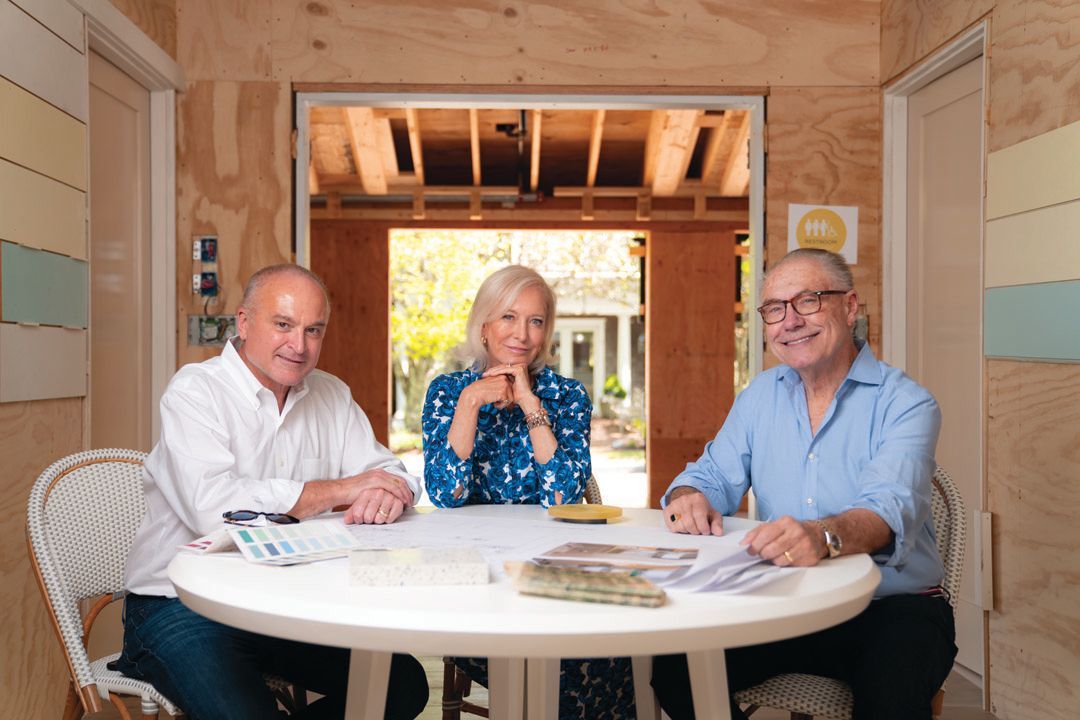

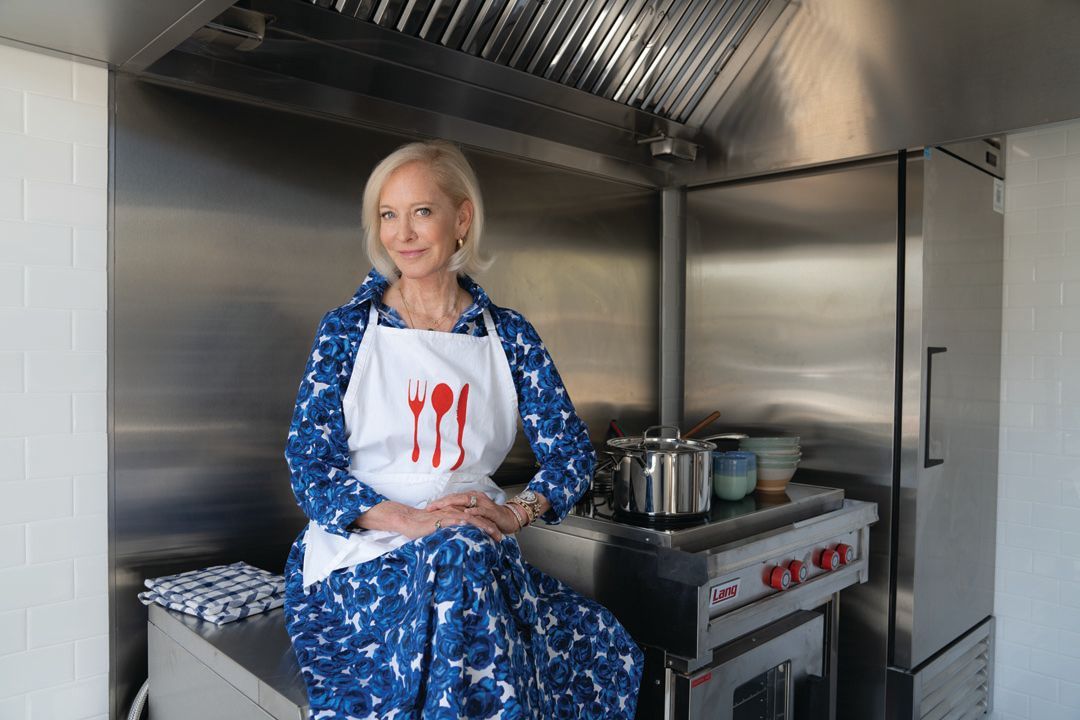
Innovative, forward-thinking ideas for Nantucket are nothing new to Wendy Schmidt, whose latest venture, "The Hive," will support local farmers and makers to ply their craft while expanding food resources on the island. Those looking to produce food on Nantucket are often stymied by access to affordable commercial kitchens, a problem that Schmidt has sought to address through a facility designed for food innovation and production that will be both affordable and accessible. The Hive, opening early this month, will include rental kitchen space, as well as specific programming and the opportunity for food producers to access bulk ordering of sustainable products and packaging, as well as other shared services.


The Hive’s building at 5 Amelia Drive—the former location of Keepers Restaurant—was expanded to include six commercial kitchens and common space for meetings, as well as a centralized online platform for food ordering and a pick-up food locker system. It will also have a vending machine for non-perishable food items made by the island’s local creators. N Magazine sat down with Wendy Schmidt and Cecil Barron Jensen, Executive Director of Remain, to gain a deeper understanding of the role The Hive will play in the food production world on Nantucket.


Tell us about the inspiration behind The Hive.

Wendy Schmidt: This is an extension of the larger philanthropy of the Schmidt Family Foundation. We focus on several areas: human rights, clean renewable energy, healthy food and agriculture systems, and access to fresh, healthy food. Since we started Remain in 2008, we have concentrated on the social and environmental sustainability of the island, reflected in all the projects we’ve undertaken, starting with the year-round viability of downtown, which will likely always be a challenge. Remain supports anchor institutions downtown by being a benevolent landlord to businesses like Born & Bread, the Corner Table, the Nantucket Community Music Center, and Mitchell’s Book Corner. These are important tent poles for downtown and for the community.


Is the idea to focus on locally grown food?

Wendy Schmidt: We’ve been thinking for a long time about the food system on the island and how we can help make Nantucket a place of more opportunity. A lot of food is grown on the island, and we have many farmers markets. Just like communities across the country, we face high rates of food insecurity, housing shortages, and economic challenges.


So what is your strategy?

Wendy Schmidt: There’s a way here on the island that we can make a difference as a philanthropy interested in access to healthy food systems. That’s how Pip & Anchor came about, originally working with 100 Mile Makers, including the organic local food boxes that people can sign up for. We’ve previously looked for places where we might help production and offer commercial kitchens to people to use because that’s really a limiting factor if you’re a food producer. When 5 Amelia Drive showed up as an opportunity to purchase with a couple of kitchens in it, this was our moment. We looked to see if this model actually works anywhere…and it turns out it does. So Cecil and our team at Remain just started digging into how to transform this particular site into what we’re opening this summer.


How do you interface with food entrepreneurs?

Cecil Barron Jensen: We’ve always been really interested in helping young startup businesses flourish on the island. We noticed that a lot of the small businesses were food-related—people wanting to start restaurants or takeout businesses, or maybe they were creating a product like jam or salsa that they wanted to develop and get to market. Our colleagues
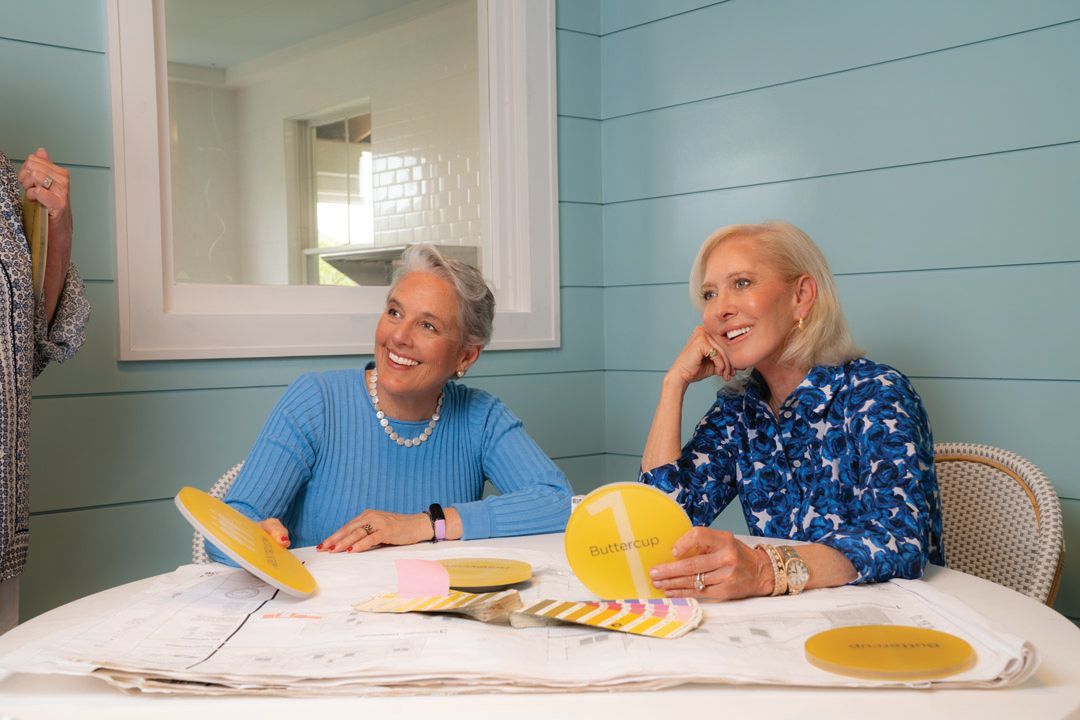
At the Nantucket Island Center for Entrepreneurship in the Nantucket Chamber of Commerce offices we're doing a lot of coaching of small food-related businesses. We had the idea of giving cooks and chefs commercial kitchen space while also combining it with support for entrepreneurs, including educational opportunities to learn about growing an idea and turning it into a full-fledged business. When we found 5 Amelia Drive, it had two existing, big, beautiful kitchens. We added four kitchens. They’re varying sizes and outfitted with a wide variety of equipment. We see the kitchens working for the innovation folks, people who are developing small products like jars of pickles or sweets, as well as those who have existing catering businesses.


Wendy Schmidt: What we did here was to make the scale appropriate and utilize this building to its full potential. It has two apartment units on the top floor for housing, which is also an important need on Nantucket. We plan to have a take-out business there, so there will be food outside. The building is fully electrified, meaning that in a conventional traditional setup, you would have gas firing everything, but because we’re working on renewable energy, we put induction into five out of the six kitchens. The air quality will be great; it’ll be a healthy environment for people to work in and visit.


Can you explain specifically how it works?

Cecil Barron Jensen: The plan is to have two opportunities for people to pick up food when they’re visiting The Hive. One is with the food lockers. If chefs are making meals in the building— for instance, if a caterer is cooking a giant menu for a party and they have the ability to cook 10 extra meals— they can list it through an online ordering platform managed by our operator. You and I could go in and say, ‘Oh, I’d really like to have that beef tenderloin tonight,’ or whatever it is that they’re cooking. The meals can be reserved and picked up in the food lockers. And then there will be vending machines, where you can purchase stable, packaged food. If somebody is making jams or chocolates or pasta that’s in a package, they can use the vending machine for people to purchase.


What are some of the benefits of the shared space model?

Wendy Schmidt: We are trying to use all of the newest technologies in this building, both in the customer experience and also in the production side of things. The other great advantage of having people in a shared space this way is how you can achieve economies of scale. We can dig into sustainable packaging and share all of those resources among everybody who uses this. As a single producer, you might work there twice a week for three hours, but the arrangement allows for lots of food producers. So it’s not just six people we’re talking about here; we’re talking about many producers working in these spaces.


Will there be any eating spaces at The Hive?

Wendy Schmidt: There’s going to be some comfortable seating on the porch. It’s not really like a restaurant, but honestly, just down the street at Pip & Anchor, you can purchase prepared food in a setting with seating to eat on-site. The Hive is not intended to be a place where there’s going to be food service, but people are welcome to come inside and watch what’s going on through the large windows into the kitchens—to see how the sausage is made and to make food purchases.


Is there an educational component to The Hive?

Cecil Barron Jensen: One of the more important things is the Maker to Maker learning. I think there’ll be tons of opportunities in the building for makers to support each other, and that’s something that our operator, Karen Macumber, will definitely facilitate. She’ll make sure that there are lots of educational opportunities. The makers will be able to have conversations about how to market their products, how to package, and distribute them.


When it comes to food insecurity on the island, are there any programs or initiatives that you’ve worked on that will be able to reach that part of the community as well?

Cecil Barron Jensen: Remain has had a wonderful relationship with the nonprofit Nantucket Food Fuel Rental Assistance, which operates the Nantucket Food Pantry. They are housed in the Greenhound Building, which was owned by Remain until 2021. We’ve also funded a number of studies, which have informed how organizations can meet the needs of the community. Our tenants at Pip & Anchor, in partnership with Nantucket Resource Partnership, are significant players with their Nourishing Nantucket boxes. To date, they’ve distributed more than 6,500 boxes of fresh, local, nutritious food, feeding 80 families. Families weekly on the island who are experiencing food insecurity. So we’ve definitely been in conversations with them, and what we’re hearing is that people who are providing for food insecure individuals need commercial kitchen space, especially for products that are grown on the island. Our hope is that The Hive and its makers will become an important resource in the community to help support local farmers and food-insecure families.


How many local businesses are you projecting to be able to support during the summer season?

Wendy Schmidt: We plan to start with 12, but ideally, we’re going to grow the program as we learn the system, as we get comfortable with the procedures and the policies, and as we figure out how to manage these kitchens and also meet Board of Health requirements.
Health standards. So the target number right now is 12. But that’s a starting point for us, and we’d love to be able to accommodate more in the future.

I imagine it also opens up a lot of opportunity to have different types of food on the island; we only have so many restaurants because we only have so much space.


Wendy Schmidt: Local opportunities are often out of reach for a lot of people who would like to participate in the food business. But The Hive brings together people with talents, skills, abilities, and provides coaching on different ways to build their own businesses and livelihoods.


What other educational programs could be happening at The Hive, whether it’s for those makers or maybe even for the Nantucket community to learn more about healthy food?


Wendy Schmidt: There’s so much potential. One of the programs at our foundation focuses on healthy food and agriculture, agroecology, and the mysteries of mycelium in mushrooms. There’s so much to learn—for example, let’s learn about bees, what’s at risk in the world right now because of climate change, and how we can become part of the solution instead of the problem. What is in soil? What soil grows healthy food? All soil in the world doesn’t grow food, and people don’t understand that. There are lots of topics that we could bring into the public conversation in that space, and I think we’re very open to all these conversations. It’s a great public service.


Where do you see The Hive growing in the next five years?

Wendy Schmidt: I think in five years’ time, we will have not only proven the concept but it’ll also be a well-oiled machine. It’ll be an island resource people know about from the time they’re young. They’ll know that if they want to do this, there’s a place where they can start. And by then, you would have people who had succeeded through the system who could mentor newcomers. It could become a real engine on the island in five years’ time.


Cecil Barron Jensen: It goes back to that idea of The Hive as an incubator. You can imagine all these little baby businesses growing up in The Hive and then flying off. Maybe they will become brick-and-mortar restaurants, or maybe they will go the food truck route, or maybe they will take their business off-island where they’re co-packing some wonderful food that started on Nantucket and is being sold in grocery stores all over New England. You just never know, so I love the idea of being able to really grow businesses and see it happening right in The Hive.


Is there anything that we didn’t touch on that you would like to add?

Cecil Barron Jensen: I just want to make sure that all the credit goes to Wendy and her incredible vision for this work. I can see how it will make a difference on Nantucket. It’s going to change the way people think about how to make food on Nantucket, how it’s grown, and how it’s sold. And I think that’s really exciting. Credit to Wendy for the vision for that.


Wendy Schmidt: That’s very kind, Cecil. Vision is one thing, and bringing it to life takes a dedicated team working through thick and thin to fit all the pieces together. We have a talented team at Remain under Cecil’s leadership, who have taken this project through all aspects—from the construction to the financing to the running of it and the nuts and bolts of how it’s all going to work, interfacing with the health department and getting new electrical panels and on and on and on. It’s taken skills, and we’re lucky to have them. We’re also grateful to the talented team at Gary McBournie Design, Matt MacEachern at Emeritus Architecture, and Gerard Clarke with Clarke Brothers Construction


Latest Stories

By Jen Laskey August 1, 2026
Four Drinks for August Written by Jen Laskey August inspires us to squeeze every last drop out of summer. Whether you’re ticking experiences off your end-of-season bucket list or practicing the lost art of doing nothing, or a little of both, Nantucket’s drink experts have the perfect pours to help you make the most of summer’s last call—from a Cointreau-based spritz to a Portuguese white blend and a lush bourbon and beach plum cocktail. Let’s all linger in summertime a little longer. COINTREAU CITRUS SPRITZ ($19.99, 750 ML bottled cocktail at The Islander) COINTREAU L’UNIQUE ORANGE LIQUEUR ($48.99, 750 ML bottle at The Islander) Recommended by ZEINA METRI,co-owner, The Islander If August has you in the mood for ready-to-serve simplicity, Zeina Metri recommends the Cointreau Citrus Spritz. It’s made with French white wine and natural citrus flavors, and the star ingredient is Cointreau, anorange liqueur distilled in western France that’s often used in margaritas and cosmopolitans. “Cointreau is such a versatile liqueur,” noted Metri. “It’s crafted from a blend of sweet and bitter orange peels and gives cocktails a depth and balance that elevates every other ingredient around it.”The Cointreau Citrus Spritz comes in two flavors—Orange & Blood Orange and Lemon & Lime. It’s light enough to day-drink with friends on a warm afternoon or to sip while watching those last summer sunsets. With its low alcohol level (10.5% ABV) and resealable screw cap, it’s perfect for a month when all you want to do is chill. Just pour it over ice and voila! “The Cointreau Spritz is bright, refreshing and vibrant without being overly sweet,” said Metri. And if you’d rather make your own, simply pour a splash of Cointreau into something bubbly. LUÍS SEABRA, GRANITO CRU DÃO BRANCO, BLEND OF ENCRUZADO, BICAL AND CERCIAL, 2022 ($155/bottle at Galley Beach Restaurant) Recommended by IEVA ALDINS, Wine Director, Galley Beach Restaurant Every summer has that one unforgettable discovery, and this year it might just be Luís Seabra’s Granito Cru Dão Branco, a white blend of three native Portuguese grapes: encruzado, bical and cerceal. “This wine is sunshine in a glass,” said Ieva Aldins, wine director of Galley Beach Restaurant. “It [has] mouth-watering acidity, voluptuous elegance, minerality and salinity that make it a perfect summer sipper.” Seabra is one of Portugal’s top winemakers. “He used to make wines for Niepoort Winery but now focuses on his own old-vine and terroir-driven wines,” said Aldins. “His Cru series focuses on sourcing vineyard sites with high mineral content—as the name [Granito] suggests.” Aldins recommends sipping the Granito Cru by the beach and pairing it with shellfish and seafood. “I particularly love it with our crab cake or lobster spring roll, as it has both the body to hold up to these dishes and the acidity to hold up to their richness,” she said. BEACH PLUM RUSH($16 at The Fairgrounds) Recommended by CONRAD MEURICE Bar Manager, The Fairgrounds The blushy golden-orange color and tart, floral notes from beachplum honey give this cocktail an unmistakably late-summer vibe. The Beach Plum Rush is one of the most popular signature drinks at the new Fairgrounds restaurant, said bar manager Conrad Meurice. “It brings together a traditional Kentucky straight bourbon with some local flavor flair of beach plum,” he said. “We balance out the cocktail with some fresh lemon juice and add Angostura bitters for a crisp citrusy finish with a hint of spice.”A riff on the Gold Rush, a type of whiskey sour made with honey rather than simple syrup, Meurice’s Beach Plum Rush gets an additional pop of flavor from honey that he infuses with beach plum. You can buy beach plum honey at local specialty food shops, but Meurice says you can also quickly mix up your own by stirring a little beach plum jam into some local honey. Best sipped at The Fairgrounds’ new flower bar, the Beach Plum Rush is a great pairing partner for the restaurant’s beet salad with salmon or shrimp, or the tuna poke bowl. Makes 1 serving - Glassware: Rocks glass Ingredients: - 2 ounces Kentucky straight bourbon• ¾ ounce lemon juice • ¾ ounce beach plum honey• Dash of Angostura bitters Instructions:
By brianbushard July 31, 2026
Written by Brian Bushard Photography by Kit Noble A taste of New York has arrived on Nantucket. By 10 a.m. on a Saturday, the bagels at Slow to Rise Bakery’s stand at the farmer’s market have all but sold out. Down the street, Bagel Bar (opened in June by the owners of sushi restaurant Bar Yoshi, no less), is peddling freshly baked bagels. Meanwhile, Nantucket coffee conglomerate Roastd is baking bagels at its Airport Gas shop for its four island locations. And on Old South Road, the Meat & Fish Market is baking bagels every single morning. “It seems there has been a bagel explosion,” Bagel Bar owner Marc Knight said over a brunch of bagel sandwiches and Italian paninis. “This whole idea started a year ago and [Bagel Bar] opened briefly last year. But when we hatched the idea, there wasn’t as much of a bagel scene.” But over the past few years, Nantucket’s breakfast scene has started to look a lot more like something out of Brooklyn. At the Meat & Fish Market, owner Sean Ready has been baking bagels in house and serving heaping bagel sandwiches since he opened the shop nine years ago. The Meat & Fish Market even introduced a Cisco bagel, made with the brewery’s Whale’s Tale Pale Ale. Meanwhile, the duo of Tucker Puljic and Katrina Newfrock have been running Slow to Rise on Nantucket since 2022, with classics like plain, poppy seed and cinnamon sugar, to a Middle Eastern za’atar spice bagel, an English muffin bagel and an Italian-style cacio e pepe bagel with Parmigiano-Reggiano and black peppercorns. This isn’t the first time Nantucket has seen everything bagels everywhere. In the mid-1990s, Nantucket got its first taste of New York bagels, when Big Apple transplant Brad Moore opened Bagel Basin behind the former restaurant 21 Federal. Not one month later, there was a second bagel shop, The Nantucket Bagel Company, which was later purchased by Something Natural. The Gaslight even baked its own bagels for a time for Sunday brunches, serving smoked salmon or bluefish on bagels and tuna tataki or Italian cold-cuts in bagel sandwiches—with mimosas and Bloody Marys. Where Nantucket’s burgeoning bagel scene goes from here is to be seen. But if one thing is true, this is no half-baked idea. “The popularity of bagels has exploded in the last 10 years,” said Chris Dadey, a food and beverage consultant for Roastd. “It’s a little bit of New York culture moving north."
By brianbushard July 31, 2026
A Taste Of Jamaica At the Chicken Box Written by Brian Bushard Photography by Kit Noble Recipe By Peticea Murray The Chicken Box as a venue is known for its music and bar scene, but during the day thereis a completely different vibe. In June, Peticea Murray started bringing her food truck, 876 Island Cuisine, to the Box. By the time the lunch crowd arrives, the truck, which takes its name from Jamaica’s area code, is slammed with customers.“A lot of the island workforce is built by Jamaicans,” said Murray, who grew up cooking with her grandmother in Montego Bay. “I have a passion for it, but I myself did not have anywhere to buy this authentic Jamaican food [on Nantucket]. I thought I have to have a Jamaican restaurant so my people can have somewhere to have authentic Jamaican food, and not only that, to bring Jamaican culture through food to the Nantucket native people.”Murray’s truck offers staples like jerk chicken, as well as escovitch fish, rice and peas (red kidney beans are typically used, but the name comes from the local red peas in Jamaica), and coconut water straight out of the coconut. “[My grandmother] taught me all the old recipes, all the good stuff,” she said. “That’s why I cook the way I cook, because it’s coming from generations of authentic flavors.” JAMAICAN RICE AND PEAS, yields 8-10 servings Ingredients: -2 cups long-grain rice, washed -2 cups cooked red kidney beans (or 1 can, drained and rinsed) -1 can (13.5 ounces) coconut milk -2 cups water(reserved from cooking beans) -3 cloves garlic, minced -4 sprigs fresh thyme -2 scallions, chopped -1 small onion, chopped -1 whole Scotch bonnet pepper(do not cut it open) -1 teaspoon salt (or to taste) -½ teaspoon black pepper -1 tablespoon butter Instructions: In a large pot, combine the kidney beans, coconut milk, bean liquid (or water),onion, garlic, thyme, scallions, salt, black pepper and butter. Add the whole Scotch bonnet pepper and bring everything to a gentle boil. Let it simmer for about 10 minutes so the flavors develop. Cover the pot with a tight-fitting lid, reduce the heat to low and cook for 20-25 minutes, or until the rice is tender and all the liquid has been absorbed. Remove the Scotch bonnet pepper and thyme stems. Fluff the rice and gently with a fork before serving. CHEF’S TIP: The key to authentic Jamaican rice and peas is allowing the coconut milk, thyme, scallions, garlic and the Scotch bonnet pepper to simmer together before adding the rice. This creates the rich, flavorful base that makes the dish stand out. Keeping the Scotch bonnet whole adds its signature aroma without making the rice overly spicy. This recipe pairs perfectly with jerk chicken, curry goat, brown stew chicken, oxtail or escovitch fish.
By brianbushard July 31, 2026
Written by Brian Bushard Photography by Kit Noble How could a traditional mooring possibly be bad for the environment? The fact is that the moorings that have been deployed for decades have had a deleterious effect on eelgrass in a way that has consequential impacts on Nantucket’s fragile bay scallop population. The problem with traditional moorings, according to Nantucket Land and Water Council ecologist and waterkeeper RJ Turcotte, is that after months of shifting winds, the boats they secure will pull in all directions, forcing a traditional chain to swipe at the eelgrass below—a process called scouring. The bigger the boat, the worse the damage. An aerial view shows the problem as clear as day: sandy rings around the moorings where eelgrass had been. “We’re obviously seeing a decline [in eelgrass],” Turcotte said. “It gets worse as you go up the harbor. We’re at a point where every year, the eelgrass is getting thermally stressed and we’re having nutrient inputs causing algal growth that’s competing with the eelgrass. Anything we can do to help them along, we want to do. To that end, the Land and Water Council is introducing new 200-pound pyramid-shaped moorings designed to keep the eelgrass in place. Above the surface, it’s a standard mooring. But unlike the traditional moorings, which are affixed to the seafloor with a mushroom-shaped base and a heavy chain, the new moorings use a system that looks more like a bungee that can contract and relax as the boat it’s securing sways around in the direction of the prevailing wind. Eelgrass provides a habitat for several species, including bay scallops. It also helps to hold sediment in place, mitigating coastal erosion, and improves water quality by absorbing pollutants. But eelgrass cover in the harbor has fallen precipitously over the past few decades, reaching 14% in 2024, according to Nantucket Shellfish and Aquatic Resources Manager Tara Riley. Preserving Nantucket’s eelgrass—and by effect, its scallop industry—is therefore a priority for fishermen and ecologists. It’s been the subject of numerous initiatives around the harbor, including efforts to reduce nitrogen loading from fertilizer use, which causes algal growth that blocks sunlight from reaching eelgrass on the harbor floor. Town Meeting has also voted to expand the town sewer to neighborhoods along the harbor, hoping to reduce runoff into the harbor. And nearly 10 years ago, the Land and Water Council undertook another project to transplant eelgrass to an area off Monomoy, which Turcotte likens to underwater gardening. The Land and Water Council’s pilot project for the new moorings is funded by the Great Harbor Yacht Club Foundation. “There are obviously things that are out of our control, like the rising water temperature,” Turcotte said. “There’s not much we can do about that. But anything we can do, including things like this, to make gains and help [the eelgrass] out when it is struggling, we want to do.” This year, the Land & Water Council is starting with 12 of the new eelgrass-friendly moorings as part of the pilot project. If the project is successful, Turcotte’s goal is to replace every mooring with the new eelgrass-friendly model. At the end of the day, it’s a simple fix. “Scour is physical damage,” he said. “It has a direct link and we can figure it out."
Nantucket's newest youth theater group, the Nantucket Stage Company
By JohnCarl McGrady July 31, 2026
Nantucket's newest youth theater group, the Nantucket Stage Company
By brianbushard July 31, 2026
Managed and staffed by world renowned St. Regis brand, this boutique residential building is located directly on the water in the heart of Boston's Seaport neighborhood where culture, dining and entertainment are just steps from your front door. Enjoy a curated lifestyle with 24-hour concierge, valet parking, doorman and a dedicated butler service, as well as the perks and privileges at St. Regis and Marriott properties around the world. Residences include Italian flooring in all living areas and the kitchen, BAMO custom designed cabinets, manufactured in Italy exclusively for the St. Regis Residences,Boston; natural stone backsplash and counter, and Sub-Zero and Wolf appliances. The bathrooms are inspired by a world-class spa, including heated floors. Residents enjoy an entire 12,000 square-foot floor of amenities including an infinity edge resort indoor/outdoor pool and terrace with a nano folding door to a harbor view patio, sauna, jacuzzi, steam room, spa, library, conference room, fitness center, sports simulator, residential lounge/bar, private wine vaults as well as two resident hotel guest suites. Valet, doorman, butler, 24/7 concierge and in-room dining provided by newly opened SAVR Restaurant
MORE STORIES