Writing the First Draft of History
Fox News’ Senior White House Correspondent Jacqui Heinrich
Interview by Bruce A. Percelay
Images courtesy of Fox News
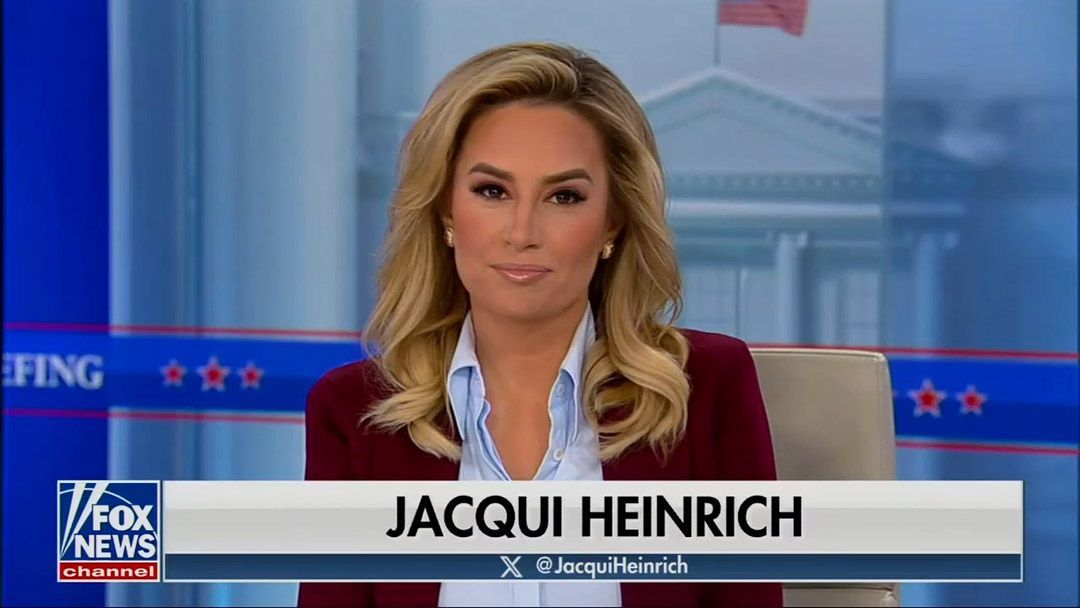
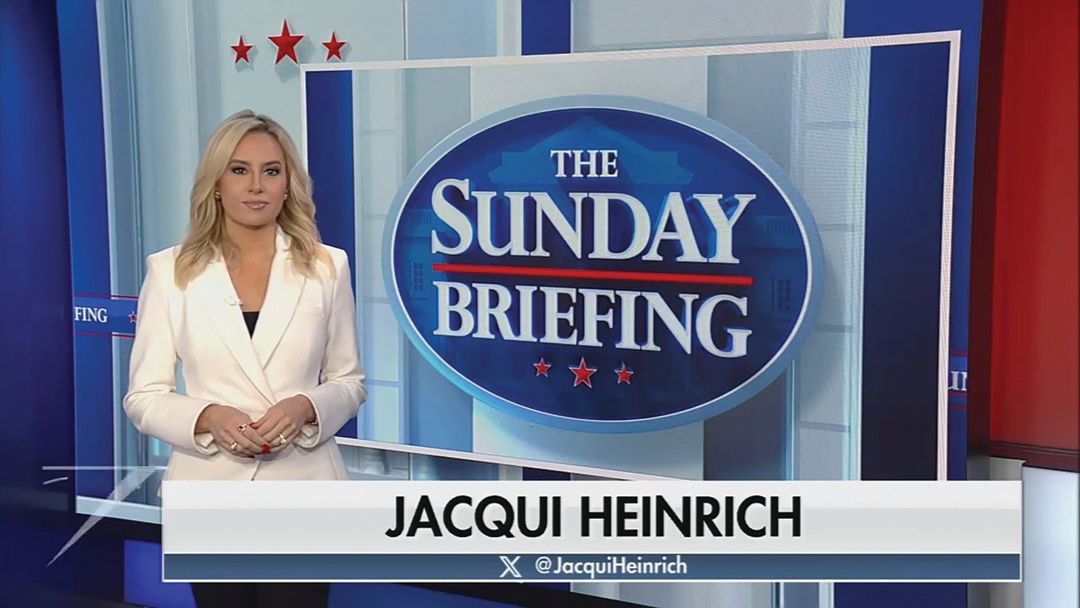
Not many people can say they’re about to call President Donald Trump’s personal cell phone. But sitting in the White House basement, Jacqui Heinrich is one of those people. Heinrich, a Boston native and frequent Nantucket visitor, was promoted last year to co-host Fox News’ The Sunday Briefing. She also serves as Fox’s senior White House correspondent and is the president of the White House Correspondents’ Association. In August, she gave a behind-the-scenes talk on the Trump White House at the Dreamland, and she made time to speak with N Magazine on the 30th anniversary of Fox News about her career, the state of the country and journalism today.
What is your experience on Nantucket?
HEINRICH: I’m from Massachusetts originally. I was born in Boston. I’ve lived in Lincoln, Sudbury and Gloucester, and I have a lot of family still in and around Boston. It’s home for me in so many ways. [Nantucket] was always a place where my family would go to try to get away for a little bit. It feels far away enough that you feel like you’re breaking from the pace of the rest of the world, but it’s still New England, and you feel that.
Do you feel that Fox News as a network has an inherent leaning toward the right, or is that simply public perception?
HEINRICH: If you watch our reporting, it’s apparent we cover every story from all sides fairly. The show that I anchor, we book Democrats every show. Just as we reach out to a Republican lawmaker, we reach out to a Democrat lawmaker. That’s almost every Sunday show that I host. I would push back on the presumption that there’s a leaning. Every network has its editorial, opinion side, and that’s the nature of cable news. But the reporting we do on this channel is straight up and down.
The Trump era is a very new experience for the media. We have not had a president with as much influence over the media, and some of it is punitive. Does that put a chill on the media’s coverage of the president?
HEINRICH: I don’t think so. I think that as we saw at the White House Correspondents’ Dinner, he shook the hands of the journalists that were honored for their work that night, and all of those stories were critical of him, including the Wall Street Journal reporters who broke the story [of an alleged letter from Trump to Jeffrey Epstein]. He was very annoyed with that storyline and made no secret about that. I don’t think that it has had any impact on our pursuit of the facts and telling people what’s going on here at the White House.
I think people lose sight of the fact that this is not unprecedented. The Obama administration similarly exercised a lot of litigation against reporters, and I think that the difference with Trump is that he’s just a lot more loud about it. So we do tend to hear the president’s feelings about things more often, certainly, than other presidents. But I think what is happening in the courts is not without precedent. From my perspective as a journalist, there’s no act of intimidation that should stifle our quest for information and pursuit of the facts.
But does his willingness to go after the media in the courts for reporting stories he does not appreciate have any impact?
HEINRICH: You’re talking to the person in the chair, asking the president or the press secretary a question in the briefing room or a question in the Oval Office. I have not—and my colleagues have not—been told by their managers to stop asking questions. I think that’s apparent every single time the president is on camera. The threat of litigation is something that we’re not privy to, but it’s not something that has, in practice, stopped our line of questioning, and I think that history speaks for itself on that.
The war in Iran has not panned out smoothly for the Trump administration. Have you noticed a change in Trump’s patience at the White House?
HEINRICH: As a reporter, my job is to talk about what’s happening on any given day, and we’ve seen things evolve into a predictable cycle in ways where they want a deal, they’re negotiating, the negotiations fall apart, we’re poised and ready to resume kinetic action, and then they come back to the table. We hear different iterations of that over and over.
I think that had the administration done more Oval Office addresses to really get people to understand where things were and what might become necessary might have benefited them down the line when we’re nearing the midterms. I think there are considerations of how long will the American public tolerate the cost to them of this operation in terms of the cost of living, higher gas and oil prices. I think that’s something they’re wrestling with. But I have not seen it change the administration. They all sing from the same page of music, and that’s whatever the president is saying that day. And we have great access to him, so we get to hear it in his own words.
How concerned is Trump about the midterms?
HEINRICH: I don’t know that the White House is as concerned as Congress. You hear from members, and when they go on shows and they talk about what they’re hearing in their districts, I think that you hear the president return to a few facts every time he talks about this, which is that we can’t let Iran have a nuclear weapon—and a lot has been achieved in terms of setting them back from that goal with the operation that’s happened so far—the strait [of Hormuz] has to be opened and international shipping has to return to a place where it’s not under threat. I think that’s what’s steering their decisions. The midterms are a couple months away, and I think that’s more visibly on the minds of people who are looking closely at the polling.
There is a long history of the media protecting information about the president’s health, dating back to Franklin Delano Roosevelt. Biden was clearly impacted cognitively, but we also hear about Trump’s bruised hands and swollen ankles. Why do you think it’s hard to get real clarity on the president’s health?
HEINRICH: During the Biden administration, whenever the press would raise concerns about the president’s health—whether he was stumbling over a word, having a lapse in memory or was looking out of it—we were often attacked by the administration for our line of questioning as being a partisan hit. That was something that I think was shameful. That’s not happening under this administration. They let us in to talk to the president on a daily basis. We see with our eyes and hear with our ears how [Trump] is doing, and I don’t think there’s a valid comparison to the Biden administration.
The president seems to enjoy interaction with the press. How accessible is he?
HEINRICH: I could call him right now, and he’d pick up the phone. I’ve gotten calls from him before. He engages routinely with reporters, including some of the reporters he has the most contentious relationships with. I think that’s something that is unique to him, and I’d be surprised if we saw it again. I’m sure the Secret Service isn’t too thrilled at how many people have his cell phone number. It’s something that I’ll remember forever being able to phone the president and ask what’s going on at any given time.
With the president, things seem to change very quickly. Does that unpredictability make reporting difficult?
HEINRICH: You just have to know everything about everything at all times. No big deal. You have to have a strong handle on all of the day’s issues and be ready to ask the president questions on any given topic at any given time. They can call us into the Oval Office right now, and you might be in front of him for three hours. I always have a running list of what I would bring up if an availability opened, and that was different than under Biden.
Journalists have a job to do, but they’re also Americans. Sometimes, there are national security issues that put journalists in a difficult position where they might say something that could have an impact on the country as a whole. How would you manage a situation like that?
HEINRICH: There have been examples of that in the past. There was a prisoner swap story under Biden, where a small number of reporters were told about a transfer that was going to be happening, and if the information about it got out, it would jeopardize the lives of those people. Luckily, agreeing to those terms and receiving the information is something that I can bring in my managers on. I’m not alone and in a silo at that moment. But I think that there are countless examples of times when the press has been entrusted with secret information, and that’s a discussion between the outlets, editorial managers and the administration.
What about this job is most appealing, and what is the most difficult?
HEINRICH: It’s a privilege to watch history unfold from the front row. That is an experience that [only] a handful of people get in life, and that is a responsibility that you take on. It includes a lot of work, so I think it’s the most fulfilling and the most difficult at the same time. But it is something that I’ve always wanted in terms of having that access, being right there and getting to write the first draft of history. That’s something that is huge. I’m grateful to be able to go on these trips and to be up close to all these officials who are making decisions every day that affect Americans’ lives. I’m privileged to work for this network where we are supported in that, and where our audience appreciates that.
Our viewing numbers show that we do that well, and that the public trusts us to bring them the news. My show on Sundays has 400,000 independents who watch. These are people who determine the outcome of elections. They turn to Fox when they want to get the best reporting, and I appreciate the privilege that I have in doing that.
The division in this country is arguably as serious as it’s been since the Civil War. What is your take on where the country is going? Does the media’s attention on political extremes worsen the problem?
HEINRICH: I think that we’ve seen the country move farther apart, but I would push back on the idea that it’s because of the legacy media. I think there are a lot of structural reasons for that—people are getting their information in silos that are dictated by algorithms that give them bias-confirming information. More and more people are consuming their news in 20-second clips on YouTube Shorts, Instagram and TikTok than by reading a paper. I think that’s a piece of it. I think that primary elections are a piece of it, where you have more money than ever before that is being injected into these races. If you look at the polling on who casts ballots in these primary elections, it’s usually the farthest left and the farthest right faction of the party. Those are the engaged primary voters. If you’ve got to clear a primary to get to the general, it guarantees that you’re going to end up with two candidates who have gotten the buy-in of both extremes.
This year is Fox News’ 30th anniversary. Social media is having a profound effect on the conventional news business, print media is under pressure and broadcast news viewership is declining. Where do you see Fox 30 years from now?
HEINRICH: You can follow the lines in the graph and look at the trajectory and presume that we’re going to be in an even more dominant spot. Our show on Sundays has one of the youngest demographics across cable and growth year over year. I think part of that is making sure that you’re present on social media to share your reporting and to have the audience connect with you, but then bringing them into the channel to watch the fullness of your report.
Latest Stories