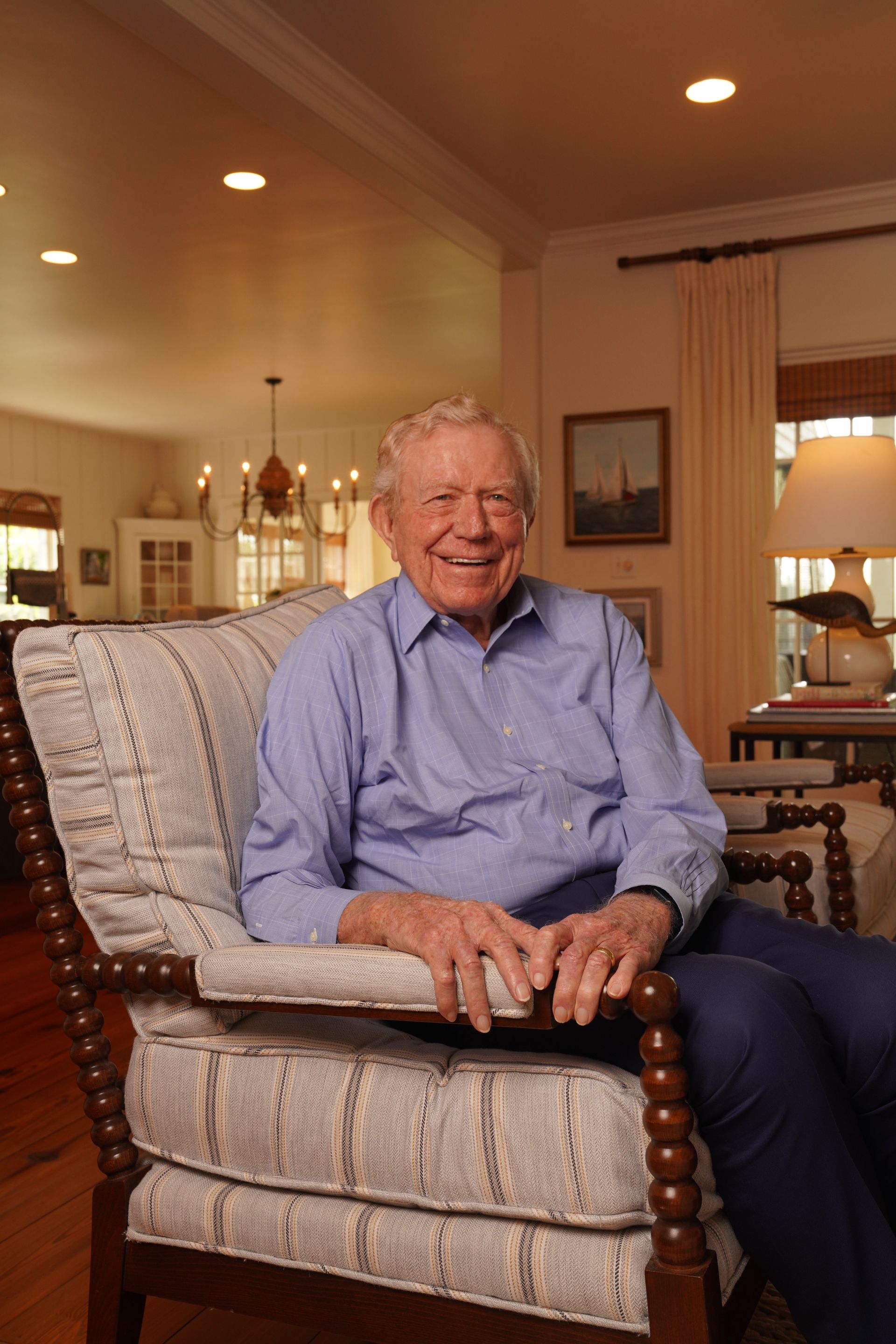
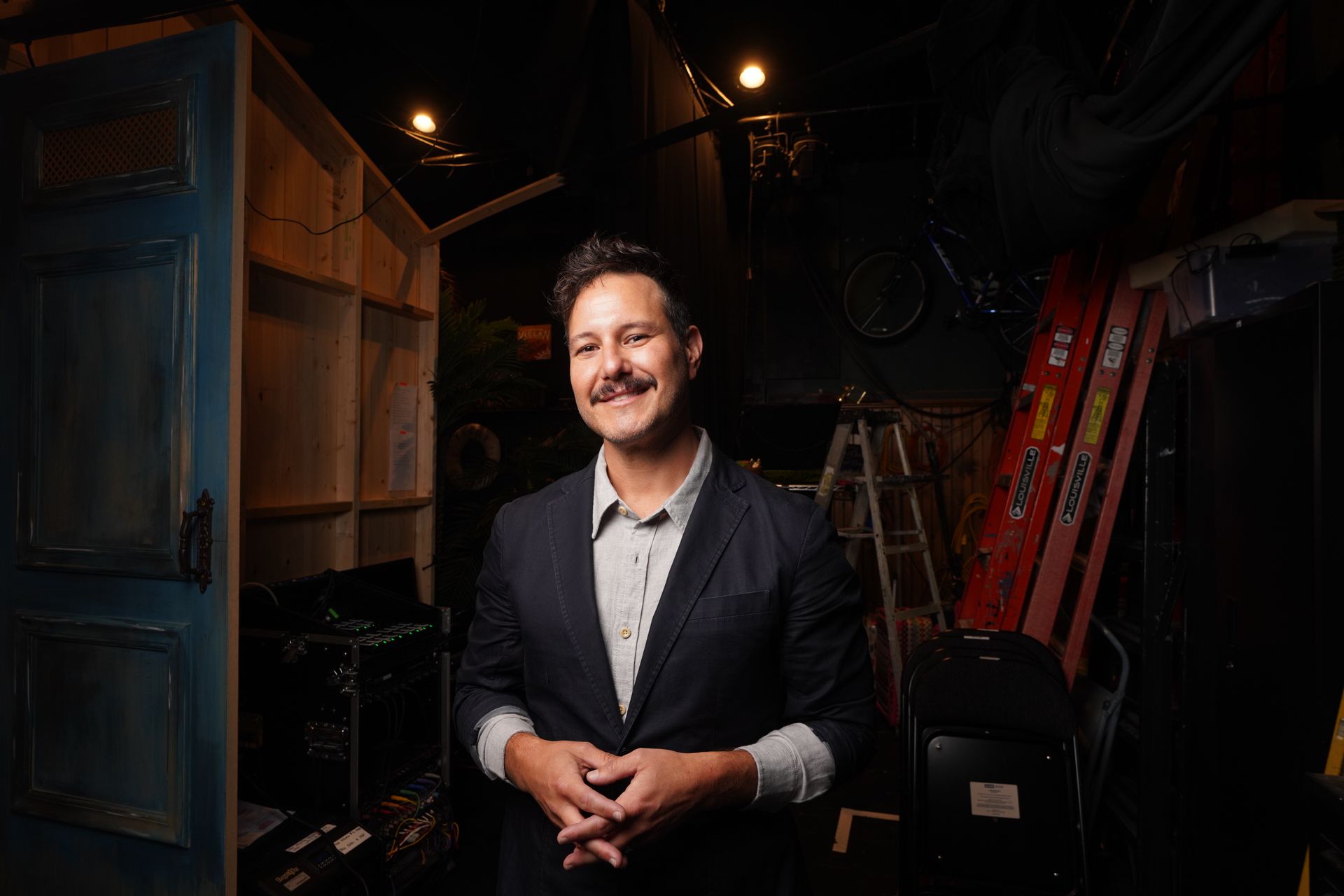
Texas Democrat and Nantucket summer resident Ben Barnes
Interview by Bruce A. Percelay
Photography by Kit Noble
Few people have witnessed history quite like Ben Barnes. At 25 years old, the up-and-coming Texas Democrat was put on the planning committee of President John F. Kennedy’s November 1963 fundraising tour through Dallas. More than 60 years later, Barnes still asks what happened that day, and whether the country would be any different had Kennedy not been assassinated.
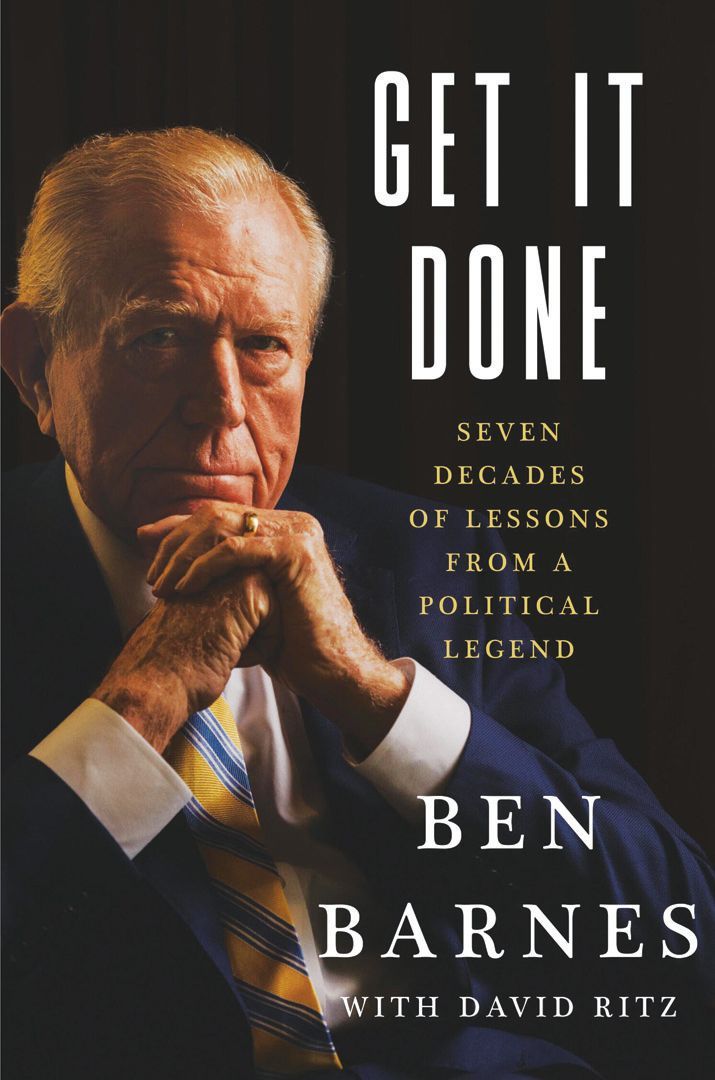
Barnes, now 88, has lived a full life in politics. The youngest elected Speaker of the House in Texas state history who became a political journeyman, Barnes has been involved with every president from Kennedy and Lyndon B. Johnson to Barack Obama, Joe Biden and Donald Trump. Barnes, who maintains his thick Texas drawl, has served as a consultant, lobbyist and power broker, and recently released an autobiography titled
Get It Done. The longtime Nantucket summer resident sat down with N Magazine
for an insightful conversation on the Kennedys, as well as Lyndon B. Johnson’s mixed reputation and the current state of democracy in America.
At age 26, you became the youngest Speaker of the House in Texas state history. In hindsight, how did you develop the maturity to lead and be respected in state politics?
BARNES: That’s a question that I have tried to answer to myself all these years. Getting elected to the House when I was 21, my first day in the Legislature, I was so young-looking that one of the older members walked up to me and thought I was a page. He asked me to go get him a cup of coffee. Well, I didn’t want to embarrass this guy, a senior member of the Legislature, so I went and got him a cup of coffee. Two days later, he came over, introduced himself. He said, “I didn’t know you were a state representative. I thought you were a page.” That instantly kind of hung with me the rest of my political career.
I really formed a network of people that I went by to see and ask their advice and counsel, and that served me very well. Number one, I needed their advice and counsel because I didn’t know what the hell I was doing, but I also needed them to know that I relied on them and I respected them, and that helped me overcome the age of running for speaker and asking them to vote for me for speaker because they thought they were having an impact on my life. I was taking their advice. A lot of times I would thank them when we did something I thought was correct. I learned very early that the most important thing you can do to become a friend of a legislator or an elected public official is to ask them for their advice and ask it often. When you take their advice, be sure and go back and give them credit and thank them for giving you the right advice.
You were asked to help plan John F. Kennedy’s fundraising tour in Texas, and you were quite strong in your advice for him not to tour Dallas. Was that an instinct? What was your trepidation?
BARNES: It was the atmosphere in Dallas. The Dallas News let H.L. Hunt of the [conservative] Hunt family run a full page ad, “Kennedy Go Home,” the day that Kennedy got there. It was very, very embarrassing for Texas for that ad to be in
The Dallas News. Adlai Stevenson had come to Dallas and had the same experience. We’re going to have the president of the United States for the first time in Texas as an experienced president, running for reelection, and we’re going to have some embarrassment. I didn’t know what was going to happen, but it never entered my mind [that he would be shot].
What do you remember from that day?
BARNES: Jack Kennedy said to me on that Sunday, “Let me tell you, Ben, if someone wants to shoot the president of the United States, there’s no way to keep him from shooting the president of the United States. If the president gets out and fulfills his duties and goes and does things, he’s a sitting duck.” Later, I saw Reagan shot. If the gun hadn’t misfired, Gerald Ford would have [also] been dead. She was about six feet from him, and Reagan was [also] shot at close range. I saw those two people shot, and then George Wallace got shot when I was in office. Jack Kennedy, Bobby Kennedy and Martin Luther King were all killed when I was in office, and that’s a sad record of being in office when the three major assassinations in the political history of this country all took place in the ’60s.
Had Kennedy lived, how different would the country have been?
BARNES: I believe—despite what a lot of the Kennedy fans say, and I’m a fan of Jack Kennedy myself—that he and Johnson would have basically made the same decision on Vietnam. I don’t believe that Kennedy was getting out of Vietnam, and I believe that Kennedy got screwed by the Bay of Pigs and the CIA backing up. But I think that the Civil Rights and Voting Rights acts would have ultimately been passed, but they wouldn’t have been passed in ’64 and ’65 because I don’t think Kennedy could have gotten the Southern senators to sit down as Johnson got them to sit down. I don’t think Jack Kennedy could have passed those acts, and that’s something else that Ted [Kennedy] and I agreed on.
What was it about Johnson that enabled him to lean so progressive at the time? The positions he took were not typical of a Southerner.
BARNES: Johnson learned that there was great abuse based on race, really about his experience in South Texas, more so than his experience with Black Texans. Fredericksburg and Johnson City are a little bit like Comanche County, where I was born. There was not a Black person in my high school or grade school class, and there were very few Hispanics. I mean, it was a white part of Texas, and Johnson grew up there. Johnson had those feelings. People that knew him said he didn’t talk about it a lot, but he decided that the one place that he could accelerate was equal rights in America. He had a chance to do it.
The day he signed the Voting Rights bill, I was in Washington because I was president of the Southern Legislative Conference. He put his arm around two or three of the guys and we huddled there, and he said, “Ben, I want y’all to know, and all your friends [to] know that by passing this Voting Rights bill today, the South is going to turn Republican.” He said, “I will probably get beat, and y’all may all get beat. But I tell you, us passing the Civil Rights and Voting Rights bill is more important than all of our political careers put together. And so I want y’all to remember that, and you’re going to have to live with it.”
Then he took about three or four steps away, and he twirled back, and he said, “And something else,” as he punched me in the chest with a finger. He said, “Ben, some day a Black man will be nominated president of the United States.” This is 1965. He said, “And by God, you better be for him because a Black president will not only change this country, but it’ll change the world.” Well, fast forward then. I’ve been for Bill Clinton and I’d been to Nantucket with him. When Obama ran for president [in 2008], we endorsed Obama, and it made the Clintons very angry at me.
If you eliminated Vietnam from Johnson’s record, would he be considered one of the great presidents?
BARNES: There’s no doubt about it, if they’re not going to Vietnam. Medicaid, Medicare, public television and public radio. He added more areas to the national parks than any president except Teddy Roosevelt. He’s got a long record of things that he did. There are 2,000 bills he passed, and he used the image and memory of the tragedy of John Kennedy to his advantage. I think about half the legislation he passed [was from] when he would say he was going to do this in memory of Jack Kennedy. I think the unfortunate tragedy of Bobby Kennedy being killed and the tragedy of Martin Luther King being killed added a sympathy that ran through Johnson’s legislative program. A lot of people, even those opposed to those things, didn’t get out and fight him like they would have maybe normally because they didn’t want to fight the images and the ghosts of Jack Kennedy, Bobby Kennedy and Dr. King.
Fast forward to today. The bipartisanship divide seems to be getting wider, with socialist candidates on the left and far-right candidates on the other side. Where are we headed with this great divide?
BARNES: The birth of the real right wing that took place in the early 2000s and the people who got elected to Congress that were really right wing permeated our political society enough that they grew in numbers. Then along came Donald Trump, and he seized on this opportunity. A lot of people don’t think Trump’s intelligent. I think he’s a smart guy, and I think he seized on this divide that he saw developing in this country. He brought out a type of person that was not used to being in American politics who felt like they were left out of the system, and they were mad as hell. They got an opportunity to go support Trump, and they got an opportunity to have some power. It was not enough to be against someone politically. Trump permeated this into the system that you’ve got to dislike them or hate them.
I consider the division in America to be more than a political division. I consider it to be a personal division. People have family fights and arguments at Christmas and Thanksgiving. Members of the family don’t speak. It’s a very difficult time in America, and I think it’s the most dangerous time. I really think that there’s a lot of wood, a lot of grass, and there’s a lot of people running around that have buckets of gasoline and a box of matches in their pocket. A lot of bad things can happen very quickly.
Is there a resolution to this situation? Could the right president pull the country together?
BARNES: When you’re assigning blame, obviously I think that Trump and far-right-wing Republicans are more to blame. But the Democrats are not behaving themselves as respected, freedom-loving proponents of democracy. We’ve got a group of Democrats now that are not afraid to call themselves socialists and not afraid to even use the word communist again, and that’s very unhealthy. I am still an optimist, and I think we can find a person and a political movement that can save America and move us back to at least a much stronger degree of cooperation and less hatred and bigotry. It’s going to take a very talented person, and it’s going to take a lot of changes.
I’ve never been for term limits, but I’m for term limits now. I think some congressmen ought to serve six terms and senators ought to serve two terms. I’m for a 75-year-old retirement age now. I think everybody can still, under the Supreme Court decision, give all the money they want to. But I want to see it reported in 72 hours. I want you to have to file with the secretary of state the contributions you get. I want redistricting done by impartial boards. This gerrymandering to save seats or to regain the control of the House or keep control of the House is a lousy way to run a democracy.
Do you think Trump’s conduct has redefined the presidency, or will it snap back to what we have come to expect?
BARNES: The thing that I understand the least today about what’s happening in this country is the fact that the public has seemingly taken for granted that people can make money in office. I never thought I would live in a country where the people would accept a president and his family personally benefiting from being in office and making business deals and having a sales machine to sell the things that that family has been able to do. I think it’s very, very unhealthy. We become a third-world country if our presidents are going to go get wealthy when they get elected. We are all going about our lives, and now we’ve grown accustomed to Trump and his family making money, and that is in clear violation of the United States Constitution.
Thomas Jefferson famously said that if given the choice of a government without newspapers or newspapers without government, he would choose the latter. Is the media complicit in the divide between left and right?
BARNES: In 1963, there were 78 representatives of the press in the state Capitol: daily newspapers and some radio and television. Most cities in Texas had two papers. If
The Dallas News didn’t get you in the morning edition, the
Dallas Times Herald
got it in the afternoon edition. There was fierce competition, and as a result, newspapers had the money and they spent the money to report the news. Well, because of the internet, newspapers got in financial trouble because people weren’t reading newspapers anymore. As a result, these online sources that don’t have a system of checks and balances will have people read it and believe it. Today, in this last session, there were eight press people, not 78 that had offices when I was in office. That’s a sad situation because people don’t know what to believe, and there’s a world of people who believe the internet. I don’t think people are nearly as informed about their state government and their federal government as they were when everybody got their source from the daily newspapers.
Are you optimistic about the future of the country?
BARNES: If I had to describe America in 2026, I’d say we’re confused. We have so many sources directing us to do so many different things that we don’t have a definition of purpose like our parents drilled into our heads. Maybe we’re too smart, I don’t know. The jury’s out on what we’re going to leave our kids and what’s going to happen in this society, but I don’t think we’re going to get near as high grades as what Tom Brokaw called the Greatest Generation. I don’t know which words in the King’s English that we’re going to use to describe what our generation is or how much we’ve contributed to the future of this country.
What are you most proud of from your career?
BARNES: I’m more proud of the role I played in public and higher education. Specifically, some of my friends met and had dinner 20 years ago and created the Ben Barnes Fellows. Now there are over 50 kids that have gotten a full run to get an undergraduate and graduate degree. They’ve gotten $50,000 a year out of that fund that my friends created. Meeting them, seeing the job that they’re doing and seeing the responsibility that they feel in their soul—I think that’s probably the proudest accomplishment.
I’m prouder of that than I am the brick and mortar, and I certainly passed a lot of tax bills and created brick-and-mortar facilities. We created probably 20 new colleges, universities and medical schools. When you can go by and point to something that I helped do, I get a great deal of pride. But I don’t think I’m as proud of the brick and mortar as I am of the human beings in my life. I think I’m the proudest that in some small way I touched a few lives that might play a significant role in the future.