Architectural Anomaly
Mid-Century Modern on Nantucket
Written by Sally Laurencelle
Photography by Kit Noble
Anyone who’s taken a drive down any street on Nantucket is well accustomed to the cedar-shingled stately homes and cottages that define the island’s architectural style. Save for a few brick and Victorian homes downtown, island homes are known for uniformity more than anything else. But there was a moment when architects broke from uniformity on Nantucket, leaving behind a few mid-century modern homes scattered across the island.
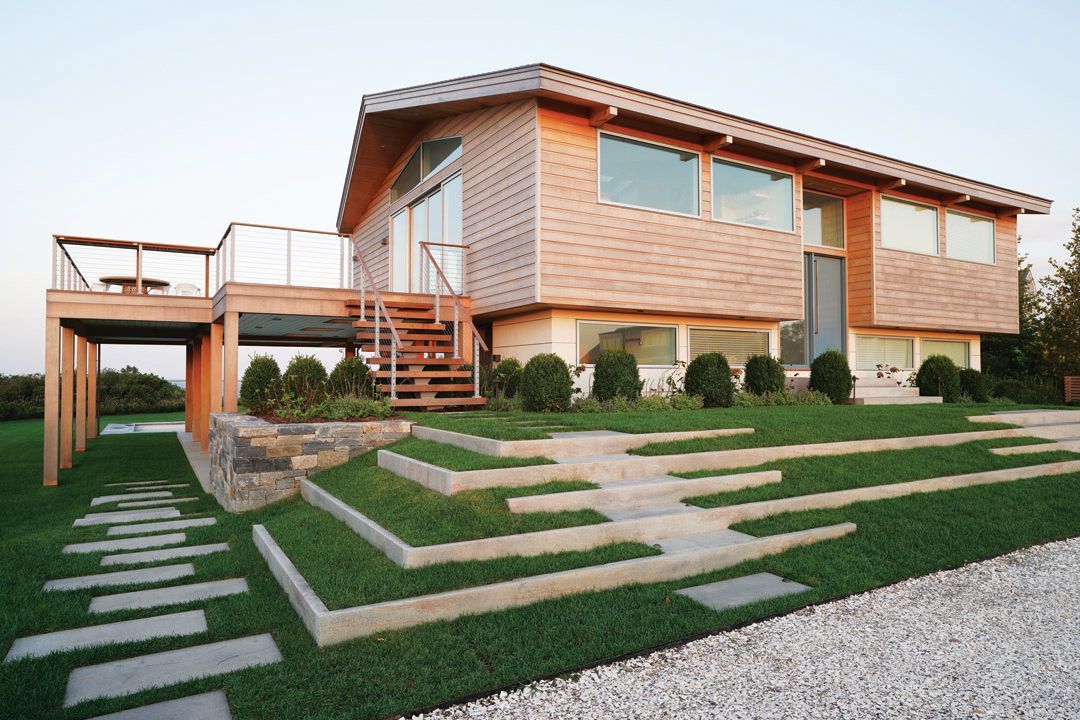
The house at 84 Pocomo Road is one of them. Originally built as a kit house assembled on-site, the house—a rare example of mid-century modern architecture on Nantucket—had fallen into disrepair. When it first hit the market, it was considered a teardown, though its new owners saw the importance of keeping the house intact. Architect Chip Webster sat down with N Magazine to discuss the opportunity to restore not just the house, but a distinct moment in Nantucket’s architectural history.
Which elements of mid-century modern design felt naturally compatible with a Nantucket setting?
CHIP WEBSTER: It would be challenging to design a mid-century modern house in many places on Nantucket, given the Historic District Commission’s guidelines. What made this project unique is the opportunity to restore and preserve an important part of Nantucket’s architectural history. History is a moving target. What’s not that old now becomes very old down the road. To accurately preserve the history of a place, one needs to recognize that architectural designs and lifestyles change over time. The mid-century modern style occurs in this area of the island because it was during this time period when vacation homes were being built in Pocomo. One of the things that led to mid-century architecture was a desire to maximize light, views and connection to the outdoors.
How did you adapt the historical design of mid-century modern to the owner’s way of life?
WEBSTER: The [owners are] avid kiteboarders, and one of the reasons they chose Pocomo was because of the world-class kiteboarding only steps away from their property. The new basement incorporates a large room for kiteboarding equipment and additional sleeping space for the family. Additionally, the home had to meet the current standards of building code requirements such as egress, structural integrity and energy and insulation requirements.
How does your architectural style guide your decisions fromconcept to completion?
WEBSTER: There is a responsibility for anyone designing structures used by humans to make them into functional spaces while fostering a positive relationship with the people using the building. That means the light-air relationship of the rooms and the flow of circulation through the building must work in harmony.
Do you see this house as an outlier on the island or as part ofan evolving architectural trend?
WEBSTER: This property is certainly an outlier. Mid-century modern houses represent a minimal percentage of homes in Nantucket. It would be interesting to see how the Historic District Commission would react to a proposal for a new design based on mid-century modern.
What overarching architectural themes guided the design of this house?
WEBSTER: The overarching architectural theme was the restoration of the original design, which focused on light, views, open spaces and connection to the outside. In the original design, there was a large fireplace in the middle of the house, which separated the kitchen from the living space. To open and connect the spaces, we removed this fireplace. However, we wanted to keep the exterior architectural integrity of the original design, so we kept the chimney and made it into a skylight to bring light into the middle of the house. We carried this skylight theme to the exterior deck where we integrated flush glass to allow light down to the lower patio.
How do you feel that light and materials worktogether in this space?
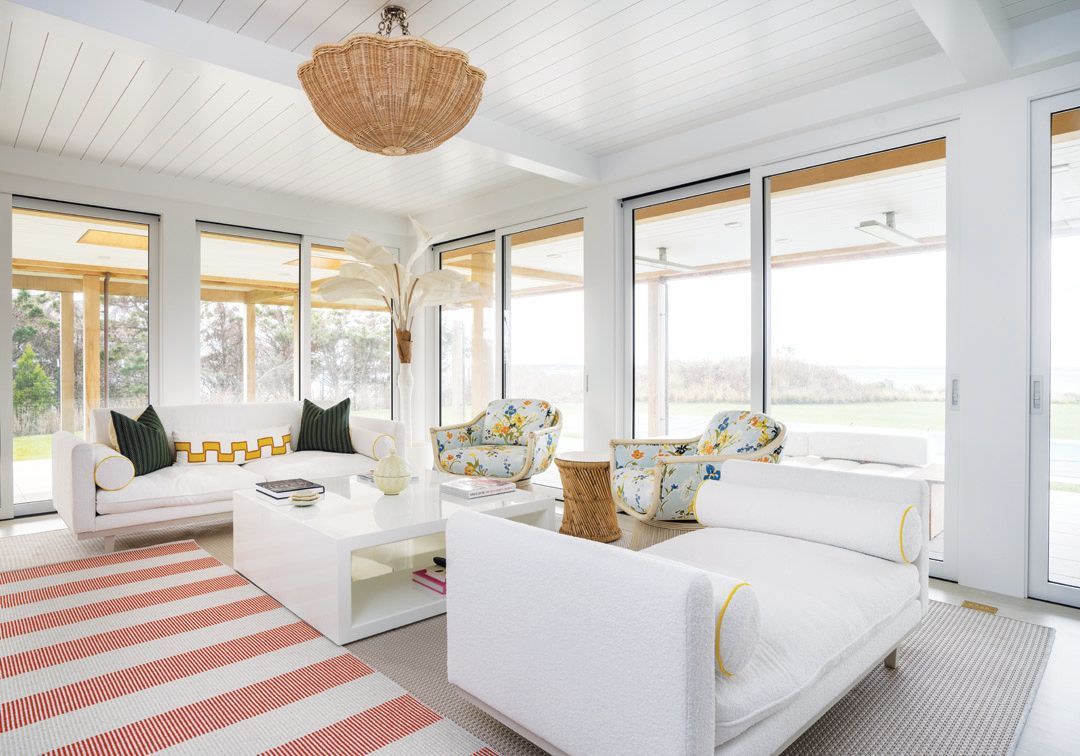
WEBSTER: We worked closely with the interior designer, Melanie Gowen. [We] kept the architecture clean and simple. Melanie chose to use white as the primary wall color to act as a canvas for the artwork, furniture and fabrics to bring brighter colors into the space while reinforcing the mid-century modern aesthetic.
Are there details in this project that might go unnoticed by others but feel especially important to you?
WEBSTER: One of the themes is simplicity and minimalism. There are no moldings, no baseboards and no trim around the doors. Surfaces are smooth and clean; ceilings and beams create the detail instead of additional moldings.
Latest Stories