FAST TRACK
How John Esposito went from record store clerk to music industry rock star.

John Esposito could hardly believe his eyes. The year was 1993, and he was sitting in the legendary Twenty-One Club in Manhattan. Through plumes of smoke, holding court at the head of the table, was none other than Ol’ Blue Eyes himself, Frank Sinatra. “Alright, play it cool,” Esposito told himself, as he approached the music icon. He’d learned long ago that slobbering over stars never got you anywhere. It was best to talk about their work. “In the Wee Small Hours is my favorite album of all time,” Esposito gushed to Sinatra, after introducing himself. The crooner’s eyes lit up. A genuine smile spread across his face. How the hell did I get here? Esposito thought. It wouldn’t be the last time he would ask himself that question.
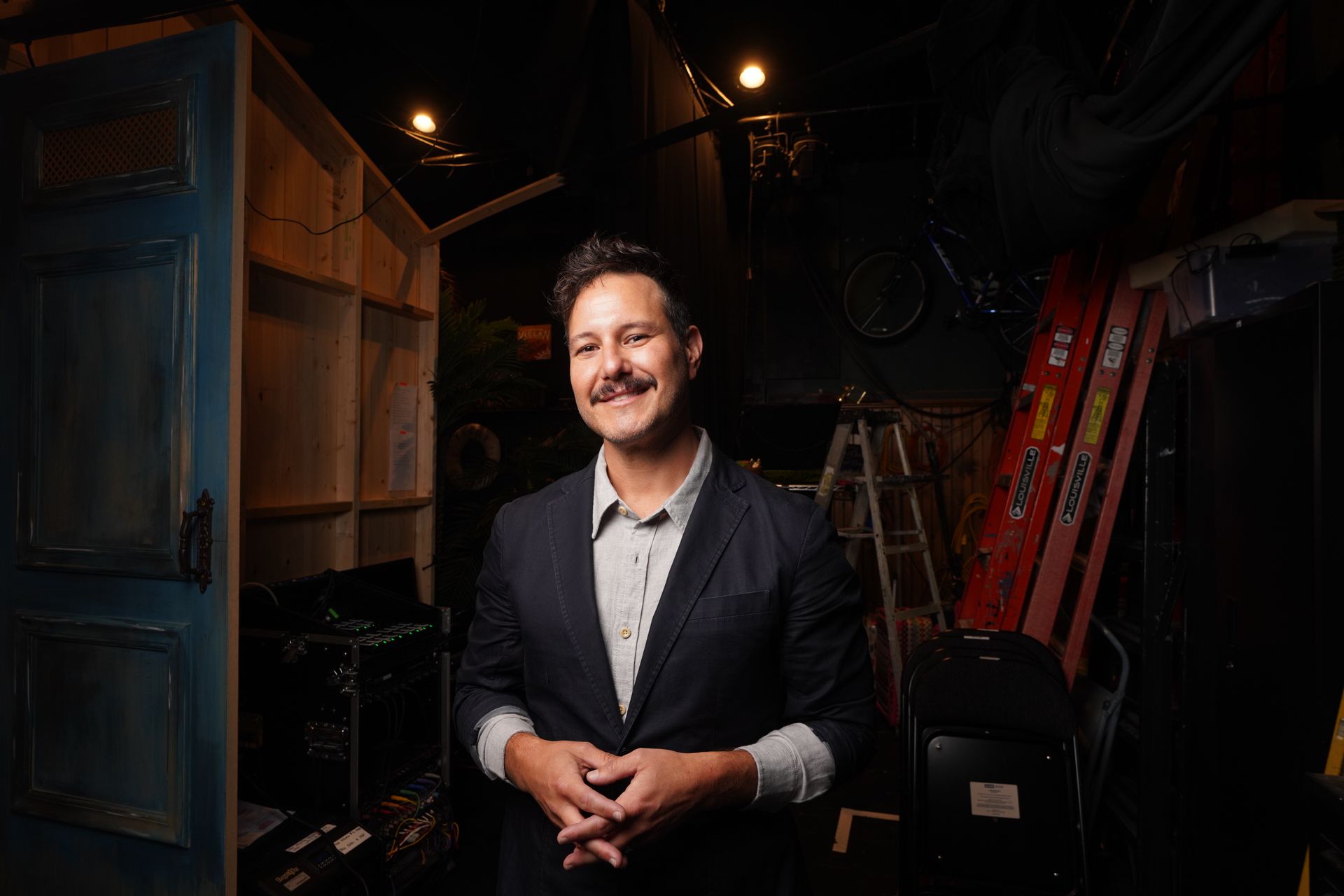
Nearly forty years later, John Esposito, or “Espo” as most friends call him, is hanging in his backyard clubhouse on Nantucket, a three-hundred-square-foot prefab shed on his property equipped with a dart board, a wet bar and a sound system. He’s dubbed the hangout the Eat Fire Spring Yacht Club where there’s only one rule: Whoever wins at darts gets to pick the next song for the sound system. At this point in his career, Esposito has a lot of songs to choose from. He’s charted a star-studded career in music that has crossed multiple genres, from rock and roll to rap to his latest fixation, country, as the chair and CEO of Warner Music Nashville.
"I had no idea that my passion for music would lead me to becoming head of a record label,” Esposito said. Growing up in Punxsutawney, Pennsylvania, he sang in the choir at his Catholic church and felt an immediate connection to music. His father introduced him to Sinatra early on, but the real watershed moment came on February 9, 1964, when four shaggy-haired Brits in matching suits appeared on The Ed Sullivan Show. “My life changed when I first saw the Beatles,” Esposito said. “From then on, I couldn’t get enough rock and roll.” Led Zeppelin. Crosby Stills & Nash. The Doors. He collected albums with abandon. By the sixth grade, he started playing the guitar, mostly, as he says, to sing “silly love songs to woo the gals.” He also learned to play the drums and helmed a number of high school bands.
Esposito became a student of music, not so much of music theory, but musicology. He emerged an expert on bands from the ’50s, ’60s and ’70s—not just rock and roll, but jazz and other standards. Yet music was just a passion; he never dreamed of entering the industry professionally. Instead, Esposito graduated from Indiana University of Pennsylvania with a journalism degree and set off hellbent on breaking into the news industry. Then fate swooped in.

While making his way for an interview at a PBS station in Washington D.C., he spotted a HELP WANTED sign in the window of a record store. He was growing concerned that if he didn’t get hired for a job in journalism, he would soon be forced to move back home. So Esposito took the position at the record store to make ends meet. On his second day on the job, he was putting away vinyl albums when the regional manager happened into the store. He studied Esposito’s resume and asked, “What the hell are you doing here?” Esposito said he was just trying to pay the bills. “Well, follow me,” the manager said, “I’ll train you to run record stores.” And just like that, Espo got his start in the record business.
Charismatic and erudite, Esposito proved to be a natural in business. Soon he was running a number of record stores at once. Promotions kept coming. Then entering the ’80s, a headhunter called him out of the blue asking if he’d be interested in interviewing at the buyers department at Macy’s. He took the interview and they offered him the position, which effectively doubled his salary. Macy’s finetuned Esposito’s business acumen until another big-name company came knocking. Mitsubishi offered to triple his salary to run their sales operation on the East Coast. He took the gig. “I was being amply compensated, but I was bored out of my gourd,” Esposito recalled. His first love of music was calling him back.

“My life has been a bunch of forks in the road, and like Yogi Berra said, ‘I took it,’” Esposito said. Seeking to leave his role at Mitsubishi to reenter the music business, he called up his biggest retailer, Nobody Beats the Wiz (also known as The Wiz), and asked if they would introduce him to people in the industry. They offered him a job as chief operating officer of music and movies instead. Within two years of working at The Wiz, Esposito was pursued by Sony Music, EMI and PolyGram. The senior executive from PolyGram, a Nantucket summer resident named John Madison, ultimately convinced him to join their ranks. So began the pinch-me journey he’s been on ever since.

“What I realized with my musicianship is that I can speak a language that a lot of people who work in this business do not,” he explained. “I can go backstage with artists and put in layman’s language how they could be more successful. Musicians have that crazy gene that intrigues the hell out of me. When artists realize that you’re passionate about their work, it becomes inspiring to them.”

Along with becoming a hugely successful music executive, Esposito has lived experiences most people couldn’t dream up. There was that one time, while serving as the founding general manger and executive vice president of The Island Def Jam Music Group, he and rapper Jay-Z took a helicopter to make an unannounced visit to one of their retailers. He and the rapper burst through the doors of Transworld to hand-deliver a sneak preview of Jay-Z’s next album.
For the last thirteen years, Esposito has been working on the polar opposite end of the music industry. In September 2009, he was enlisted as the first president of Warner Music Nashville (WMN), a label handling all of Warner’s country acts. When he arrived, WMN was struggling. One of the first artists Esposito met with was a “cowboy-hat-mullet-wearing” musician named Blake Shelton. Esposito built WMN around Shelton, giving him the clout to pull in other country giants like Kenny Chesney and successfully quadrupling the label’s market share over the course of a decade.
“The other thrill we get in this business, if you have a heartbeat, is finding the unknown talent,” Esposito said, “when your ears and your gut tell you that a person is going to be a household name.” One such example was the signing of Dan + Shay, which would help propel the label’s market share by 20 percent. The following year, he found similar success in signing Gabby Barrett, whose first single went quadruple platinum. Indeed, since taking over WMN, Esposito has helped propel more than sixty-five singles to the top of the charts, garnering a slew of awards.
“Nantucket is my relief,” Esposito said. “We live here for three months every year.” During the pandemic, he and his wife and daughter lived on the island full time. They have since returned to their nine-months-in-Nashville, three-months-on-Nantucket schedule, but Esposito plans to retire on the island once the music stops. After years of renting in the ’90s, Esposito bought his property in Squam twenty-two years ago, sight unseen. He said it turned out to be one of the best decisions in his life—which says a lot, considering John Esposito has clearly made a lot of good ones.

Latest Stories