The Last Scallopers?
Saving Nantucket's Bay Scallops
Written by Sally Laurencelle
Photography by Kit Noble
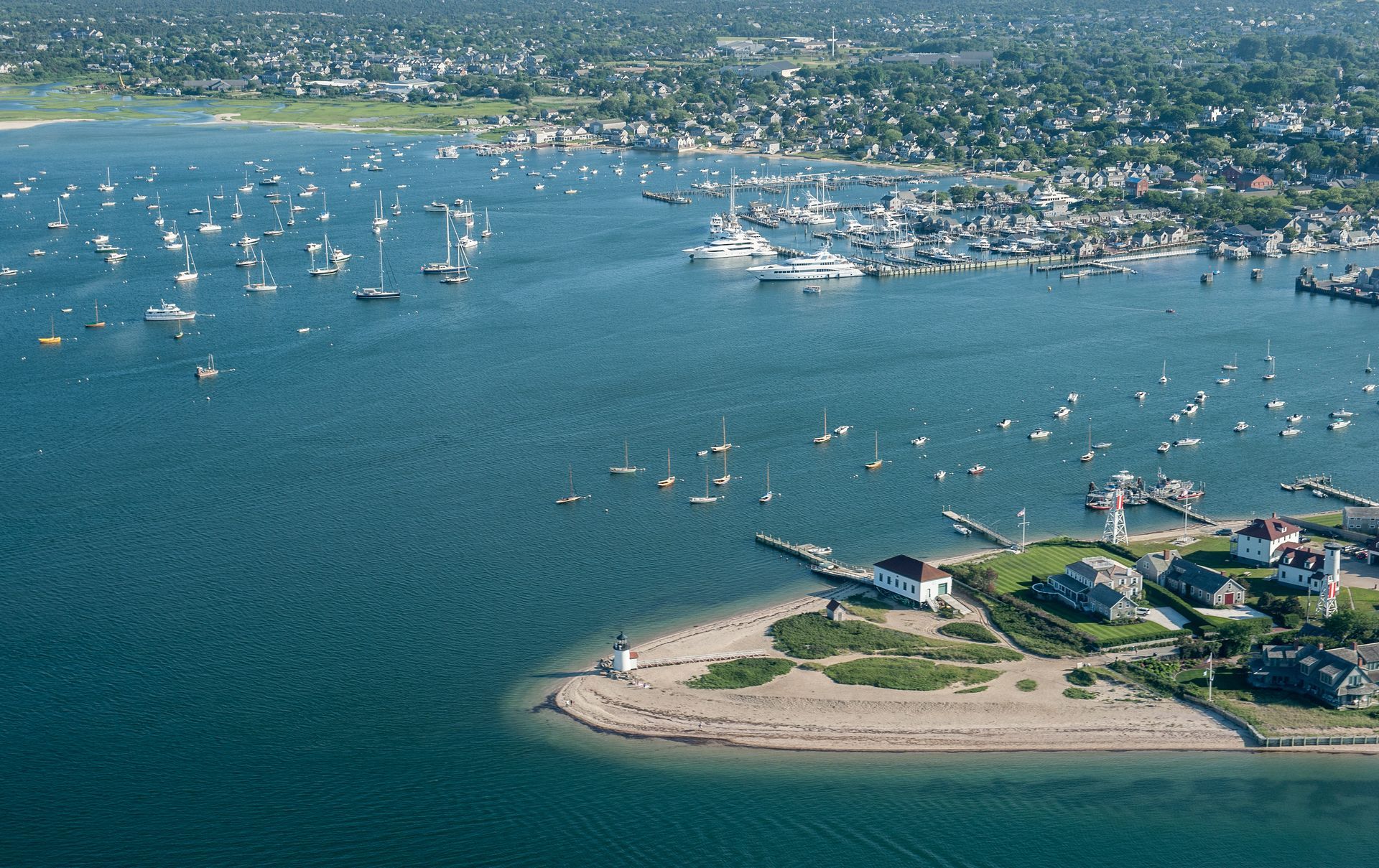
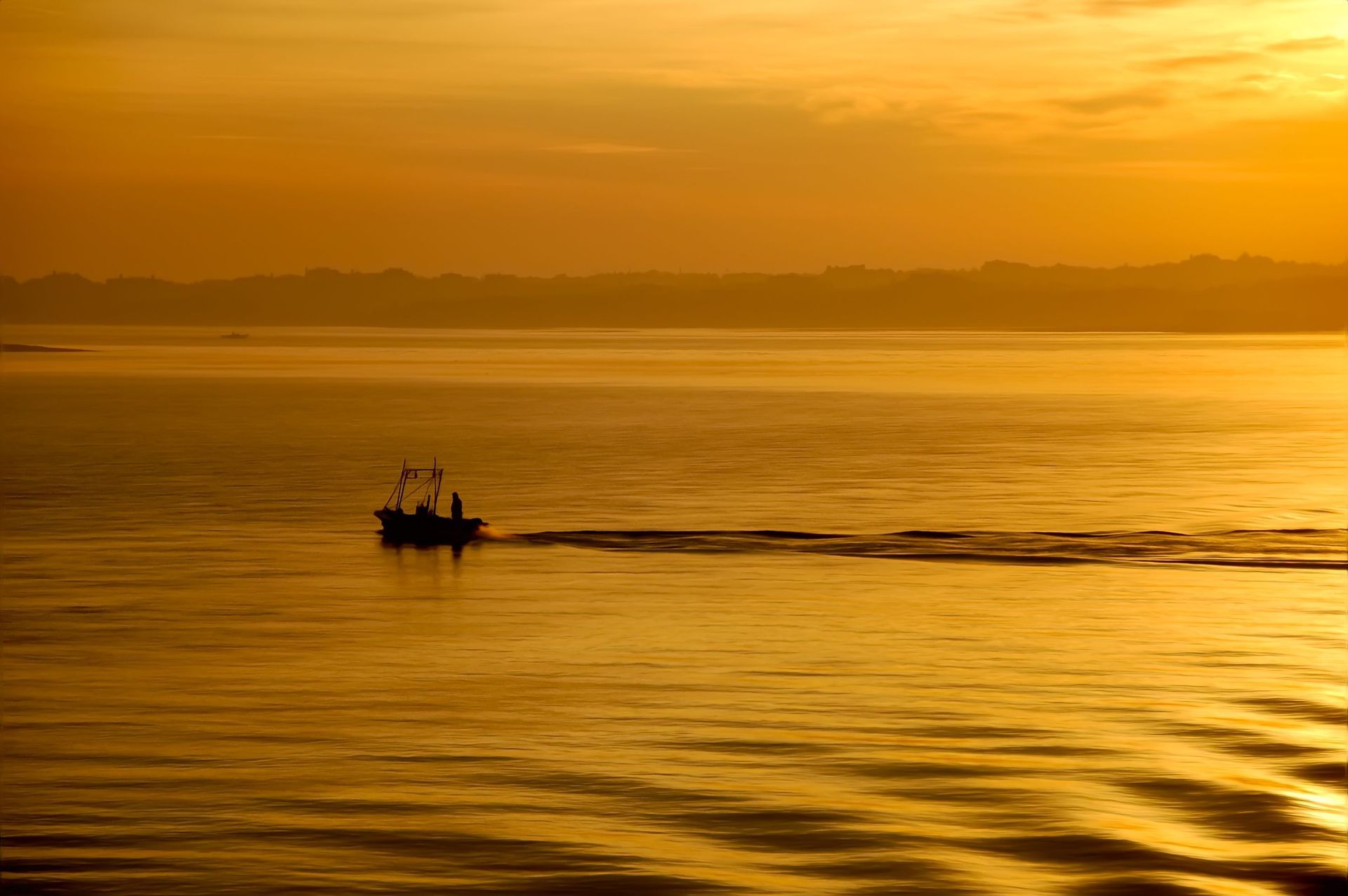
As the sun rises on a crisp early fall morning on Nantucket, many islanders are still sound asleep in their beds, but scallopers are already waist-deep in the harbor, dragging their dredges across the harbor floor in hopes of a first good haul. The harbor is still, the air sharp with salt, and the faint diesel hum of working boats carries across the water. For Captain Bob DeCosta, the quiet ritual is more than a livelihood. It’s a family tradition that has spanned three generations. His father taught him how to fish in the ’70s, just as DeCosta now takes his own son out on the water.
“I can’t imagine not scalloping,” said DeCosta, who operates a charter fishing boat in the summer. “I enjoy getting up early in the morning, being on the water, watching the sun rise and the tranquility that comes with it. After a full summer charter, it’s very peaceful. It’s almost like I’m not even really working.”
But the fishery DeCosta inherited doesn’t look like the one his father knew. Two decades ago, 250 fishermen worked on a fleet of 100 boats. Today, the fleet has shrunk to 50-70 fishermen on 25-30 boats. It’s an expensive job with low returns: Rigging a boat is costly, while wholesale scallop prices remain stagnant at $12 to $14 a pound. “The winter scallop fishery is the last real struggle for commercial fishing on Nantucket,” DeCosta said. “We don’t have the market we used to have. It’s become more of a niche item, a specialty item than a more robust market.”
Scalloping is one of the island’s last ties to its working waterfront. Whaling has long vanished, but scalloping preserves a piece of the island’s maritime culture. “Once scalloping is gone, we’ll just be known as a destination for tourists. It won’t be known as a water-related community anymore,” DeCosta said. Nantucket’s bay scalloping industry is one of the last of its kind. Similar fisheries on Martha’s Vineyard and Long Island have dwindled to nearly nothing.
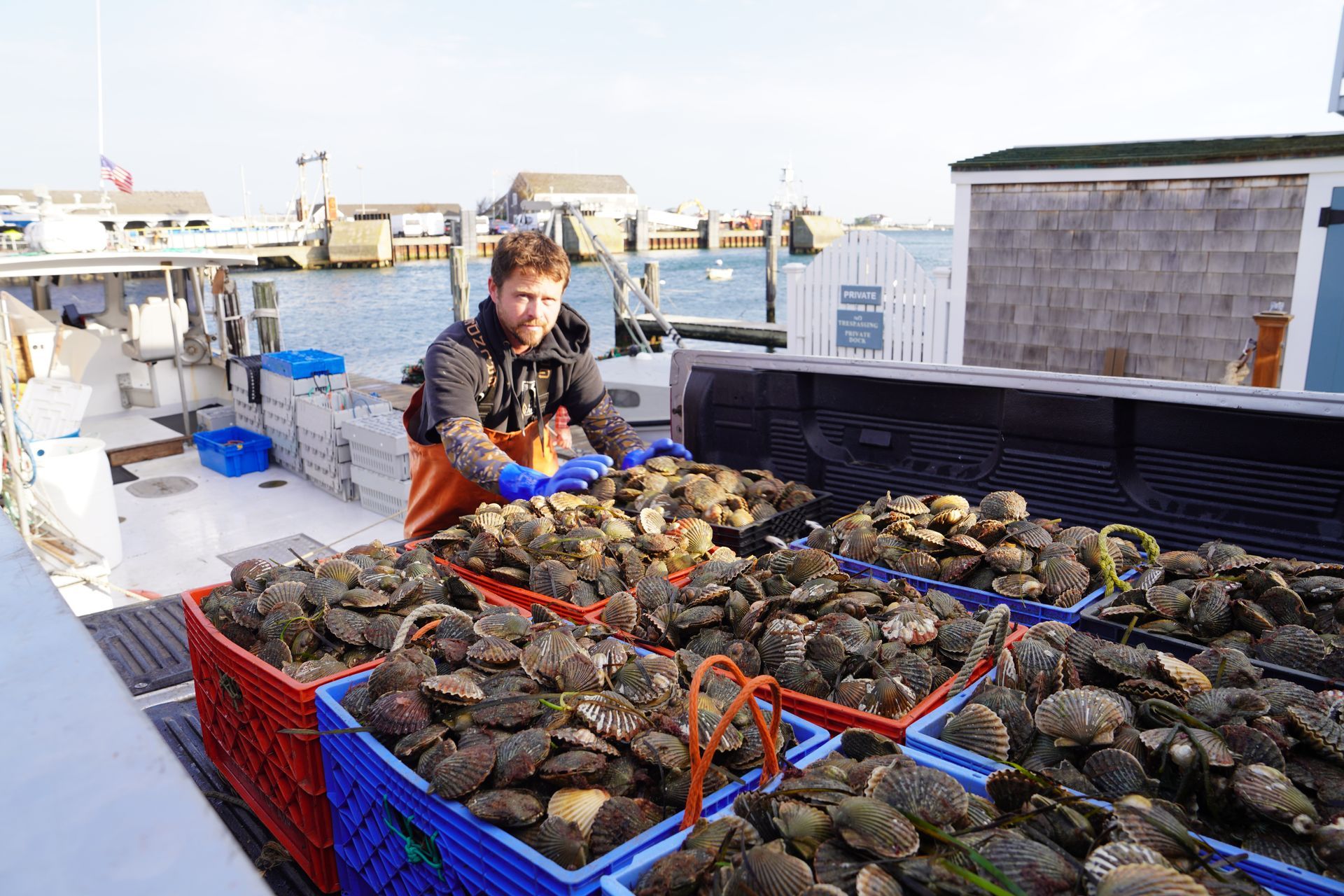
The loss is visible not only in the water, but on land. Reconciling the memory of what once was, DeCosta recalled, “If you weren’t afraid of hard work, you could make a good living scalloping in the winter.” Many families on-island had a scallop shanty tucked away in their yard. Neighbors would open scallops together in garages or backyard sheds. Families who worked in restaurants would supplement the extra income once the summer crowds disappeared.
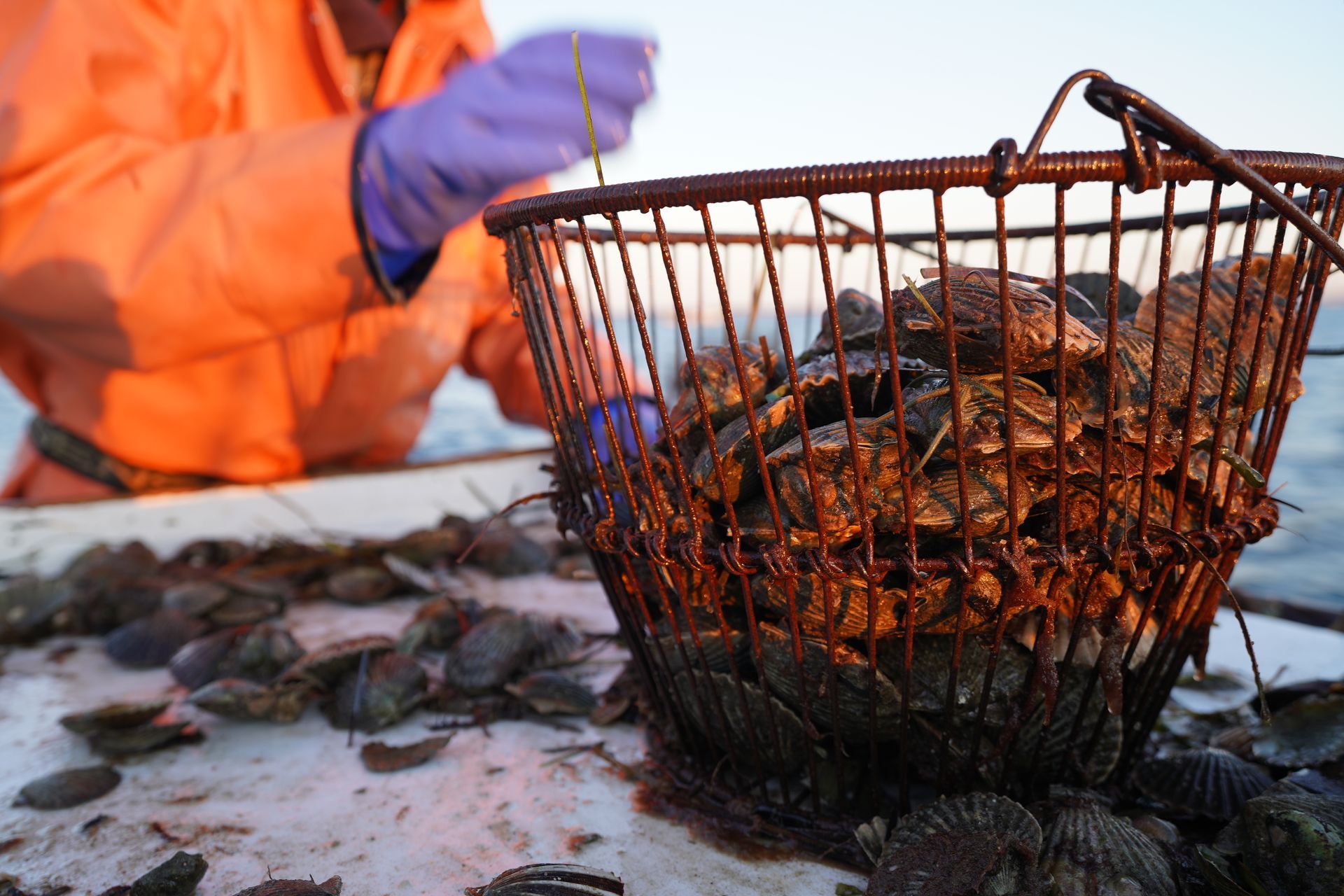
“Every kid after school used to open scallops for extra money,” he said. Now, scallops face a multitude of health regulations that have reshaped the industry. Today, strict health codes require scallop openers to have a three-bay sink, 180-degree water, refrigeration and a dedicated handwashing station. Backyard shanties simply can’t meet these regulations. “It’s much harder to find openers these days,” DeCosta admitted. Without the pool of neighborhood kids or part-time workers, many scallopers are left to do the job themselves. That means a day on the water is only half the work. After four or five hours of dredging for shellfish, most commercial scallopers have to shuck the scallops themselves.
Meanwhile, the number of bushels harvested during the scalloping season has significantly dropped within the last decade. The annual yield has swung from a high of 20,000 bushels to a low of 3,500 over the last 10 years, according to the town’s Brant Point Shellfish Hatchery. In the 1980s, on the other hand, the island was seeing as many as 100,000 bushels harvested. Even with an extended season this winter, scallopers pulled a fraction of that total, ending the season at 7,500 bushels, with fewer than a dozen commercial scallopers sticking it out to the final day of the season—though the dozen commercial scallopers who did stick it out to the final days of the season called it a successful year for the harvest, with larger scallops than previous years.
Tara Riley, Nantucket’s shellfish and aquatic resources manager, oversees the Brant Point hatchery, which works year-round to raise larval shellfish to replenish the harbor. “It takes a lot of space to grow shellfish and the algae that they eat,” Riley said. “We’ve had to be pretty creative and efficient through using different kinds of technology that a lot of hatcheries don’t have.”
She added that protecting the harbor starts with awareness: “You need to change your mind. There needs to be a whole mindset that changes about what’s important here and what’s important to Nantucket. The water is beautiful blue, and it’s clear, and you can’t really notice the changes that are happening unless you are looking underwater on a regular basis.” She continued, “And once you start doing that, it’s pretty evident that there’s a problem.”
Since 2011, the Nantucket Land and Water Council has also been working on harbor restoration, focusing on a multitude of initiatives, such as eelgrass8 meadows. Eelgrass serves as an essential habitat for bay scallops, but in recent years it has significantly decreased due to environmental factors such as nutrient loading. Restoration efforts began in 2018, when volunteer divers painstakingly transplanted eelgrass shoots from healthy areas of the harbor to a half-acre site off Monomoy.
“It was incredibly labor-intensive,” said RJ Turcotte, waterkeeper for the Nantucket Land and Water Council. “We were physically transplanting eelgrass by hand. Currents can sweep seeds away, crabs can eat them or they might not grow. Gardening is hard enough; try doing it at the bottom of the ocean.”
Although surveys show the sharp declines faced by sc allop populations over the last decade have plateaued, climate change poses a constant threat. Once harbor waters reach 75 degrees Fahrenheit, eelgrass becomes stressed and stops reproducing. Every year, Nantucket Harbor sees more days that cross that threshold. “That’s simply climate change,” Turcotte said. “We can’t control the temperature. But there are things we can control.”
Those factors, he explained, are often small. Nantucket doesn’t have factories dumping pollutants into the water. Instead, it’s what Turcotte calls “death by a thousand cuts”—fertilizers from lawns, soap rinsed off boats and stormwater runoff from driveways. Scallop and environmental advocates have argued that the runoff of fertilizer from grass lawns loads the harbor with nutrients like nitrogen that cause excessive algae blooms and choke out eelgrass.
“We have to buy in on what we do as individuals; that is what is going to make the difference,” Turcotte said. “We need to keep up with how quickly the place is growing and developing. Everyone needs to buy in that it’s your harbor too, and that it’s going to take you to help keep it healthy and keep the scallops around.”
In 2022, Nantucket residents came together and voted to ban fertilizer island-wide (though that proposal is stuck in committee on Beacon Hill). Along with the ban, the town has worked on expanding the sewer system into Monomoy and Shimmo to decrease septic runoff into the harbor. “The community is huge,” Turcotte said. “We couldn’t do this without people from all corners of the island.”
Turcotte and the Land and Water Council have high hopes for an eelgrass management plan, and that with continued community commitment, Nantucket can retain its eelgrass so the island can continue to experience the joy of scalloping for generations to come. According to DeCosta, one thing is certain: “[Scalloping] is truly one of the last of the island’s unique businesses. Things change and evolve. The island has changed in the last 40 years and so has the fishery. We’re still hanging in there and we’re still doing it, and hopefully for another 40 years we’ll still be doing it.”
Latest Stories