VIEW FROM ACROSS THE POND
A conversation with the British Ambassador to the United States, Dame Karen Elizabeth Pierce.
interview by Bruce A. Percelay
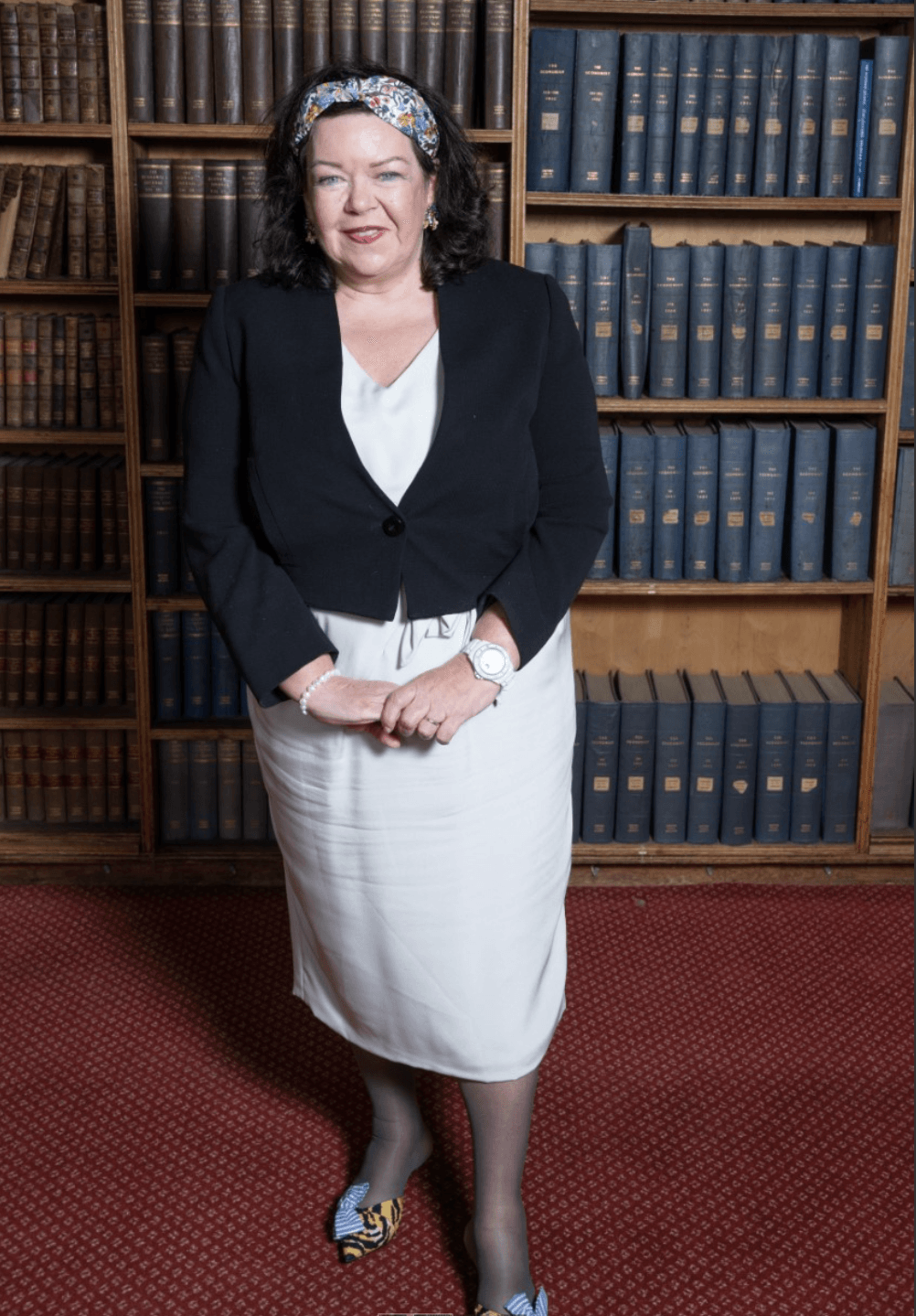
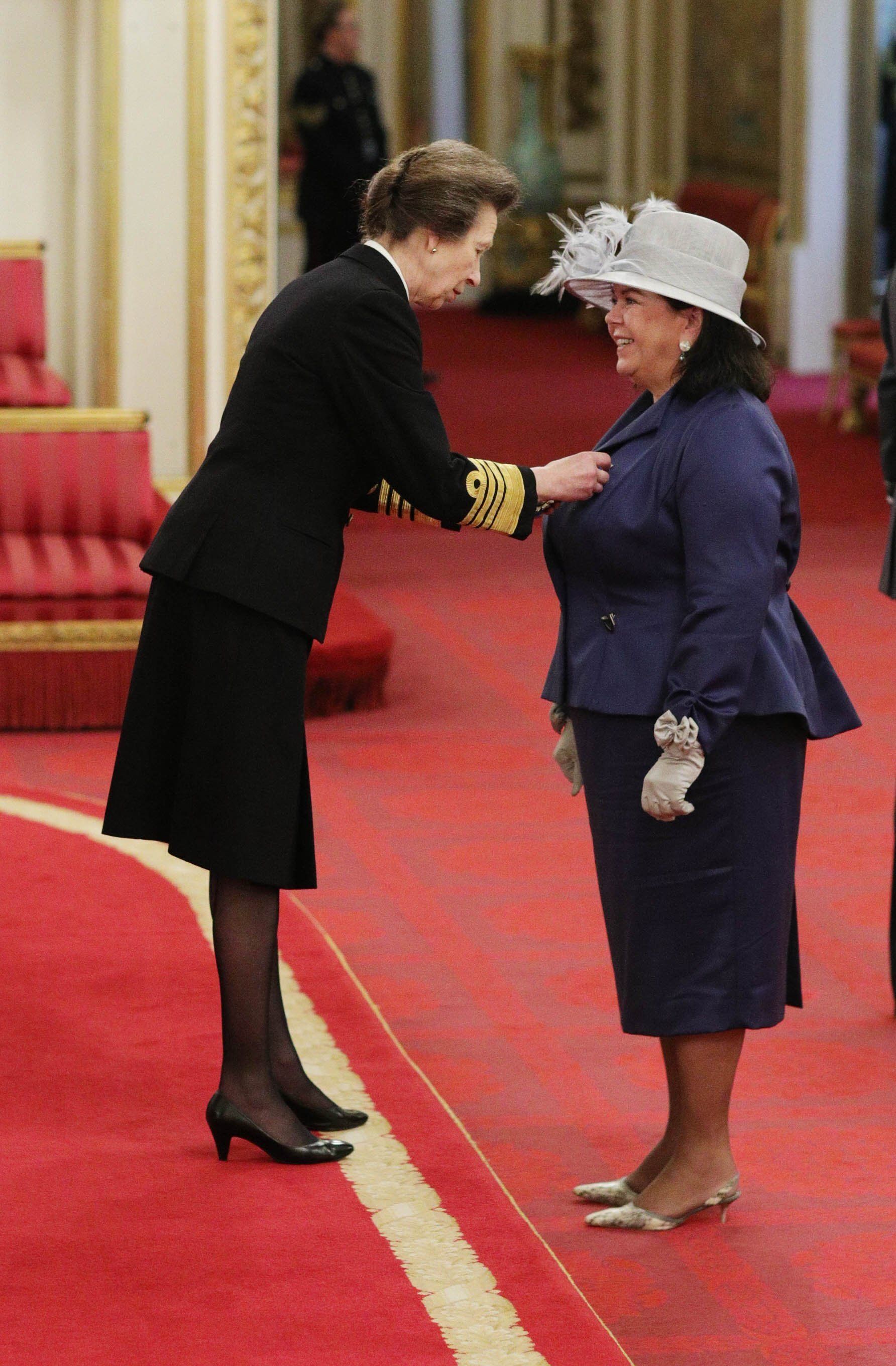
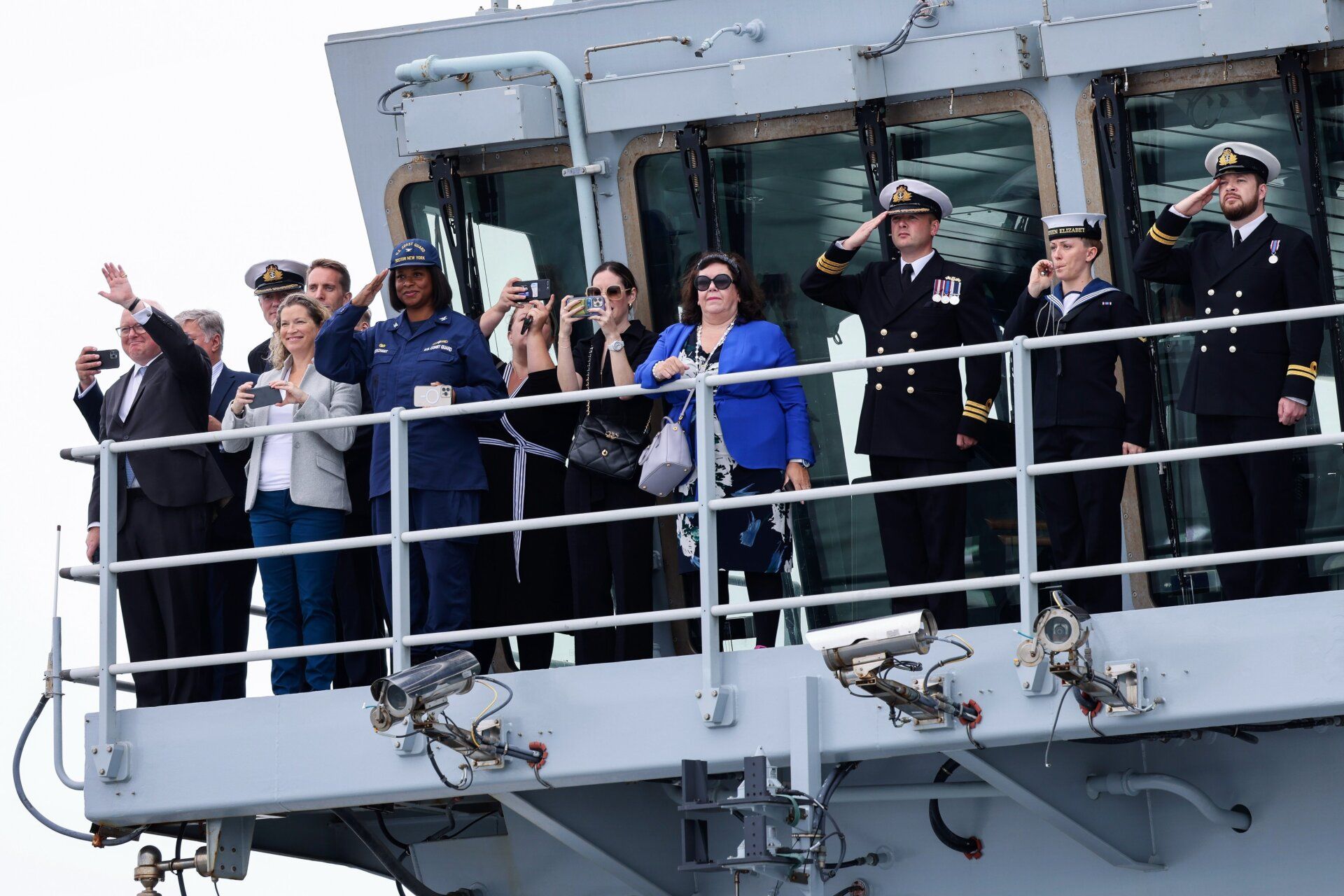
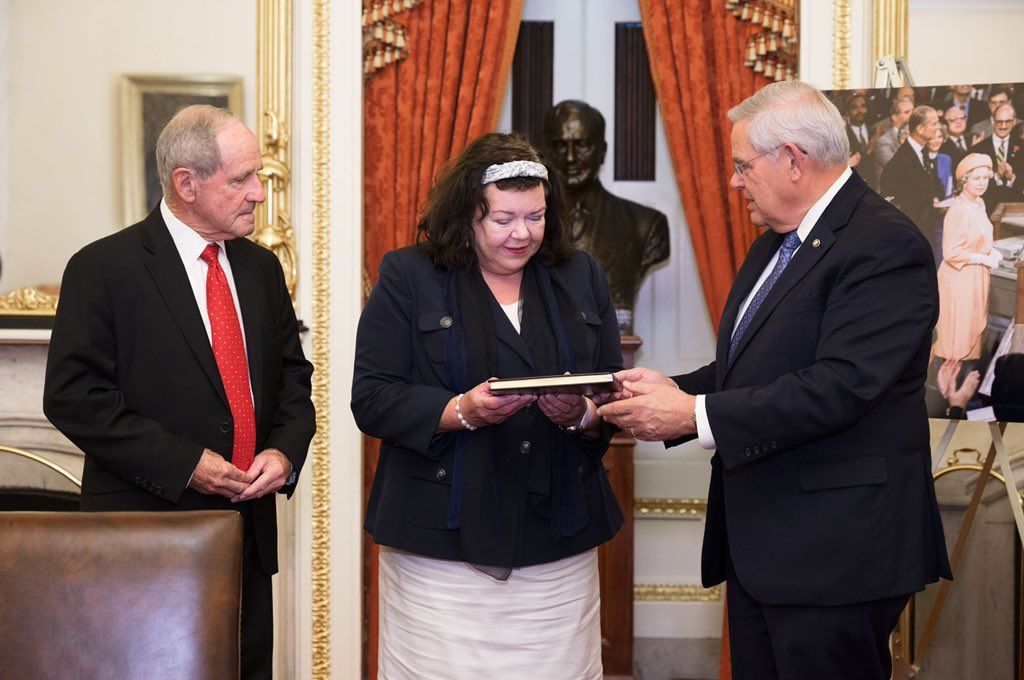
Alongtime visitor to Nantucket, Dame Karen Pierce is the British Ambassador to the United States. With her cunning intellect and colorful personality, Ambassador Pierce has won broad support in the United Kingdom for both her charisma as well as her skill in navigating complex international issues. Since joining the Foreign and Commonwealth Office more than forty years ago, she has blazed her own trail while representing the United Kingdom around the globe. N Magazine interviewed Ambassador Pierce on a wide range of issues, from the passing of Queen Elizabeth II, to the new prime minister, to the serious challenges facing Britain and the world beyond.
Britain is going through a remarkably unsettled period, with its third new prime minister in less than two months. What can Britain say to the world to demonstrate that its political system is stable?
Throughout the last year, the U.K. has remained a steadfast partner to the U.S. and a force for good globally. For business and investment, the fundamentals of the British economy remain strong – and the World Economic Outlook forecasts that the U.K. will have the fastest growth of all G7 countries in 2022. As a security partner, we are a permanent member of the Security Council alongside the U.S. and are a leading member of NATO. We remain absolutely committed to supporting Ukraine and standing up to aggressive, autocratic regimes. Britain’s standing on the world stage has not and will not change.
Given the changes in leadership and political direction, does Brexit look like a good idea in hindsight or is it something that will negatively impact U.K. going forward?
The government remains committed to the 2019 mandate that brought them into office. As Prime Minister Rishi Sunak said in his first address from Downing Street, he is absolutely committed to building an economy that embraces the opportunities of Brexit where businesses invest, innovate, and create jobs. And I think that the strength of the United Kingdom’s response to the war in Ukraine has shown that as a security partner and ally, we are as capable and reliable as ever.
Another major development this year was the passing of Queen Elizabeth II. How will history remember Her Majesty?
I’d like to start by echoing what President Biden said: that she defined an era. He was absolutely spot on. The post-World War II era from 1952 until now has always known the Queen. She traveled to something like 126 countries. She was present at the founding of the United Nations. She met thirteen of the fourteen U.S. presidents during her reign. She met an enormous number of world leaders. When you saw the Queen, you really thought of her as the embodiment of the United Kingdom and all its history. But at the same time, she was also a remarkable individual. She had a great sense of humor and a mischievous smile. She was pretty smart about people and events. She could put her finger on the essentials of things.
Could you share any personal anecdotes you have with her?
When I became ambassador, because of COVID, I couldn’t go back for an audience, which is what ambassadors usually have with the Queen or the King when they’re appointed. So, I did it over the telephone. We had about an hour’s conversation about American politics. She had a deep interest in American history and asked me some pretty good questions. She really did feel that it wasn’t just a question of common kinship and common heritage. It absolutely was an issue of common values. The Queen had this great praise that the values set out in the Magna Carter were vividly restated by the Founding Fathers.
The void that is created by the Queen’s passing is very hard to fill, particularly at a time when there are so many other challenges to life in Europe, and in Britain in particular. What is the psyche of the British people right now?
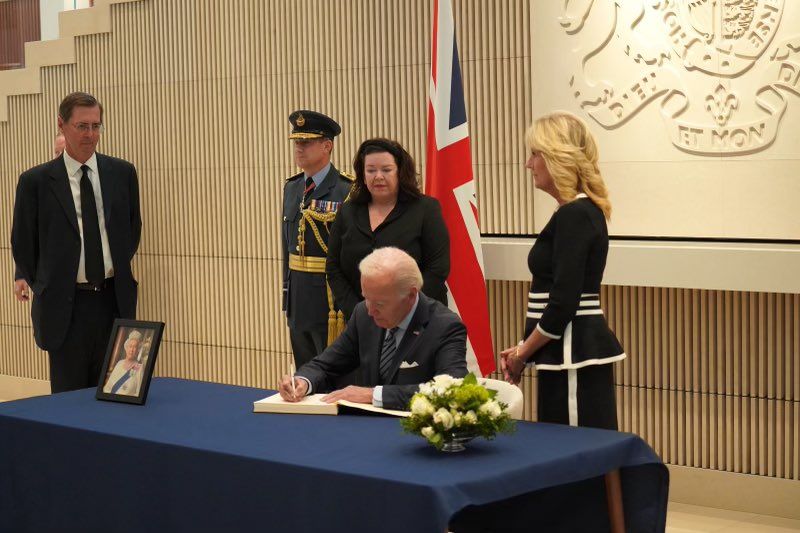
I wouldn’t say there’s a void. It is a feature set down in many philosophical and psychological works. “The king is dead. Long live the king.” In many ways, that is the point. And I think the fact that there was a week-long mourning, and you saw the coffin come down from Scotland to lie in state in Westminster Abbey for people to go and pay their respects, then you had that enormous state funeral—which President Biden kindly attended—that helped people very much come to terms with the passing of the second Elizabethan era. The king was proclaimed in the middle of all this right away, across all the realms. We’ve received many messages of support for him. I think the mood of the British people is to celebrate the Queen’s life and to look forward with the new king to tackling some of these big challenges we’ve been talking about.
What additional means should the United States and the United Kingdom undertake relative to ensuring that Russia is either defeated or kept in check in their aggression against Ukraine?
I think both of us are doing an enormous amount already. And I want to pay tribute to President Biden’s leadership on this and the nearly $50 billion that the U.S. and Congress have committed to help Ukraine with its defense. I think there is a need to continue supplying high-grade weaponry for defensive purposes. I think there’s a need to do more internationally, so that other countries are saying to the Russians that it’s time to get out of Ukraine, but also saying to the Russians that they don’t want to see any more Russian adventurism in the rest of Europe because the Balkans [and] places like Georgia and Moldova are at risk from Russian actions.
We have to keep up the pressure where we can intensify sanctions. A lot of people are skeptical about sanctions, but the point here is that the sanctions are there to degrade Russia’s ability to fight the war by denying them access to finance, denying them access to high-grade technology, and stopping them from resupplying the invading armies. And to that extent, the sanctions are working.
Do we try to bring China on board with the objective of containing Russia?
That’s a very good question. It’s one that exercises London and Washington, but also Paris and Berlin and Brussels and New York. The Chinese took a decision a while ago to invest heavily in the Russian relationship. It’s important to them. At the same time, we believe that they obviously, fundamentally condemn changing borders by force. And they know that Russian war crimes, Russian aggression, Russian attacks on nuclear power plants are something that they need to be condemning; otherwise, people will assume that the Chinese support them. And that’s not a position China is comfortable with. So I think we need to go on talking to China about this and confronting the Chinese with just what the Russians are doing and urging them not to give the Russians any support.
What is the strategy of the U.K., the U.S. and allies with respect to reducing dependency on Russia’s energy supply?
Well, it would be wrong of me to pretend this is an easy problem to solve, because as we’re seeing, it’s very difficult. Arguably, it should have been done many years ago, and even more arguably, we shouldn’t have got ourselves to the point of dependency on a country like Russia that doesn’t play by the international rules and doesn’t want to. That’s the point of Russia’s disruption at the moment.
We have a number of elements in the strategy, some of which, I have to say, will take a few years to come to fruition. Some of it is around a transition to nuclear energy. Some of it is around more liquefied natural gas [LNG]. We, the Brits, have been working with the Americans to ship LNG from the U.S. I’ve seen the port in Baltimore to the U.K. and then by pipeline to other places in Europe, including Germany. Some of it is around accelerating the transition away from fossil fuels in general. Some of it is by getting oil producers to release more gas and oil onto the market and looking at our own strategic reserves. It’s something the G7 countries are working very hard on at the moment. I think there is universal will among the G7 to take this forward. Some of the details are complicated, but we have people working on this day and night.
The euro and the pound are being battered right now at a time when Britain and the continent need as much export help as possible. Does this create a downward spiral that is difficult to contain where exports are becoming less and less competitive?
I think a lot of things are coming together. The Russian invasion of Ukraine has exacerbated and aggravated trends that were already there. So, obviously, as people came out of the pandemic and things struggle to get back to normal and you have to look at supply chains, that’s one set of problems. The energy and food crises caused by the Russian invasion are obviously acute problems that are on everyone’s minds. And as we struggle to deal with all of this, as you say, you see these fluctuations in currencies and world markets.
I’m not an economist, but I think the economies, fundamentally, are reacting to events here rather than have long-term structural weaknesses that need resolving. The energy dependency is obviously the most chronic of those weaknesses, but I think we will find a way forward. So I don’t think it’s inevitable, even if there is a short-term dip. The forecasts show, in a couple of years, things getting better. The challenge for governments, of course, is that they’ve got to get their people through the winter with a difficult energy situation.
Between inflation, the potential of rationing oil and soaring food costs, it’s a perfect storm. Suffering among large groups of people can cause social unrest. How concerned are you about the economic hardships triggering more serious political divides in the U.K. and beyond?
If you start with the world, the food security issue is a huge one for a lot of developing countries. Grain is now being shipped out of Ukrainian ports, thanks largely to the UN and to Turkey, who have put a good plan together. But those countries, in my view, need to be saying to the Russians: “We want you to enable grain to flow freely from the Ukrainian ports.” Grain is not a sanctions issue. The export of grain is solely about the Russian blockade of parts of the Black Sea. So those countries need to come together and tell the Russians they want to see food security relief at scale. And then, I think, that will be an enormous help with the food security side and global inequalities that flow from that.
Whenever you have economic downturns, as you say, you have to look for signs of wider political unrest. I think everybody does realize, coming out of the pandemic, that we are in times that are unprecedented in recent years and that things will be difficult for a while. So I think there’s a greater realization. And we’re not expecting big problems in the U.K. Nevertheless, it’s something that all governments, including the British government, keep on their risk registers. And we will, in the U.K., be looking at ways that we can help ordinary households with their energy bills.

People are concerned that China is inspired by Russia’s invasion of Ukraine, vis-à-vis Taiwan. The failure of the Russian invasion is undeniable, and the coalescing of allies against Russia has probably been the only positive outcome of all of this. What’s your feeling about the likelihood that China will make a move on Taiwan?
I think the Chinese have watched very closely at what’s happened: both the failure of the Russians to achieve their military aims and the coming together of the international community, particularly those countries that have the biggest share of the global economy. Sanctions would affect China also, and China can conceive the extent of those sanctions that would be available in the event of an invasion of Taiwan. I don’t want to speculate on the timing. We obviously watch what happens in the South China Sea very carefully. It’s very interesting the condemnation of the Chinese overreaction to the Pelosi visit, these heavy-handed military exercises around Taiwan. And predictably, it’s had the effect of even more parliamentarians wanting to visit Taiwan. We need to handle the Chinese carefully. We don’t want to accidentally provoke the very things we’re trying to avoid. We do, in my view, need more channels of communication with the Chinese, private channels, to avoid miscalculation. But I think, in terms of our firmness, U.S. firmness, international firmness about no invasion of Taiwan—that’s holding up very well and that’s very visible to the Chinese. They will take that into account.
In terms of the local economy, the U.S. doesn’t always perceive England as an innovator and a country that is at the cutting edge of technology. However, under former Prime Minister Boris Johnson, there was a very ambitious plan to increase the U.K.’s role in science and technology. And I’m curious to get your take on how the U.K. expands its role in science and what part that expansion takes on providing future economic growth from a country that was formerly heavily industrialized.
I’m going to take issue with your technology and not just science. It isn’t only about the pure science. It is about finding applications and putting those to use. It’s about finding the money, venture capital or elsewhere, to fund those big developments.
We’ve started a new tech partnership with the United States. It’s something that President Biden and Prime Minister Johnson signed last year, when President Biden paid his first visit to the U.K. And that enables cooperation across a whole range of new technology like AI [artificial intelligence], like quantum, like America had been this beacon of democracy, as you say, and that’s what we had all looked up to. And it’s very sad to see any of that falter, but it’s not endemic. I believe it’s a short-lived blip, the things that happened on January 6th. Now, it’s for America itself to deal with those events. It’s not for foreigners to intervene. But I think American institutions and the American spirit are strong enough to get to a good answer on that in a way that does credit to the cause of democracy.
Around the world, it’s fashionable to say democracy is in retreat. I don’t believe that, but we’re not doing enough to bring it to the fore perhaps. And open societies are a theme that most people in Britain really, really rally to. It’s one that speaks to something in the British psyche. And they will want to do all they can to support work around the world to promote liberal democratic values.
You have held diplomatic posts all over the world. Have you ever seen the world in a more dangerous or unsettled state that it is now?
I wouldn’t use superlatives about this, just because our own experience is obviously limited by what we’ve personally seen. I think, if you look at history, since the Second World War, there have been lots of turbulence. In the States, you had McCarthyism. In the U.K., you had the Brixton riots. There were various other things that happened in Europe and in Japan and elsewhere. We’ve had wars in Africa.
We’ve had dictatorships in places like Spain and Portugal. We had the Vietnam War. Things happen. And it’s our job as government servants, as [the] public sector, to try and put a shape on them, assess them and find ways of managing them.
What I do think is unprecedented is the rise of China. That is very much a phenomenon of the last twenty, thirty years. And that, we’ve never had to contend with before. So you have a more assertive China at the same time as you have a more aggressive Russia. And now they are out to contest the rules of international affairs, if you like. So I think we have to be on our guard against that.
We’ve talked a lot about the challenges that are readily apparent, but what are you most optimistic about?
I am optimistic about our ability to meet these challenges and turn them around. I think you see the same in America, but I think it’s a particularly British strength to get opportunity out of adversity, even if there are setbacks in the short term. You obviously saw that in the Second World War, but I think you see it in all sorts of other areas, that Britain is fundamentally a pragmatic and problem-solving nation. We thrive on being able to have problems to solve and come out with ideas. We then worked with our allies, of course the United States, to turn them into reality. But I think that’s one of the things that’s in the British DNA.
I think the other thing is a very strong belief in freedom. That, obviously, is shared with the United States. It goes back to Alexander Hamilton’s “We think in English.” We think the same way about the rule of law and about freedom within the law. I think those are very important qualities. And I do want to come back to this open societies point. I think there’s a deep belief in the U.K. that open societies do deliver better for ordinary citizens. And I think we want to work on showing that that really is the case. We’ve changed a lot of our development aid approach so that we can more quickly and flexibly help those countries trying to get their economies on track. And I think that sort of pragmatic approach to some of these problems is going to continue. And that’s what keeps me going.
*This interview has been edited due to space constraints.
Latest Stories